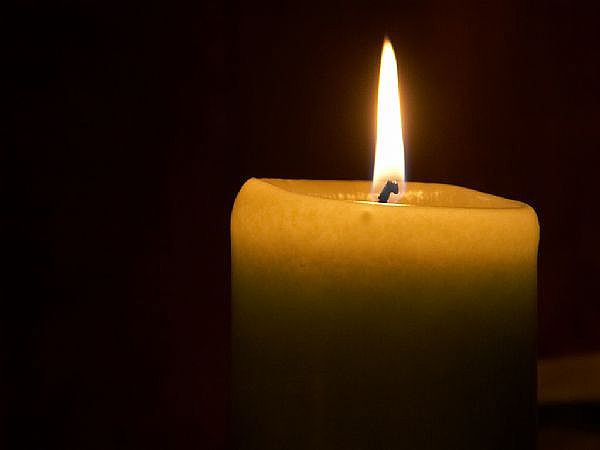
There is hope everywhere

Snow by Anne Sexton | Monday, December 07, 2015 | The Writer’s Almanac with Garrison Keillor

Snow,
blessed snow,
comes out of the sky
like bleached flies.
The ground is no longer naked.
The ground has on its clothes.
The trees poke out of sheets
and each branch wears the sock of God.

There is hope.
There is hope everywhere.
I bite it.
Someone once said:
Don’t bite till you know
if it’s bread or stone.
What I bite is all bread,
rising, yeasty as a cloud.

There is hope.
There is hope everywhere.
Today God gives milk
and I have the pail.

“My Lord God, I have no idea where I’m going.”

reblogged from (ZENIT.org)

The “Waze” of Providence

“My Lord God, I have no idea where I’m going.”

Los Angeles, December 01, 2015
Bishop Robert Barron |

Just after I was named auxiliary bishop of Los Angeles, Archbishop Gomez, my new boss, told me to get the Waze app for my iPhone. He explained that it was a splendid way to navigate the often impossible LA traffic. I followed his instructions and have indeed used the app on practically a daily basis since my arrival on the West Coast. Waze not only gives you directions, but it also provides very accurate information regarding time to your destination, obstacles on the road, the presence of police, etc. Most importantly, it routes you around traffic jams, which positively abound in the City of Angels.

Especially in my first days and weeks on the new job, I basically had no idea where I was going-and my duties required that I be all over the place: LAX, Pasadena, Inglewood, Granada Hills, Ventura, Oxnard, Santa Barbara, Santa Maria, etc., etc. And often I was required to journey after dark. So I would program an address into the Waze app and then listen to the mechanical female voice as she guided me to my destination. It was often the case that her instructions were counter-intuitive, which was not surprising, given the fact of my disorientation in a new environment. But I gradually learned to trust her as, again and again, she got me where I needed to be.

I’ll confess that my faith in her was sorely tested a few weeks ago. I had left my home in Santa Barbara very early in order to attend a ten o’clock meeting in Los Angeles and was making pretty good time on the 101 expressway. Suddenly, the Waze lady instructed me to get off the highway a good 25 miles from LA. Though skeptical, I followed her advice. She subsequently sent me on a lengthy, circuitous, and rather slow journey through city streets until finally guiding me back to the 101! I was so frustrated that I pounded my fist on the dashboard and expressed (aloud) my dismay. When I got to the meeting, I laid all of this out to one of my episcopal colleagues and explained that I thought there was a glitch in the system. “Oh no,” he quickly responded, “there was a tanker spill this morning on the 101, not far from where she made you exit the road. She probably saved you an hour or two of frustration.”

At that point I saw clearly something that had been forming itself inchoately in my mind, namely, that the Waze app is a particularly powerful spiritual metaphor. As Thomas Merton put it in the opening line of his most famous prayer: “My Lord God, I have no idea where I’m going.” Spiritually speaking, most of us are as I was when I arrived in Los Angeles: lost, disoriented, off-kilter. But we have been provided a Voice and instructed to follow it. The Voice echoes in the Scriptures, of course, but also in the depth of the conscience, in the authoritative teaching of the Church, in the wise counsel of spiritual directors, and in the example of the saints. Does it often, indeed typically, seem counter-intuitive to us? Absolutely. Do we as a matter of course ignore it, presuming that we know better? Sadly, yes.

Are there some among us who, in time, learn to trust it, to guide their lives by it, even when it asks them to go by what seem circuitous routes? Happily enough, yes.There is another feature of the Waze app worth considering in this spiritual context. When you get lost or perhaps decide that you know better than the navigator, she doesn’t upbraid you or compel you to return to the route she had originally chosen. She calmly recalculates and determines the best way to get to your goal, given the choice you have made. God indeed has a plan for each of us. He has determined, in his wisdom and love, the best way for us to get to our goal, which is full union with him. But like Israel of old, we all wander from the path, convinced that we are brighter than the Lord of the universe, or perhaps just enamored of asserting our own freedom. But God never gives up on us; rather, he re-shuffles the deck, recalculates, and sets a new course for us. Watch this process, by the way, as the Scriptural narrative unfolds. And watch it happening, again and again, in your own life: what looks like a complete dead-end turns into a way forward; the wrong path turns, strangely, into the right path.No matter where you go, Waze can track you and set you on the right road, and this “all-seeing” quality has given us confidence in its direction. As we have learned to trust the mechanical voices of our GPS systems in regard to the relatively trivial matter of finding our way past traffic jams, so may we learn to trust the Voice of the one who, as the Psalmist puts it, “searches us and knows us and discerns our purpose from afar.”

Bishop Robert Barron is an auxiliary bishop of the Archdiocese of Los Angeles and the founder of Word on Fire Catholic Ministries.

“Candles in an Advent of darkness”

The arrival of Advent this year is overshadowed by the world’s violence. Distant events press in. A week ago, a young Jewish boy from a town near mine, who was studying and volunteering in Israel, was killed by a Palestinian gunman in the West Bank after he had brought food to Israeli soldiers. I wrote a note to a friend in that community, assuming he may have known the family.

“They are our closest friends,” he responded. “It is heartbreaking.”

How little has changed in 2,000 years. Piety and good works don’t save us from violence. Quite the opposite it seems, these days.

As I climb into my attic and poke around for the purple and pink candles to make my Advent wreath, I can’t help but recall a more innocent time in my own home not so very long ago. Advent was the time for concocting ornaments and playing carols while we worked. It was the season of the “Jesus Box;” each day we’d put into it a piece of paper on which we’d written a small deed of kindness we’d done for another. We made peanut butter pine cones for the birds, drank cocoa late in the long afternoons, read books, and strung popcorn.

All of these gestures were designed to bring a slower, more mindful pace to our days, so that when Christmas came, we would greet it with a renewed understanding of the incarnational message, “Christ is born” – the kingdom of God come among us.

“Resetting” the ordinary and seeing the holy in this season isn’t as easy as it once was. Saturated by news clips and tweets of divisiveness, how are we to find the quiet in which we might discover our own navigational stars of hope? The shelter of mere tranquility has collapsed for many of us. If we are totally honest, we are wandering in a dark as deep as that of Mary, Joseph, and the Magi, harried by the same environment of conflict and uncertainty.

But maybe this is the point. Perhaps Advent is actually about accepting reality as it is, and surrendering our small certainties in order to hear a different message than the one we read in the news.

In 1944, the German Jesuit priest, the Rev. Alfred Delp, imprisoned by the Nazis and writing from prison in Berlin, wondered whether he would live to see the fourth Advent candle lit on his own wreath. All the same, he took the trouble to light the first one. Advent, he wrote, even in the darkest of times, is still our time to “review our lives and take a sober look at things because reality is still the place where true joy grows and where we build things that can support a load.”

Read the rest here.