Tim’s birthday

Yesterday would have been my brother Tim’s 57th birthday.  Three years ago he took his life on St. Patrick’s Day.  (This was the “very challenging time” of the “Courage” post.  See May 7, 2009.)  There were many, many ways that God upheld me through that time and many, many friends who did the same.  One of those friends was Amy Carmichael (see my last post).   Four months after Tim’s death, I read this and it was a great comfort:

For God sees the whole man, and He has a tender way of looking at a soul at its highest, not its lowest.  He does not do as we so often do, misjudge it because of what its diseased mind made its body do in a blind and broken hour.  And we have to do with a Love that can grasp the poor hands that reach out to Him in that darkness–what father would not do that?  And He is our Father.

But when those who have prayed for such a one have no assurance that there was ever any turning to Him who alone can save, then indeed we seem to be viewing a land like that hopeless country the prophet describes, whose streams shall be turned into pitch, and the dust thereof into brimstone. ‘And He shall stretch out upon it the line of confusion and the stones of emptiness.’  But a word of peace comes through the confusion: prayer in the name of His Beloved Son does not fall upon stones of emptiness. Sometimes, somewhere we shall know better than we know now how gracious the Lord is.

from Gold by Moonlight
Accepting the unexplained

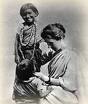
Amy CarmichaelA woman who has been very instrumental in my life was a Protestant missionary from Ireland to India in the first half of the last century.  (A little anecdote: as a child, she prayed for God to change her brown eyes to blue, a prayer God did not answer.  Only later when she was in India rescuing children from temple prostitution, did she realize the value of her brown eyes.  It made it much easier for her to disguise herself as an Indian.  She could darken her skin, but she would never have been able to disguise her blue eyes . . .) As a result of an injury, she ended up spending a good part of her life bedridden and wrote many poems, letters, and meditations from her bed, for which I will be eternally grateful. 

For some reason, this excerpt from her book, Edges of His Ways, has been on my mind the past few days:

This is the fruit of my morning’s reading.  It is not new, but it came to me as new.

God counts on us to accept whatever answer to our prayers He gives us, whether or not it be the answer that we wished and expected.  When Paul wrote to the Christians of Rome, he asked for the kind of prayer that is like wrestling with a strong (though unseen) enemy [cf. Rom 15.30-32].  He asked for prayer for three things, that his service (the offering of alms) might be acceptable to the Jewish Christians; that he might be delivered from the Jews who did not believe; that he might come to them–the Christians of Rome–with joy.  The answer to the second of these three prayers was two years in a prison in Caesarea; the answer to the third was two years’ imprisonment in Rome.  In both cases his was the kind of imprisonment which required the prisoner’s right hand to be chained to a soldier’s left.

Not many of us love to be under a roof between walls, without being able to go out into the open air. Think what it must have meant to Paul to be not only indoors but never once alone.  Think of being chained to a Roman soldier at all hours of the day and night.  “That I may come unto you with joy by the will of God, and may with you be refreshed.” There was not much natural joy and refreshment in coming as a chained prisoner. 

Nothing was explained. Paul and the men and women of Rome were trusted to accept the unexplained and, like John the Baptist, not to be offended in their Lord.

When we feel weak and incapable

One of my top five books is Dom Marmion’s Union with God, a collection of some of his letters of spiritual direction.

An excerpt:

You must not pay too much attention to the fluctuations which are ever passing over the surface of your soul. Like the sea, it is constantly ruffled, but in its depths it is all God’s. Ask the Holy Spirit to give you an abundance of His gift of fortitude, nothing so honours God as to lean on Him in full confidence, just when we feel weak and incapable, ‘When I am weak, it is then that I am strong . . . I glory in my infirmities that His strength dwell in me.’ May you be filled with Christ’s strength, the spouse is never so pleasing to her beloved as when she bears all her weight on the strong arm of her beloved.

And another:

Abandon yourself blindly into the hands of this Heavenly Father Who loves you better and more than you love yourself.

More to come . . .

Behold, there He stands . . .

Another of James Tissot’s paintings and another of my favorites. It came to mind as I was pondering returning to Ordinary Time. Yet He still stands behind our wall, speaking to us:

“Behold, there he stands behind our wall,
gazing in at the windows,
looking through the lattice.
My beloved speaks and says to me:
“Arise, my love, my fair one,
and come away;
for lo, the winter is past,
the rain is gone.
The flowers appear on the earth,
the time of singing has come. . . .
O my dove, in the clefts of the rock,
in the covert of the cliff,
let me see your face,
let me hear your voice.” (Song of Songs 2:9b-12a, 14)

Some of the Church fathers see the “cleft in the rock” as the pierced Heart of Jesus. . .

Let Me love you.

I am a great fan of James Tissot’s art (The Passion of Christ illustrated by James Tissot). I find he had a fresh and authentic way of portraying the events in the life of Christ. Tissot named this piece “Our Lord Jesus Christ”, but to me it is the best portrayal I have seen of the Sacred Heart of Jesus, of His incessant thirst to give His love to us. “I am yours. Let Me love you.”

(Look for more of his work in future blog entries.)

Fears and emotional wounds as the context for holiness

from Marc Foley’s book on St. Therese of Lisieux, The Context of Holiness (ICS Publications)

“Becoming an adult does not mean that the deep emotional wounds of childhood disappear. Rather, being an adult means choosing to make courageous decisions in the face of powerful emotions.” (p.13)

“When she [Therese] was assigned a job [novice mistress] that she thought was too much for her to handle, she felt overwhelmed, incompetent, unqualified, and inadequate . . . However, Therese does not apologize for her fears. She does not berate herself for feeling like a child; rather her fears and insecurities are the context within which she places her trust in God. It is as if Therese is saying to all of us: ‘There are many situations in life that trigger the deep-seated fears of childhood. I have come to see that this is a normal part of daily life. I have also come to see that our childhood wounds are not obstacles to our spiritual growth but are in some mysterious manner the path on which we find our way back to God. The deep-seated fears of my life have forced me to abandon my self-sufficiency and to rely upon the grace of God.'” (p. 14)

“Therese did not make it a goal to get beyond the effects of her childhood but to do the will of God in the midst of them. Therese understood that the emotional wounds of her childhood were not obstacles to spiritual growth but the context of growing in holiness.” (P. 96)

“Acts of faith are expressed in two ways. The first is our willingness to jump into the darkness, that is, choosing to trust in God’s guidance as we venture into the unknown. The second is our willingness to sit in the darkness, which is continuing to do God’s will when our emotional resources are depleted and life seems hollow, meaningless, and absurd. Therese was willing to sit in this darkness as long as God willed.
“These are the worst times in our life of faith when viewed from a psychological and emotional perspective. But from a spiritual vantage point, they are potentially the best of times. For when we continue to do God’s will without emotional support, our love for God and neighbor grows and is purified.” (pp. 136-7)

Christ, the lighted coal

“A friend comes to the rescue in time of need, and if he is aware of the truth of friendship, he directs his friend just as if he were himself and puts his own members at his disposal if he has lost his. … a friend is a lighted coal, and if placed beside it, it can rekindle a dead one.” (Bl. Simon Fidati of Cascia)

Christ is our true Friend, the lighted coal for each one of us, our hope of rekindling.

God is greater than our hearts . . .

I was away on vacation and then doing the proverbial catching up after vacation, and consequently neglecting this blog. Now I’m back.

Last week I read a very thought provoking–and hope provoking–piece in Magnificat by Msgr. Romano Guardini. The beginning may not sound hopeful–hang in there with it.

In the condemnation of the heart, it is God himself who condemns. Wrong has been done to him. Wrong has been done to the gentle and holy life that he has awakened in the heart, to the holy trust that binds him to his child. How can man’s self-defense reach these depths.

What possible help is there? John says, “If our heart condemns, us, God is greater than our heart.” Do you observe that this answer comes from the same depths as the condemnation itself? The answer is not: “You have done right. Your intentions were good. Be of good cheer.” No, the answer is: “God is greater than your heart.”

Your heart is great. That is the first thing, and it is amazing that that should be said at all. But God is still greater. The heart that has been lost is great. But God is greater. The heaviness of the heart to which wrong has been done is so great that it must sink. God is the sea of greatness where everything heavy is made light. The wrong that has been done to life is great. God is the Creator, and God is life and grace. He is greater than everything. The holiness to which wrong has been done partakes of the dignity of God. His trust has been infringed. That is terrible. But he himself, his magnanimity, his creative love, is greater than all this wrong. John does not say, “Cheer up, it isn’t so bad after all.” He does not say, “Don’t take life so seriously.” God says, “Give these things their full weight. Then I will come to you. I am God.”

And when he comes, the creature will become clear to itself. Its self-importance will be dissolved, and everything will be fulfilled.

Courage

I just came across a card sent to me by a good friend at a very, very challenging time in my life. (A story for another time.) It was tucked away in the front zippered compartment of my bible, a place where I’ve put a number of treasures. I don’t look in there very often, and, hence, I sometimes forget what is in there–like this card. There is only one word on the front of the card: Courage. The card then unfolds to a 17 x 11 inch poster with the quote: It is at night that faith in light is most admirable. I thought about laminating it and putting it up somewhere, but I think I like it best to just re-discover it once in awhile tucked away in that zippered compartment of my bible. And it always seems to be just the right time to re-read it . . . (Thank you, Kathleen K.)