“God can be God even in the very heart of human terror”

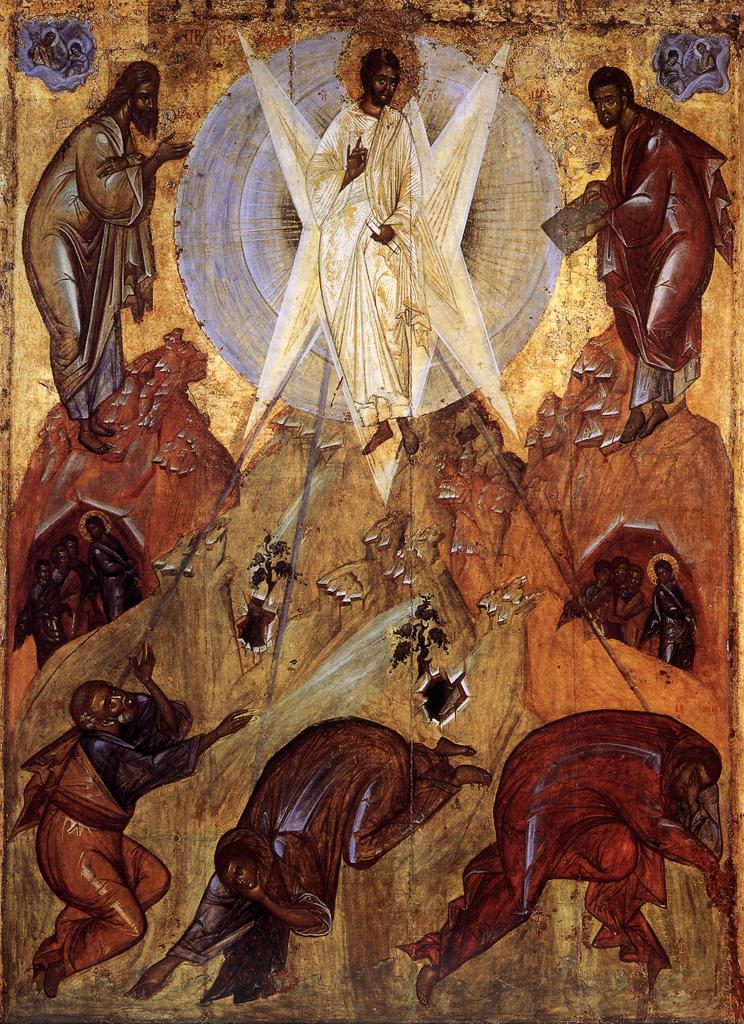
Transfiguration (2015_02_19 22_01_22 UTC)

“The whole history of God’s dealings with his people is involved in this: Moses and Elijah are also driven towards us by the same energy.  But Jesus alone stands in the very heart of it, it flows through him and from him.  It is the light that comes from him that is reflected on the robes of his companions.  They lived hundreds of years before him, yet what makes them radiant, what makes them agents of God, is the light coming from Jesus, so that this icon—like the story it illustrates—confuses our ordinary sense of time.  In the Gospels, the transfiguration story is introduced with the apparently innocent words, ‘after six days’ (in Matthew and Mark), or “after about eight days’ (in Luke).  From early times, commentators have said that this is an allusion to the days of creation: the transfiguration is the climax of the creative work of God, either the entrance into the joy and repose of the seventh day or the beginning of the new creation, the eighth day, depending on what kind of symbolism you want to use. In Jesus, the world of ordinary prosaic time is not destroyed, but it is broken up and reconnected, it works no longer just in straight lines but in layers and spirals of meaning.  We begin to understand how our lives, like those of Moses and Elijah, may have meanings we can’t know of in this present moment: the real depth and significance of what we say or do now won’t appear until more of the light of Christ has been seen.  And so what we think is crucially important may not be so; what we think insignificant may be what really changes us for good or evil.  Christ’s light alone will make the final pattern coherent, for each one of us as for all human history.  And that light shines on the far side of the world’s limits, the dawn of the eighth day.  When Jesus is transfigured, it is as if there is a brief glimpse of the end of all things—the world aflame with God’s light.

“In the strength of that glimpse, things become possible.  We can confront today’s business with new thoughts and feelings, reflect on our sufferings and our failures with some degree of hope—not with a nice and easy message of consolation but with the knowledge that there is a depth to the world’s reality and out of that comes the light which will somehow connect, around and in Jesus Christ, all the complex, painful, shapeless experience of human beings.  The Orthodox hymns for the feast of the Transfiguration make the point often made the Orthodox theologians: Peter, James, and John are allowed to see Christ’s glory so that when they witness his anguish and death they may know that these terrible moments are freely embraced by the God-made-human who is Jesus, and held within the infinite depth of life.  It is surely not an accident that it is Peter and James and John who are also with Jesus in Gethsemane: the extreme mental and spiritual agony that appears there is the test of what has been seen in the transfiguration.  We are shown that God can be God even in the very heart of human terror: the life of Jesus is still carried along by the tidal wave of that which the dark background of blowing blues and reds in the icon depicts, the life of God.” (Rowan Williams)
Brokenness Under the Blessing

Do not lose heart . . .

barnstormingblog's avatarBarnstorming

brokenvessel2

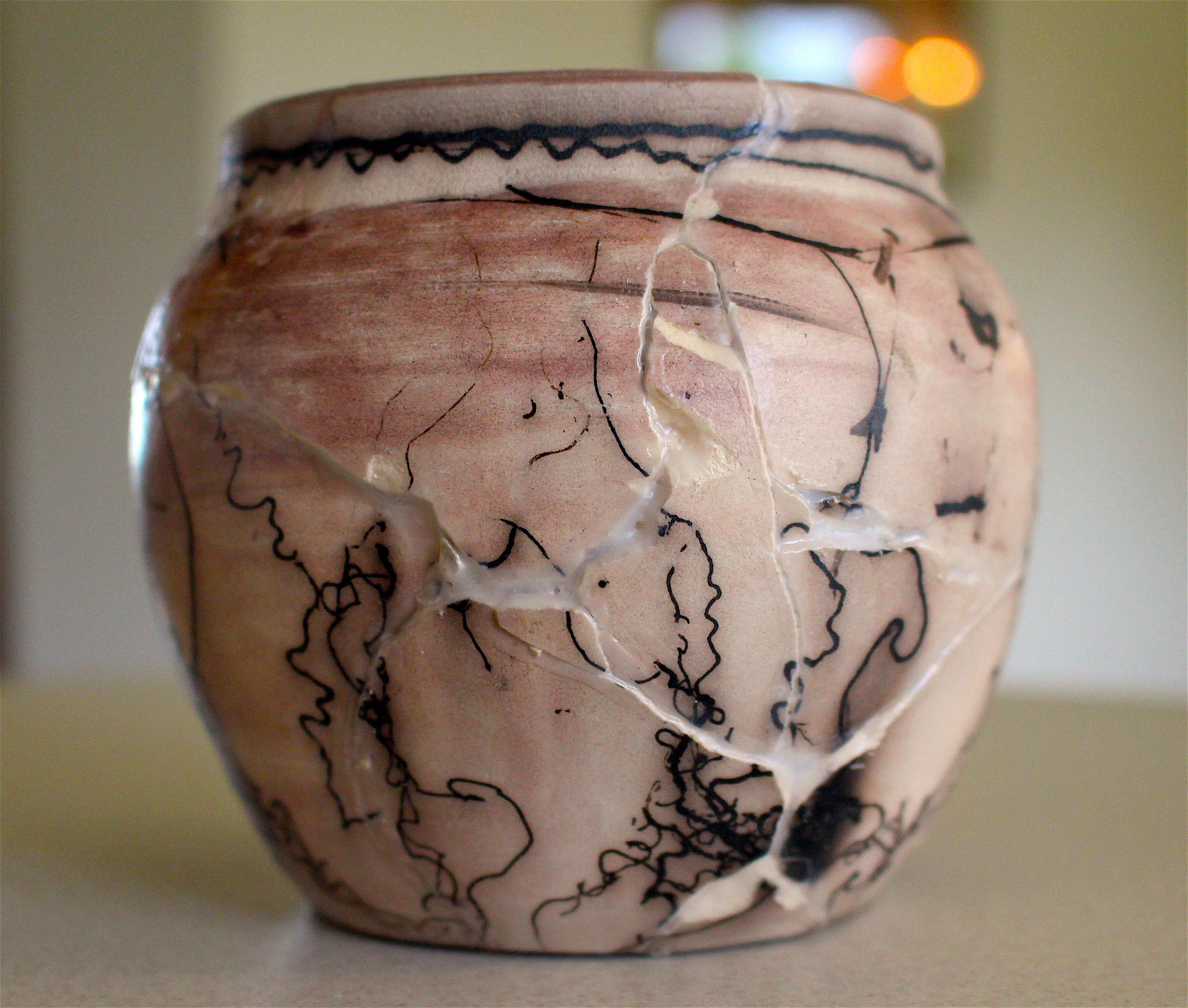
The great mystery of God’s love is that we are not asked to live as if we are not hurting, as if we are not broken. In fact, we are invited to recognize our brokenness as a brokenness in which we can come in touch with the unique way that God loves us. The great invitation is to live your brokenness under the blessing. I cannot take people’s brokenness away and people cannot take my brokenness away.  But how do you live in your brokenness? Do you live your brokenness under the blessing or under the curse? The great call of Jesus is to put your brokenness under the blessing.
~Henri Nouwen from a Lecture at Scarritt-Bennett Center

mendedpot2

For God, who said, “Let light shine out of darkness,” made his light shine in our hearts to give us the light of the knowledge of God’s glory displayed in the face of Christ.

7 But…

View original post 339 more words

Prescribing Good Medicine

barnstormingblog's avatarBarnstorming

A good night sleep, or a ten minute bawl, or a pint of chocolate ice cream, or all three together, is good medicine.
~Ray Bradbury

If there is anything I’ve learned in over 40 years of practicing medicine, it’s that I still must “practice” my art every day.  As much as we physicians emphasize the science of what we do, utilizing “evidence based” decisions, there are still days when a fair amount of educated guessing and a gut feeling is based on past experience, along with my best hunch.  Many patients don’t arrive with classic cook book symptoms that fit the standardized diagnostic and treatment algorithms so the nuances of their stories require interpretation, discernment and flexibility.    I appreciate a surprise once in awhile that makes me look at a patient in a new or unexpected way and teaches me something I didn’t know before.   It keeps me coming back for…

View original post 299 more words

She burns the light of hope

{This is a repost . . .]

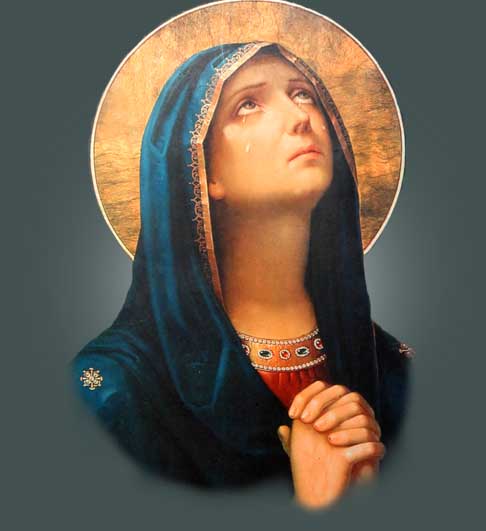
mary-pierced-heartHave you ever wondered why Saturday is traditionally observed as the day of Our Lady? A few years ago I was reading a book by John Saward (The Beauty of Holiness, the Holiness of Beauty), and, in a section about our Lady, he described Mary’s unfailing faith through the long, terrible day after Christ’s death when she alone kept faith in her Son.   I had never before heard of this mariological foundation for Saturday being traditionally her day:

The yes [her continued yes to the Lord that began with her Annunciation yes] of Our Lady does not end on Good Friday and [Christ’s] yielding of the spirit . . . . The faith and love of Our Lady last into Holy Saturday.  The dead body of the Son of God lies in the tomb, while His soul descends into Sheol, the Limbo of the Fathers.  Jesus goes down into the hideous kingdom of death to proclaim the power of the Cross and the coming victory of the Resurrection and to open Heaven’s gates to Adam and Eve and all the souls of the just.  The Apostles, hopeless and forlorn, know none of this.  “As yet,” St. John tells us, “they did not know the Scripture, that He must rise from the dead” (Jn 20.9).  In all Israel, is there no faith in Jesus?   On this silent Saturday, this terrible Shabbat, while the Jews’ true Messiah sleeps the sleep of death, who burns the lights of hope?  Is there no loyal remnant?  There is, and its name is Mary.  In the fortitude of faith, she keeps the Sabbath candles alight for her Son.  That is why Saturday, the sacred day of her physical brethren, is Our Lady’s weekly festival.  On the first Holy Saturday, in the person of Mary of  Nazareth, Israel now an unblemished bride, faces her hardest trial and, through the fortitude of the Holy Spirit, is triumphant.

I take great comfort in knowing that Mary always burns the light of hope for me (and you!) as well.