Psalms and hymns we know by heart

Friday: from the archives

Sr. Dorcee, beloved's avatarWitnesses to Hope

Amy Carmichael starts this piece by asking: “Do you ever find prayer difficult because of tiredness or dryness?”  If your answer is yes, read on.

Ps 31.5  Into Your hands I commit my spirit; You have redeemed me, O Lord God of truth.

Do you ever find prayer difficult because of tiredness or dryness?  When that is so, it is an immense help to let the Psalms and hymns we know by heart say themselves or sing themselves inside us.  This is possible anywhere and at any time.

We can’t be mistaken in using this easy, open way of prayer, for our Lord Jesus used it.  His very last prayer, when He was far too tired to pray as He usually did, was Psalm 31.5.  Every Jewish mother used to teach her child to say those words as a good-night prayer.

Hymns, little prayer-songs of our own, even the…

View original post 28 more words

The Potter’s Clay

I’ve always been moved by the comparison of our God to a potter who takes such care to shape–and reshape–us. I think you’ll be moved by this post by Emily Gibson and by the beautiful and fascinating video. Spend some time with it.

barnstormingblog's avatarBarnstorming

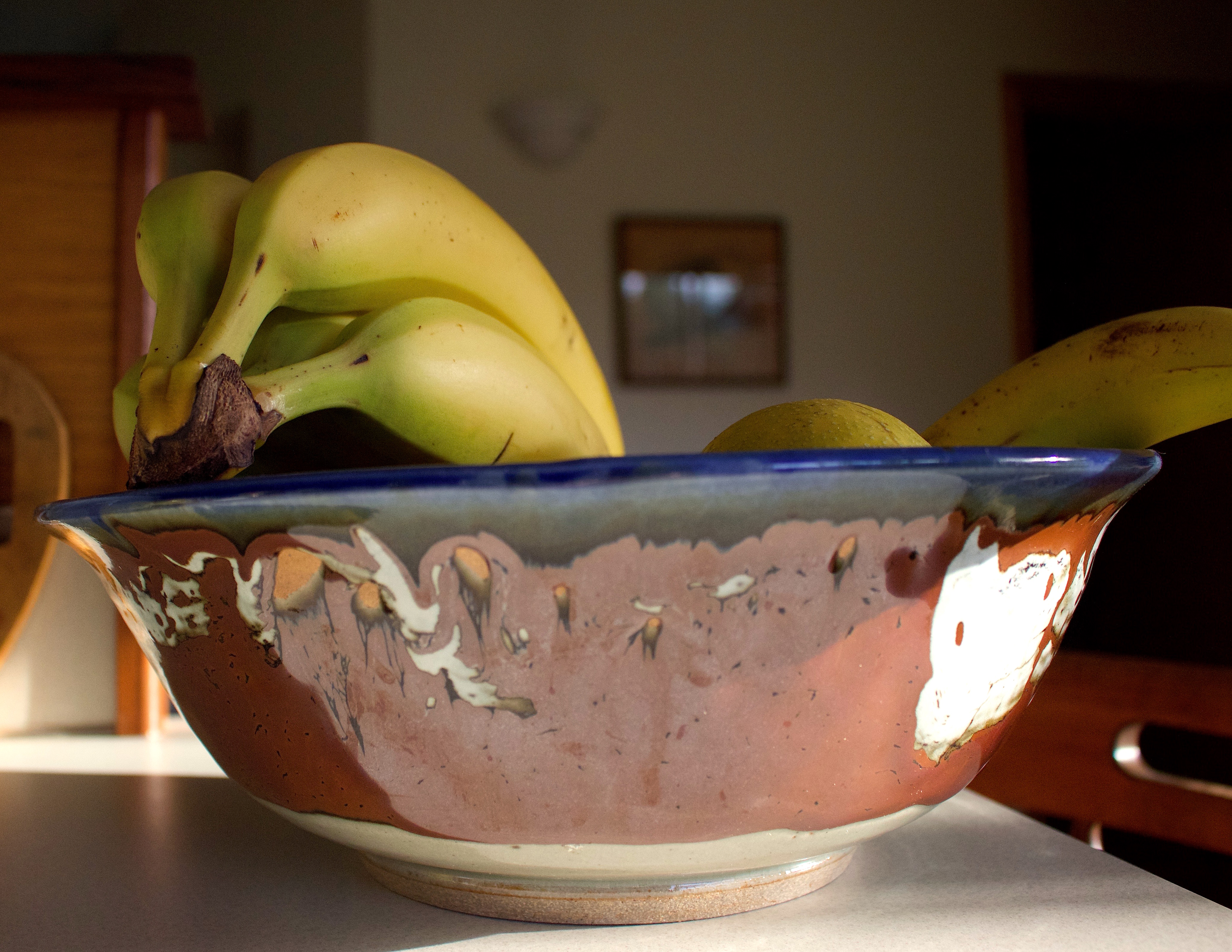
mashikopottery

Yet you, LORD, are our Father. We are the clay, you are the potter; we are all the work of your hand.
Isaiah 64:8

So I went down to the potter’s house, and I saw him working at the wheel.But the pot he was shaping from the clay was marred in his hands; so the potter formed it into another pot, shaping it as seemed best to him.
Jeremiah 18:3-4

The best pottery is never perfect, becoming an original handmade and unique piece, infused with the potter’s eye and energy, the pressure of fingers and palm, a design coming from the heart of the potter.

I had the joy this morning of virtually revisiting a special place in Japan that is a potter’s paradise, Mashiko village, thanks to a website by artist and art teacher Bette Vander Haak. The Vander Haaks took us there in 2012, and I was too overwhelmed by…

View original post 106 more words

“How are you doing?”

This week is National Suicide Prevention Week. I am resharing this post particularly for those who have suffered the loss of someone to suicide. It seemed to strike a chord when I originally posted it. My hope is that it is a comfort for someone out there.

Sr. Dorcee, beloved's avatarWitnesses to Hope

Yesterday was the sixth anniversary of my brother Tim’s death.  He would have been 60 this year.  As many of you know, he took his own life and the impact on all of us who loved him was devastating.  What I want to share here is a set of e-mails between me and my spiritual director from three years ago at this time of year.  Fr. Dan, remembering that Tim’s anniversary was coming up, had sent me a short e-mail, simply asking “How are you doing?”  My response is very frank.  I share this with you for a few reasons.

One: it means so much for people to remember, to remember anniversaries.  Every year since she found out, a friend always shows up on my brother’s anniversary with a plant.  I, of course, do not expect her to do that every year for the rest of my life, but she…

View original post 1,025 more words

To Notice Each Thing

Noticing each other’s beautiful face . . .

barnstormingblog's avatarBarnstorming

photo by Joel DeWaarda Mt. Baker photo by Joel DeWaard

hiveaugust2

IMG_7983

The Old Testament book of Micah answers the question of why we are here with another:
“What doth the Lord require of thee but to do justly,
and to love mercy,
and to walk humbly with thy God?”
We are here to abet creation and to witness it,
to notice each thing so each thing gets noticed.
Together we notice not only each mountain shadow
and each stone on the beach
but we notice each other’s beautiful face
and complex nature
so that creation need not play to an empty house.
~Annie Dillard from Life Magazine’s “The Meaning of Life”

I started out a noticer,
at seven tracing ant trails from their hills
branching out to various trees,
watching nests bloom with birds,
sitting as still as the lizard sunning himself on a rock.

Then something called adulthood happened,
and responsibilities and worries…

View original post 41 more words

How to be equipped for life?

From the wise Ann Voskamp:

You aren’t equipped for life until you realize you aren’t equipped for life.  You aren’t equipped for life until you’re in need of grace.

In the moment of realizing your limitations, your shortcomings, your inescapable sins, all that you aren’t–in that moment of surrendered lack, you’re given the gift you’d receive no other way: the gracious hand of an unlimited God.  Repentance, turning around, is the only way to be ushered into grace. . . .

‘We all want progress,’ writes C.S. Lewis.  But ‘if you ar eon the wrong road, progress means doing an about-turn and walking back to the right road; and in that case, the man who turns back soonest is the most progressive.’

She who turns back soonest is the most progressive.  She who repents most makes the most progress–you always go farther when traveling light.  She who repents of seemingly little sins knows that all sins are great–and knows a greater God.  Repentance is as much air to a Christ-follower as faith.

Life Goes On

Bill Sweeney's avatarUnshakable Hope

“Life Goes On”

Whether we’re going through the worst of times or the best of times, history and our own experiences show us that life does go on. This is true, but I don’t recommend saying “life goeson” to someone who is grieving the loss of a loved one.

“There is an appointed time for everything.
And there is a time for every event under heaven —
A time to give birth and a time to die…
A time to weep and a time to laugh;
A time to mourn and a time to dance.” (Ecclesiastes 3:1-4)

I thought about the above passage last week when our daughter gave birth to a beautiful seven pound girl on Wednesday, then a close friend died of cancer on Friday – “A time to give birth and a time to die.”

Those who are grieving and those who are rejoicing have this…

View original post 549 more words

The blessing of a wounded heart

This is a re-post from five years ago.  I was thinking about it this morning and thought I would share it with you again.  Christ had a wounded Heart also.

I did a series of posts on Fr. Iain Matthew’s writing back in July.  I have been re-reading him again.  He’s one of the people I go back to regularly–especially if I’m experiencing some kind of pain.  Because pain is precisely where, Fr. Iain says, Christ is waiting to meet us.  “The place of poverty within us is the threshold where Christ stands.”  He advises us strongly not to avoid our woundedness.  Each wound in our lives is the place where Christ wants to meet us.  The best thing to do is to make that place of pain a place of prayer,

the place within us where not everything is all right, where the wound that is in you aches. John [of the Cross] says: go there.  Go to that place of need, because that is a threshold at which Christ stands; our need is an evidence of God.

It is natural to flee from the place where that hunger throbs. Still, John encourages us to go there. It is what beckons the divine. It is the threshold at which Christ stands. We hunger for him because he has touched us; we want him because he wants us. The wound is the print of the pledge upon us, the pledge of the Spirit who holds us from the abyss. John comments on his poem: we “have our feeling of longing, the sense of God’s absence” precisely there, “within our heart, where we have the pledge.”

And so, we simply stand before God in our pain, with our pain, making our need a prayer.  God loves to hear and answer the cry of the poor. And remember: Christ had a wounded Heart also.

Seeing ourselves as God sees us

” . . . we are used to seeing ourselves as the world sees us–broken, struggling, failing, and frustrated.  But when God looks at you, an eternal and boundless love wells up inside him and he sees past every doubt, every fear, everything you think is shameful or broken about you.  When God looks at you, he sees something more beautiful, remarkable, and amazing than you could ever even wrap your head around.  In the words of St. John Paul the Great, ‘We are not the sum of our weaknesses and failures; we are the sum of the Father’s love for us and our real capacity to become the image of his Son’ (Pope John Paul II, 2002).”

(Gregory K. Popcak, Broken Gods)