The reason for this blog

Thank you, Pope Francis, for underscoring my hopes for this blog:

945189_257088437762844_1925826626_nPope Francis on Saturday met with the participants of the 26th Plenary Assembly of the Pontifical Council for the Laity, meeting under the theme “Proclaiming Christ in the digital age.”

Pope Francis said the rise and development of the internet raises the question of the relationship between faith and culture.

Looking back to the first centuries of Christianity, the Pope pointed out Christians encountered the “extraordinary legacy” of Greek culture.

“Faced with philosophies of great profundity and educational methods of great value – although steeped in pagan elements, the Fathers did not shut them out, nor on the other hand, did they compromise with ideas contrary to the Faith,” Pope Francis said. “Instead, they learned to recognize and assimilate these higher concepts and transform them in the light of God’s Word, actually implementing what Saint Paul asks: Test all things and hold fast to that which is good.”

He said this also applies to the internet.

“You must test everything, knowing that you will surely find counterfeits, illusions and dangerous traps to avoid,” Pope Francis said. “But, guided by the Holy Spirit, we will discover valuable opportunities to lead people to the luminous face of the Lord. Among the possibilities offered by digital communication, the most important is the proclamation of the Gospel.”

He said it is not enough to acquire technological skills, however important. He said the internet must be used to meet “often hurting or lost” real people and offer them “real reasons for hope.”

“The announcement [of the Gospel] requires authentic human relationships and leads along the path to a personal encounter with the Lord,” he said.

“Therefore, the internet is not enough; technology is not enough,” Pope Francis continued. “This, however, does not mean that the Church’s presence online is useless; on the contrary, it is essential to be present, always in an evangelical way, in what, for many, especially young people, has become a sort of living environment; to awaken the irrepressible questions of the heart about the meaning of existence; and to show the way that leads to Him who is the answer, the Divine Mercy made flesh, the Lord Jesus.”

Our Tired Earthliness

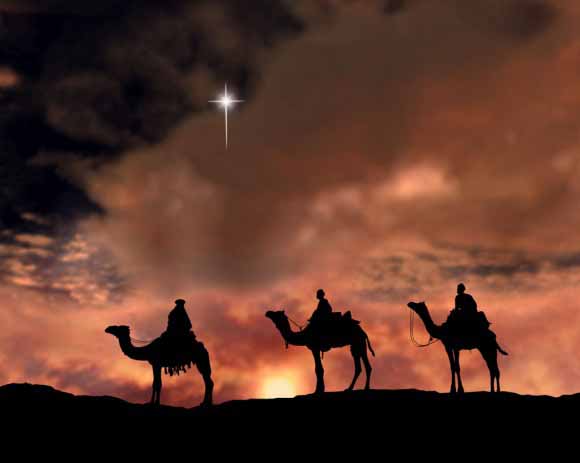
A blessed Epiphany!

barnstormingblog's avatarBarnstorming

starofbethlehem2

Immortal brilliance of presage
In any dark day’s iron age
May come to lift the hair and bless
Even our tired earthliness,

And sundown bring an age of gold,
Forged in faerie, far and old,
An elsewhere, and an elfin light,
And kings rise eastward in the night.
~Robert Fitzgerald “For Epiphany”

1002556_581472858054_326807933_n

The night sky was still dim and pale. 
There, peeping among the cloud wrack above a dark tor high up in the mountains,
Sam saw a white star twinkle for a while. 
The beauty of it smote his heart,
as he looked up out of the forsaken land, and hope returned to him. 
For like a shaft, clear and cold,
the thought pierced him that in the end
the Shadow was only a small and passing thing:
there was light and high beauty for ever beyond its reach.
~J.R.R. Tolikien, The Return of the King

The star represented a hope
too long…

View original post 48 more words

No longer alone

“How is it possible to believe that God, who is considered by religions to be infinite and all-powerful, can make Himself so small?”

“The Greek Fathers called it syncatabasis, divine condescension, that is: God coming down to be with us.  It is one of God’s mysteries.  Back in 2000, in Bethlehem, John Paul II said God became a child who was entirely dependent on the care of a father and mother.  This is why Christmas gives us so much joy.  We don’t feel alone anymore; God has come down to be with us.”  (Pope Francis)

Advent Prayer

Sr. Dorcee, beloved's avatarWitnesses to Hope

Advent Prayer

Like foolish folk of old I would not be,
Who had no room that night for Him and thee.
See, Mother Mary, here within my heart
I’ve made a little shrine for Him apart;
Swept it of sin, and cleansed it with all care;
Warmed it with love and scented it with prayer.
So, Mother, when the Christmas anthems start,
Please let me hold your baby–in my heart.

Sr. Maryanna, O.P.

Robert, Cyril. Mary Immaculate: God’s Mother and Mine. New York: Marist Press, 1946.

View original post

True courage

I just finished reading a beautiful book on prayer, Hidden Mountain, Secret Garden, by Dr. Anthony Lilles.  I liked his take on the difference between bravery and courage:

True humility attracts God.  Humility regulates how we esteem ourselves.  The word humility itself derives from the Latin humus which means rich fertile soil.  This suggests the great primordial truth of our origins.

Man was fashioned from the dust of the earth, and at the end of his days, he returns to it.  God breathed his life into mud and made it capable of doing something divine.  Life is a very fragile gift lavished upon us when we have done nothing to deserve it.  We have only a very brief time to make of it something beautiful for God.  God is attracted to souls that ground their lives in this truth.  Such humility permits Him to accomplish great things.

A particular kind of courage needs to go with such humility: the courage to accept ourselves, including our weaknesses.  Romano Guardini distinguishes this sort of courage from bravery.  Bravery confronts things that threaten us from without.  Courage, from this perspective, helps us confront what is within us.  This is not the same as excusing our own sinfulness.  It is a matter of humbly accepting the truth about ourselves, courageously acknowledging we need God’s help.

(Anthony Lilles, Hidden Mountain, Secret Garden)

Advent anxiety?

Are you dealing with Advent anxiety?  Fr. John Bartunek over at Roman Catholic Spiritual Direction has some very helpful and practical things to say.  Here’s a snippet.  If you want to read the whole article, go here.

There is a beautiful, true story about one woman who re-discovered this active Christian spirit not during the four weeks of Advent, but two days after Christmas. The heroine of our story lived decades ago in the Midwest. She was the owner of a news-stand and novelty shop in small town. One year, shortly before Christmas, she fell sick and spent the whole holiday confined to bed. She felt rather gloomy and even somewhat bitter about missing Midnight Mass and the other Christmas celebrations. But when she re-opened her store two days after Christmas she had an idea: “Why not make today my lost Christmas?” She carried out her plan by putting the spirit of Christmas into the whole day. She smiled more frequently and more warmly than usual. She tried to be extra accommodating and friendly with her clients. She even gave spontaneous discounts to customers who were low on cash. After closing the store for the day, she took some small presents to several home-bound neighbors. And she also visited some poor families to give candy to the children. By the time she came home, she was so full of joy and the spirit of Christmas that she had never felt happier in her life. She decided from then on to keep the spirit of Christmas as long as she possibly could.