Back in January I started a series on “the difficult love”: loving those whom we find difficult to love. The ultimate test, of course, is loving our enemies . . . which Christ has indeed commanded us to do. I have been reading the life of Richard Wurmbrand, a Jewish Christian pastor who was imprisoned and tortured in Romania during the Communist regime there. His wife’s entire family, who were Jewish, had been killed. Years later, in God’s providence, the man responsible for the killing of Sabina’s family, friend of their landlord, ended up staying in the same apartment building where they were living. When Richard discovered this fact, he spent the entire night in prayer and fasting to prepare himself for meeting him. He made no mention of any of this to Sabina. Richard sought him out with the intention of bringing him to Christ. The man resisted, becoming very angry. The landlord had to forestall a potentially ugly scene. As the conversation progressed and moved in other directions, Richard discovered that the man had a love for Ukrainian songs. Richard, who knew those songs and could play them on the piano, thought, “The fish has entered my net!” He invited him back to his apartment and played some of the songs for him–softly, because his wife was asleep in the next room. He couldn’t help thinking of the power of David’s harp playing over Saul’s troubled spirit. Richard then said to him–Borila was his name–“I have something very important to say to you.” He proceeded to tell him his wife’s story. I’ll let him tell the rest:
He jumped up, his eyes blazing, looking as if he were about to strangle me.
I help up my hand and said, “Now–let’s try an experiment. I shall wake my wife and tell her who you are, and what you have done. i can tell you what will happen. My wife will not speak one word of reproach! She’ll embrace you as if you were her brother. She’ll bring you supper, the best things she has in the house.
“Now, if Sabina, who is a sinner like us all, can forgive and love like this, imagine how Jesus, who is perfect Love, can forgive and love you! Only turn to Him–and everything you have done will be forgiven!”
Borila was not heartless: within, he was consumed by guilt and misery at what he had done, and he had shaken his brutal talk at us as a crab shakes its claws. One tap at his weak spot and his defenses crumbled. The music had already moved his heart, and now came–instead of the attack he expected–words of forgiveness. His reaction was amazing. He jumped up and tore at his collar with both hands, so that his shirt was rent apart. “Oh God, what shall I do, what shall I do?” he cried. He put his head in his hands and sobbed noisily as he rocked himself back and forth. “I’m a murderer, I’m soaked in blood, what shall I do?” Tears ran down his cheeks.
I cried, “In the name of the Lord Jesus Christ, I command the devil of hatred to go out of your soul!”
Borila fell on his knees trembling, and we began to pray aloud. He knew no prayers; he simply asked again and again for forgiveness and said that he hoped and knew it would be granted. We were on our knees together for some time; then we stood up and embraced each other, and I said: “I promised to make an experiment. I shall keep my word.”
I went into the other room and found my wife still sleeping calmly. She was very weak and exhausted at that time. I woke her gently and said, “There is a man here whom you must meet. We believe he has murdered your family, but he has repented, and now he is our brother.”
She came out in her dressing gown and put out her arms to embrace him: then both began to weep and to kiss each other again and again. I have never seen bride and bridegroom kiss with such love and purity as this murderer and the survivor among his victims. Then, as I foretold, Sabina went to the kitchen to bring him food.
. . .
Borila’s happiness was very moving. He stayed with us that night, and when he awoke the next day, he said, “It’s been a long time since I slept like that.” (In God’s Underground, pp. 224-225)
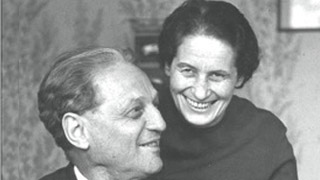
 Witnesses to Hope