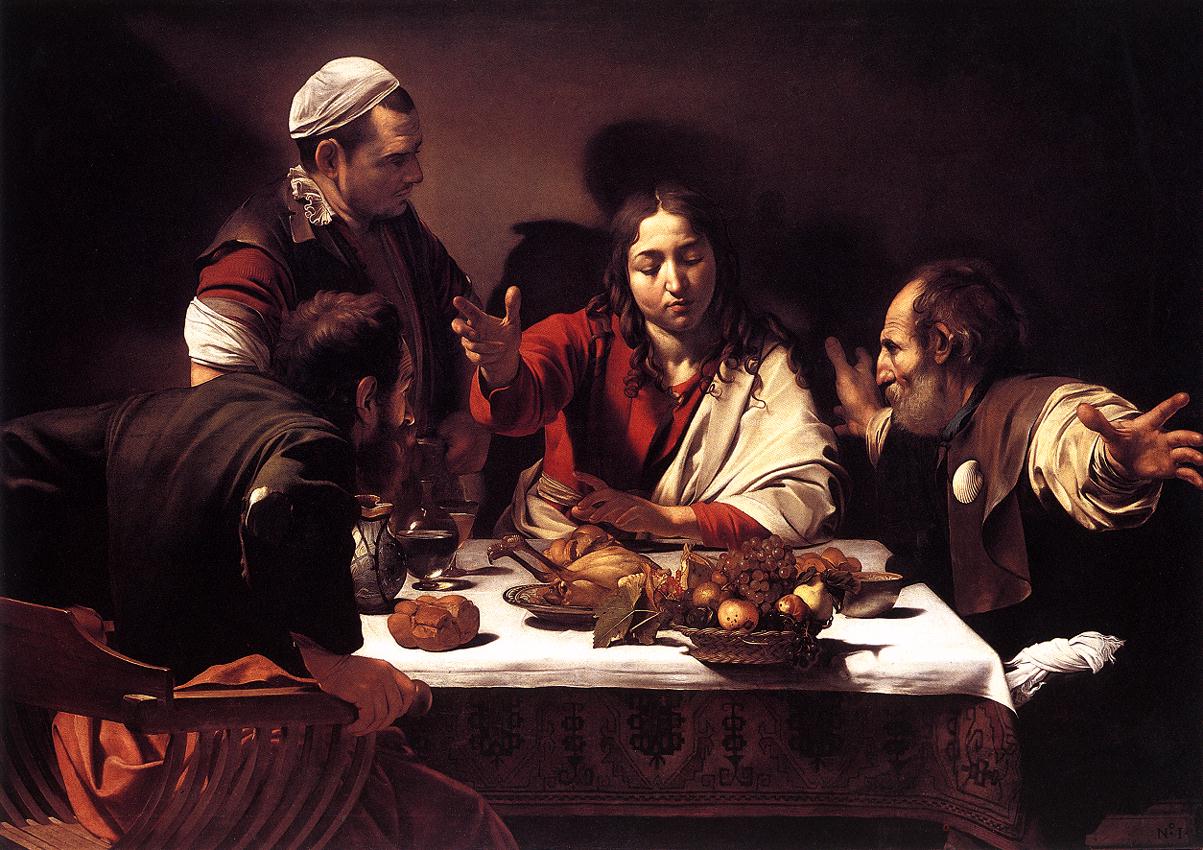
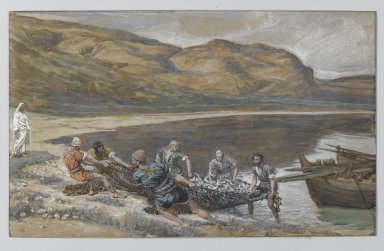
“He stood as a common person . . . “

For those who may be mourning a loss:

“He did at first conceal himself from her.  He stood as a common person, and she looked upon him accordingly.  She turned herself back from talking with angels and sees Jesus himself standing, and yet she knew not that it was Jesus. ‘The Lord is nigh unto them that are of a broken heart’ (Ps 34.18), nearer than they are aware.  Those that seek Christ, though they do not see Him, may yet be sure that he is not far from them.”  (Matthew Henry)

This is the day

One of the things I love about the week after Easter is that the Church relates to each day of the octave as though it is Easter Day.  In the Preface of Easter I, the priest is directed to pray during the octave: “We praise you with greater joy than ever on this Easter day when Christ became our paschal sacrifice.”  (Unfortunately most of the priests where I attend daily Mass pray “in this Easter season.”)  In the Liturgy of the Hours, we pray Morning, Evening, and Night Prayer of Easter Day all week.  To me this is a foretaste of heaven when each day will be as the first.  “This is the day the Lord has made.  Let us be glad and rejoice in it!”

“How an old man got new eyes”

An Easter story for young and for old from Madonna House:

How an Old Man Got New Eyes: An Easter Story

by Jude Fischer.

Once there was an old man. He was very unhappy and didn’t enjoy life very much. As things were never right, he grumbled and complained.

He grumbled that he had to get up in the morning. Then when nightfall came, it came too soon. He complained when he had to work, and found it boring when he didn’t.

He murmured that people didn’t pay enough attention to him, and when they did, it irritated him. He hated it when it rained, and then, when the sun came out, he found it too hot. In winter he longed for summer and in summer for fall. All in all, life was rather miserable.

One day he stopped at a fruit stand. He found some of the fruit was too ripe, and the rest not ripe enough. And so he decided to leave.

As he was leaving, the fruit seller said to him, “I wish you new eyes, sir, child eyes.”

“New eyes,” thought the old man as he walked away. “Why, my eyesight is perfect. My vision is sharper than that of many folks half my age. I see things every bit as clearly as I did when I was a child.”

A week or so later he stopped at the fruit stand again. The fruit seller had the fruit he didn’t want, and the fruit he wanted wasn’t there. As he was leaving the fruit seller said, “I wish you kingdom eyes, sir.”

“Kingdom eyes?” This puzzled the old man a bit. But no matter. He was a busy man, lots of things to do, and so he let it pass.

Some time later the old man stopped at the fruit stand again. It was the same old story. Everything he didn’t want, nothing he did want, everything too ripe or not ripe enough.

As he left, the fruit seller said, “I wish you treasure-hunting eyes, sir.”

“Treasure-hunting eyes?” Why he had been on a treasure hunt once. And of all in the group, it had been he who had finally spotted the treasure. Why, if anyone had treasure-hunting eyes, he had.

But where had it gotten him? There had been endless squabbling over the treasure, and in the end he had never received his share. Treasure-hunting eyes indeed!

But in spite of himself the old man began to wonder about what the fruit seller had said to him. What did he mean, new eyes, child eyes, kingdom eyes, treasure hunting eyes? The next time he stopped at the stand, he asked the fruit seller to explain.

“Well, you see,” the fruit seller began, “one day there was a stranger in town. Quite a crowd gathered to hear him speak. I joined them. He spoke of many things, but a few things he said really stuck in my mind.

“He said the kingdom of heaven is within you. He said it is like a treasure hidden in a field. And he said that unless you become like a little child you cannot enter it.

“I didn’t understand what he meant, but I wondered on it, and carried his words in my heart.

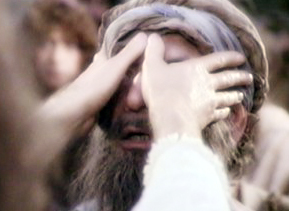
“The next day the stranger was there again. And there was a blind man, a man blind from birth, I believe. He went up to the stranger and said to him, ‘Sir, if you want to, you can make me see.’ And the stranger answered, ‘Of course I want to,’ and would you believe it, the blind man’s eyes were opened and he could see. He really could.

“How he delighted in all he saw. And it seemed to me then that I did not see rightly. For though I saw, I was not happy with what I saw the way this blind man was.

“And so, without hardly thinking about it, I blurted out to the stranger, ‘Please sir, give me new eyes.’ ‘I will,’ he answered, ‘I give you child eyes, kingdom eyes, treasure-hunting eyes.’ I thanked him and left.

“That was the last time I ever saw the stranger. But from that time on I saw things differently. Where before I saw only darkness, now I saw stars and fireflies. Where before I found only pain, now I discovered a door to joy.

“Where before I had seen nothing worthwhile, now I found much to marvel at. Where before I lived in a desert of doubt and despair, now a fountain of faith and hope sprang up. And where before people annoyed or irritated or bored me, now I saw something in them that reminded me of the stranger. And I rejoiced.”

The old man went away wondering at what the fruit seller had told him. He shrugged it off at first, but no matter how he tried to ignore it, the story kept coming back to mind.

And the more he thought about it, the more he began to long for new eyes for himself. He began to think about the stranger and to hope he would return. And when he did, he would ask for new eyes, too.

The thought excited him. But he began to worry that when he saw the stranger he would be too nervous to ask for anything. So he decided he would practice what to say: “Give me new eyes, sir, child eyes, kingdom eyes, treasure-hunting eyes.”

Yes, that is what he would say. Day and night he practiced this, to be sure he’d never forget, no matter how shaky he was when he saw the stranger.

After a while he put it to music, made it into a little song. Yes, that was the refrain he sang many times a day, day after day, month after month.

He kept alert for news of the stranger, but none came. Over a year went by. But the old man kept hoping and singing his song.

Then one day when he stopped at the fruit stand, he found the fruit seller very sad indeed. “What’s the matter?” he asked.

“I’ve just received news,” said the fruit seller, “that the stranger who gave me new eyes has been arrested and is being put to death this very day.”

The old man went home and cried and cried. His chance was gone. Now he would never meet the stranger. Now he would never have new eyes.

Yet the song had become so much a part of him that he continued to sing it. And as he was singing the song on the third day after hearing the tragic news of the stranger, he suddenly felt something like scales fall from his eyes. And he began to see things differently.

Where before he saw only darkness, he saw stars and fireflies. Where before he saw only the injuries done him and resented them, he saw how much he was loved, and he found a forgiveness that healed his wounds. Where before he had seen nothing of value, he found many hidden treasures.

Where before he had passed his days in boredom and suspicion, he now lived in wonderment and trust. And whereas before people had irritated him, he saw something in them that made him think of the stranger.

And so he knew that the stranger lived.

After shadow and darkness, the eyes of the blind will see (Isaiah 29:18).

While it is still dark

Some of us can wake up on Easter morning or Easter Monday or any other morning, for that matter, and wonder where the risen Christ is.  For one reason or another, we may feel like Mary Magdalene weeping outside the tomb wondering where they have taken Him.  I wrote this a few years back on Easter morning and thought I might share it with you:

“Now on the first day of the week Mary Magdalene came to the tomb early, while it was still dark . . . “ (Jn 20:1)

While it was still dark she came. She did not wait at home. She did not wait for Him or for others to come to her. And she expected to find what? Surely the stone still blocking her from Him. And yet she came. In the darkness. In her grief. She sought Him out even if only to lean her head and heart upon that stone that separated Him from her. In the darkness, in her grief she came.

And what did she find? The stone rolled away—but He was not there. He was not there. “I sought him, but found him not. I called him, but he gave no answer” (Song of Songs 5:6b). “Where have they laid him? They have taken away my Lord, and I do not know where they have laid him” (Jn 20:13b).

Her sorrow is now greater, yet she does not return home. She stands there weeping. And seeking. While it was still dark.

And no one else can solace her. Not angels. Not gardeners . . . She still seeks Him. While it is still dark. And that seeking, that longing of her soul, that anguish at His absence is the latch Christ uses to open her heart when He says her name: “Mary.” While it was still dark.

So go to Him. While it is still dark. While you are still weeping. Even when you cannot find Him. Stand there weeping and seeking Him. And listen for your name. Even now He is saying it.

While it is still dark.

“Blessed are those who have not seen and yet believe.”

Where is Christ today?

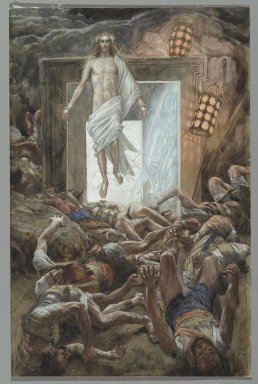
This is the day when everything is silent.  We can go about the day not giving much of a thought to it–just seeing it as the day between Good Friday and Easter Sunday. Yet monumental things were happening in the spiritual realm.  Christ descended to hell to set captives free.

This still has meaning for us.  So often we think nothing is happening in our own spiritual lives, yet God is about monumental things.  Have hope in the Unseen.

Christ descended into “Hell” and is therefore close to those cast into it, transforming their darkness into light.  Suffering and torment is still terrible and well-nigh unbearable.  Yet the star of hope has risen–the anchor of the heart reaches the very throne of God.  Instead of evil becoming unleashed within man, the light shines victorious: suffering–without ceasing to be suffering–becomes, despite everything, a hymn of praise. (Pope Benedict XVI, Spe Salvi)

And for those of you who feel that you are living “in darkness and in the shadow of death”, take heart, for you are exactly who he desires to visit.  From an ancient homily on Holy Saturday:

Greatly desiring to visit those who live in darkness and in the shadow of death, he has gone to free from sorrow the captives . . .

“Perhaps his sorrow is splendor”

From a profound book, Lament for a Son, written by Nicholas Wolterstorff on the death of his 25-year-old son from a mountaineering accident:

It is said of God that no one can behold his face and live.  I always thought this meant that no one could see his splendor and live.  A friend said perhaps it meant that no one could see his sorrow and live.  or perhaps his sorrow is splendor.

And great mystery: to redeem our brokenness and lovelessness the God who suffers with us did not strike some mighty blow of power but sent his beloved son to suffer like us, through his suffering to redeem us from suffering and evil.

Instead of explaining our suffering, God shares it.

Hidden love

Remembering and thanking God this day for all the priests we know and love.  May the Cure d’Ars bestow his blessing on them all today, and may Christ draw them ever deeper into His pierced Heart.

It is easy for any child to pick out the faults in the sermon on his way home from Church every Sunday.  It is impossible for him to find out the hidden love that makes a man, in spite of his intellectual limitations, his neuroticism, his own lack of strength, give up his life to the service of God’s people, however bumblingly he may go about it . . .  (Flannery O’Connor, Spiritual Writings)

May God forgive us for all the times we do not see with His own eyes, and may we continually pray for our priests.

One missed kiss

Not only would there be one less kiss (see yesterday’s post), but it would be missed as well.  The Lord of Love needs your love.  He said to Simon the Pharisee, “You gave me no kiss . . . ” (Lk 7.45).  Amy Carmichael writes: “To love that could miss so small a sign of love as water, and a kiss, is not love the dearest offering?”  The Bridegroom says in the Song of Songs: “Let me see your face.  Let me hear your voice.”    I don’t remember where I read the following:

. . . on Good Friday she [Sr. Maria Pierina at the age of 12] heard a voice saying quite distinctly: “Nobody gives me a kiss of love in My Face to make amends for the kiss of Judas.” In her childlike simplicity, she believed that the voice was heard by all and was pained to see that only the wounds were kissed but not the face.  In her heart exclaiming, “Have patience, dear Jesus, I will give you a kiss oflove,” she imprinted a kiss on the Face with full ardour.

During these high holy days, don’t miss those small chances to offer Him a kiss.  It takes just the simplest lifting of your heart and face to His.

One less kiss

You did not give me a kiss

Following up on yesterday’s gospel which is one of my very favorite readings:  I did a study once on all the New Testament scriptures that talk about women at the feet of Jesus.  I usually meditate on various of them this time of year because most of them occurred near and at the time of the Lord’s Passion (like yesterday’s reading).  Luke 7 recounts a story similar to yesterday’s Gospel, but in a different context, and in it, it is said that the woman “covered his feet with kisses” (Lk 7:38).  Jesus himself remarks on this to Simon (at whose house he was) and actually upbraids him for not welcoming Him in the same fashion. “You did not give me a kiss . . . ”  Let not the same be said of us.  Let us then not hold back our kisses for His sacred feet.  Mother Teresa once said something to the effect that if we don’t put our drop in the ocean, the ocean is one drop less.  The same can be said for kissing the feet of Jesus: if we don’t give Him our kiss, He has received one less kiss . . . and it will be missed by Him.  And note . . . for those of you who hold back because of your faults and failings . . . it was the kiss of a sinful woman that He valued.

One’s little pot of oinment

Today’s Gospel as we begin Holy Week is the story of Mary of Bethany anointing Jesus’ feet.  A meditation from Amy Carmichael to ponder when we think we have broken our “little pot of ointment” in vain.

Things to remember quietly when one’s little pot of ointment seems to have been broken in vain.  Of Thine own have we given Thee, for love is of God.  The love, then, was His, and to Him first of all it was offered–to the human dear one not first but second.  No pot of ointment was ever broken at His feet wihtout given Him some little quick sense of pleasure. So it was not all in vain.  Then if it seemed to miss what we meant it to do for the one we love down here, it may be only for the moment.  The remembrance may return and be very sweet, like a fragrance.

The more loving the heart is, the more it looks forward to giving a pleasure to the one it loves, the keener therefore the pang of disappointment when it fails, and the fiercer the inrush of depression.  The heart is grieved and cannot rise to be glad.  At such times it does help to know that love cannot be as water spilt on the ground.  For it is of God.  The fragrance of the ointment will yet fill the house.  The one to whom we wanted to bring comfort will in the end find that which we brought.  But the sweet and immediate comfort is-–‘Of Thine own have we given Thee.’  Dear Lord, did it comfort Thee?