A bit of hope for these days.
Category: hope
Josef Pieper on why our incompleteness means hope
A great read.

Marco Ritzki | Shutterstock
Fr. Michael Rennier – published on 02/16/25
Acknowledging that we haven’t yet reached our destination can be frustrating but should also be a source of hope in our lives.
Back in the halcyon days of my childhood, each summer our family would pile into our baby-blue minivan and drive to Florida. During the entirety of the 12-hour drive, my brothers and I would go wild, arguing over who got to sit in which seat, quibbling over who was invading the sovereign territorial space already claimed by a brother, and begging our parents for gas station snacks.
This was in the days before laptops and DVD players, so our only entertainment was the books we brought, travel versions of board games, and whatever music we could listen to before the batteries in the Walkman died. The trip felt like an eternity.
I’m sure my parents felt the dilation of time into infinity at least as acutely as we did. One year, my dad got so desperate that he picked us up out of our beds and piled us into the car at 3 a.m. so we would sleep through the first half of the drive and leave him alone. He may have been starting his vacation sleep deprived but at least we weren’t driving him crazy.
“Are we there yet?”
You can read the rest here.
Facing hopelessness
“Hope and hopelessness are themes that Tolkien returns to again and again throughout The Lord of the Rings.”
All is Well
Beautiful rendering. Nothing like the voices of children.
Thanks to Emily Gibson for introducing me to this song.
Even now
I posted this 13 years ago. After reading this meditation the first time, I hung a star in my room as a reminder. It has moved with me over the years and still hangs in my room.
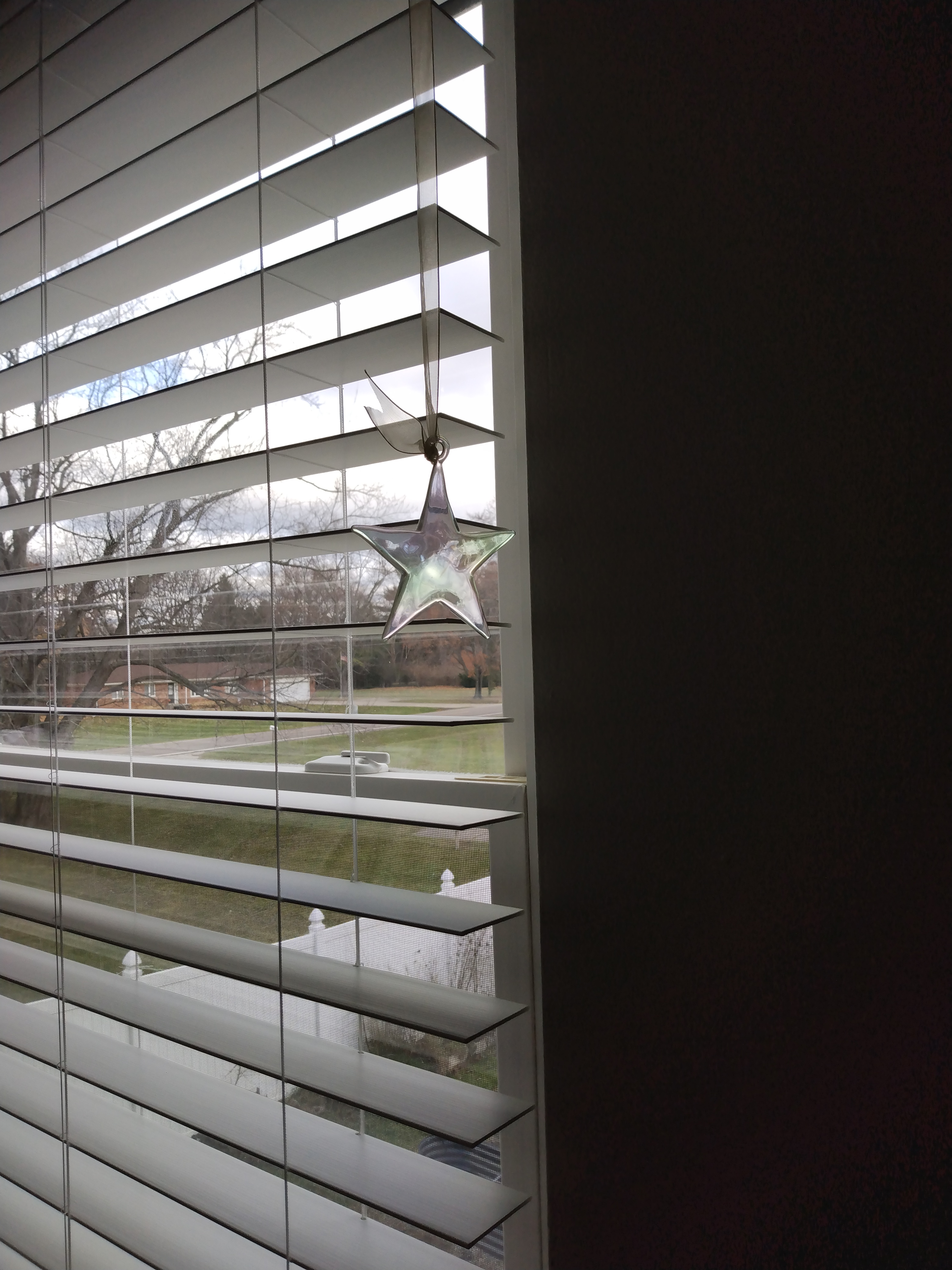
Take a moment–perhaps with a cup of tea and a lit candle–to sit quietly and read this editorial from this month’s Magnificat [December 2011] by Fr. Peter John Cameron. If you don’t have time at the moment, print it out or bookmark it to read at a time when you have the space and quiet to read it slowly. Don’t scan this quickly; it deserves the right pace to speak to your soul. And may it speak deeply to your soul . . .
The Catechism of the Catholic Church teaches that Jesus knew and loved us each and all during his life, and gave himself up for each one of us (see 478). Which means that from the moment Christ is conceived in the womb of the Blessed Virgin Mary, Jesus is loving us and giving himself to us personally. He is calling to our hearts, wooing us with all his tenderness.At this very moment, the aged Simeon stands at his post in the temple… vigilant… filled with expectation… looking for Mary’s baby. Once the infant Jesus appears, no one will need to tell Simeon that this is the One he has been waiting for all his life.
For five years already a lame man has been lying by the sheep pool in Bethesda, too weak to hoist himself into the stirred up waters. Even now, Jesus begins his approach to him. It will be thirty-three years more before Christ stands beside the man, but even now he asks him the question we are all aching to hear: “Do you want to be healed?”
Any day now a mother and a father will give birth to a little girl who will grow up to acquire a bleeding disease that will baffle all doctors and afflict her for twelve years. Even now, Jesus is pitying her, healing her, and calling her “daughter.”
Who can say how long the leper has lived alone, lurking in the shadows? Yet even now something has happened that will not allow his tortured heart to give way to despair. So even now, from a distance, he starts searching the faces in every crowd, certain that some day Someone will appear to whom he will beg, “Sir, if you will to do so, you can cure me!”
At the moment, the woman destined to be the Gospel’s famous widow is a beautiful young maiden newly betrothed. She spends all her passion in preparing for her wedding – for the day she will be a bride. Yet the days of her marriage will not last long. And with the death of her husband, she will spend her life loving others with a total gift of self. Even now Jesus the Bridegroom is watching, commending her for giving all she has to live on.
Even now Bartimaeus in the abyss of his blindness is crying from his misery, “Son of David! Have pity on me!” The child born in the city of David is readying even now to restore his sight.
Even now Jesus is settling on the tree up which Zacchaeus will scurry. Even now Jesus plans to stop, and look up, and call Zacchaeus from his limb. Even now Jesus is promising him, “I mean to stay with you today.”
At this point in time, the Samaritan woman at the well has not yet married Husband Number One. Little does she know that she will have five husbands and another man besides. But even now Jesus is appealing to the thirst that is her life and promising to slake it with the gift of his very self.
Even now the mere lad Matthew hasn’t any idea about what he will be when he grows up. What leads him one ill-fated day to betray his religion, his nation, and himself in becoming a tax collector we will never know. But even now Jesus is making his way to Matthew’s tax collecting post and summoning him from his heart with the words, “Follow me.”
Even now something makes the centurion restless, uneasy. He cannot truly be himself until he professes, “This man was the Son of God!”
Just about now the little boy Peter is beginning to learn how to fish from his father. But even now Jesus sees him on the seashore and summons him to be a fisher of men. Even now Jesus is forgiving his sins and calling Peter “Rock.”
Even now Jesus is silently beckoning us all: Come to me, you who are weary and find life burdensome, and I will refresh you. Your souls will find rest in me. I am gentle and humble of heart. Do not live in fear. I have come that you might have life and have it to the full. If anyone thirsts, let him come to me. I am the way, and the truth, and the life. I am the Bread of Life. I call you friends. I am with you always.

Even now a wondrous star has arisen in the heavens of the far-off East. Even now Magi have left all else behind, and have begun to make their way to a manger, following a path laid out by the shining star’s luster. Let us go with them.
Rev. Peter John Cameron, O.P.
Copyright Magnificat
Small places of light and blackberries
Instead of a Sunday poem, I offer you this piece of writing by Sarah Clarkson whose prose reads like poetry.
Vicarage Notes: Chiaroscuro Music, Blackberries, and Holding Fast
What are the ways of light and how may we chase them?
“My Mind, My Enemy”
This is such an incredibly beautiful piece by Sarah Clarkson, one of my favorite writers. Beautifully written with a piece of wisdom we all need to hear.
My Mind, My Enemy
When mental illness struck, my mind became my enemy. Would I battle it, or learn to love it?
When I was a child my mind was a gift.
Not the practical sort you’re supposed to use diligently but the magical kind, the sort of gift you’d find in the hands of your fairy godmother. My imagination was my secret companion. She was mighty and she was wild, and my first memories shimmer and burn with the beauty she revealed. The ordinary scenes of my outdoorsy, bookish childhood became the stuff of high fantasy. She made dryads of my backyard trees, filled the sky with talking stars, and made a heroine of sunburned little me on the commonest of days. I might return from an afternoon at play with the wistful air of an orphan or the lofty brow of a princess in search of her lost throne.
As I grew older, the scenes in my mind spilled into words that I began to scrawl into half-baked poetry and tentative stories about kindly unicorns, then adventure tales, then yearning, windswept epics. As I stood at the cusp of adulthood, I found that my imagination led me into wide, starlit spaces within my own heart, where I lay hushed and wakeful in the long evenings, reaching toward a mystery I desired with all my being.
She brought me so much goodness, until the day she betrayed me.
A prayer for Holy Saturday
I found this prayer somewhere–sorry, I have no memory of where–and since then we have prayed it together in our community every Holy Saturday morning.
Lord Jesus Christ, in the darkness of death; in the abyss of the deepest loneliness abides now and always the powerful protection of Your Love; in the midst of Your hiding we can by now sing the Hallelujah of the saved. Grant us the humble simplicity of faith, which will not be swerved when You call us in the hours of darkness and abandonment, when everything seems difficult: grant us, in this time when a mortal battle is being fought all around You, enough light not to lose sight of You; enough light that we can give it also to those still in need of it. Let the mystery of Your Easter joy shine like the light of dawn on our days; grant us that we may be truly men and women of Easter in the midst of the Holy Saturday of history. Grant us that through the bright and dark days of these times we may always with a light heart find ourselves on the path towards Your future glory. Amen.

“Oh my God, I am really unhappy!”
It’s been a bit of a rough week for me. This week is bookended by the anniversaries of two of my brothers’ passings, one who died just a year ago and the other many years ago from suicide. Also, another brother (closest to me in age) is currently homeless.
Not too long ago, after having read so much about him at Benjamin Embley’s blog, Contemplative in the Mud, I read Marcel Văn’s Autobiography. Văn had an incredible relationship with St. Thérèse who appeared to him and spoke with him often. I’ve been going back again and again to something she first said to him:
“If on the other hand, you are invaded by sadness, say to him again with an open heart: ‘O my God, I am really unhappy!’ And ask him to help you to accept this sadness with patience. Really believe this: nothing gives as much pleasure to the good God than to see on this earth a heart which loves him, who is sincere with him with each step, with each smile, as well with tears as with little momentary pleasures.”
“So when you speak to the good God, do so quite naturally as if you were talking to those around you. You can speak to him of anything you wish: of your game of marbles . . . God takes pleasure in listening to you; in fact, he thirsts to hear these little stories which people are too sparing with him.”
This has been the form of my prayer this week, a little child bringing all to her Father because that is the kind of Father that he is.
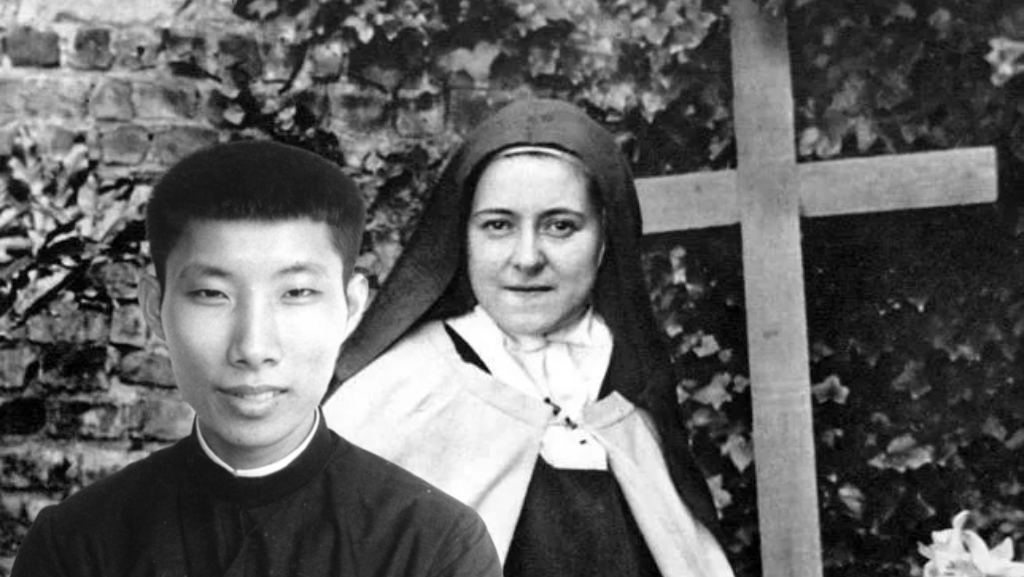
And, if I may, could you say a prayer for all of my brothers? Thank you.
Wring the Changes
A Sunday poem.
Wring the Changes
I have known the breathless feeling of a sponge that has been wrung
thoroughly and roughly above my life’s chipped sink,
squeezed to the point of tearing by the chapped hands of God
until my shape was nothing. Until I could not think.
I have known the way one squishes at the crushing of one’s foam,
have felt the curious balling of a thing without a spine.
But all of it led to a hope I do not hold alone:
that when my water’s all pressed out, I might soak in his wine.
Paul J. Pastor
 Witnesses to Hope