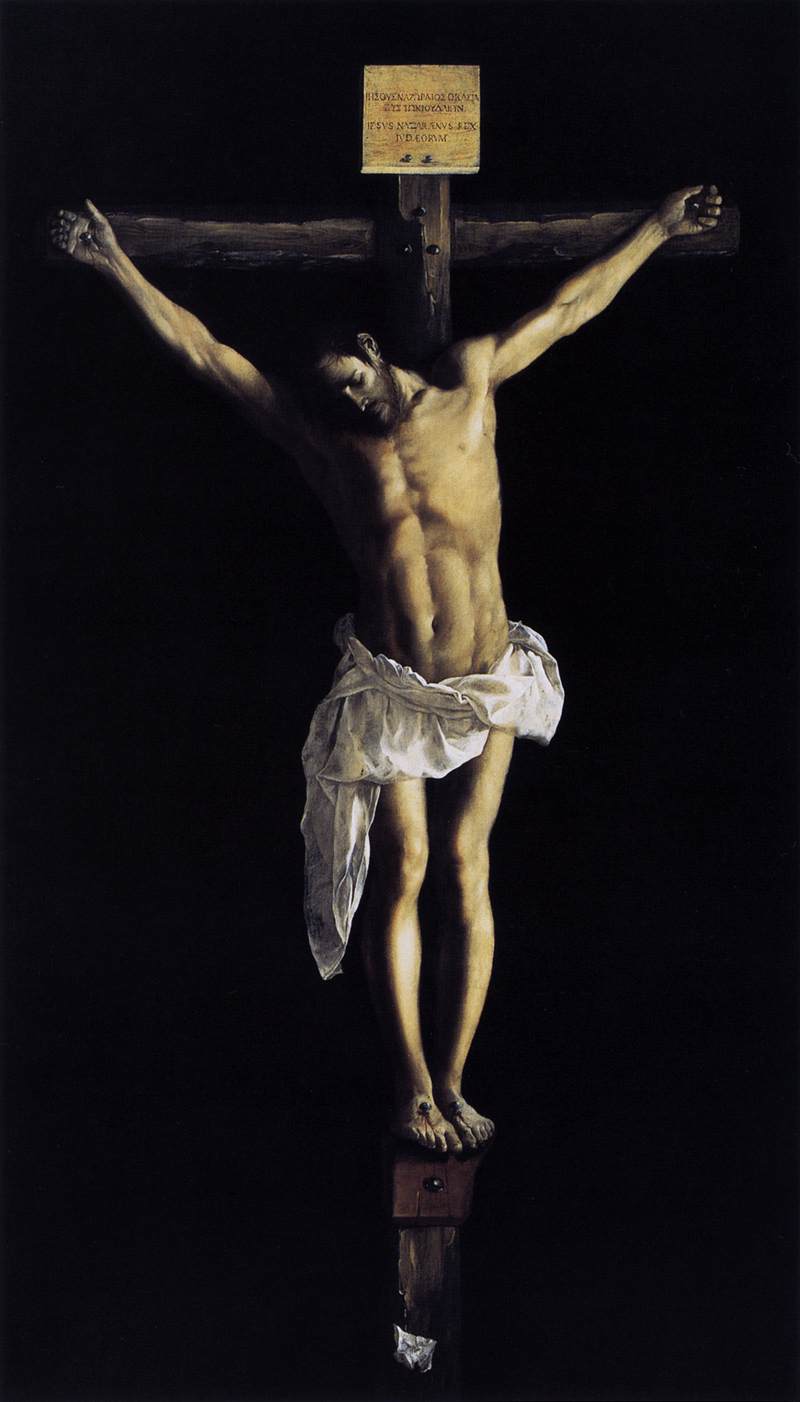
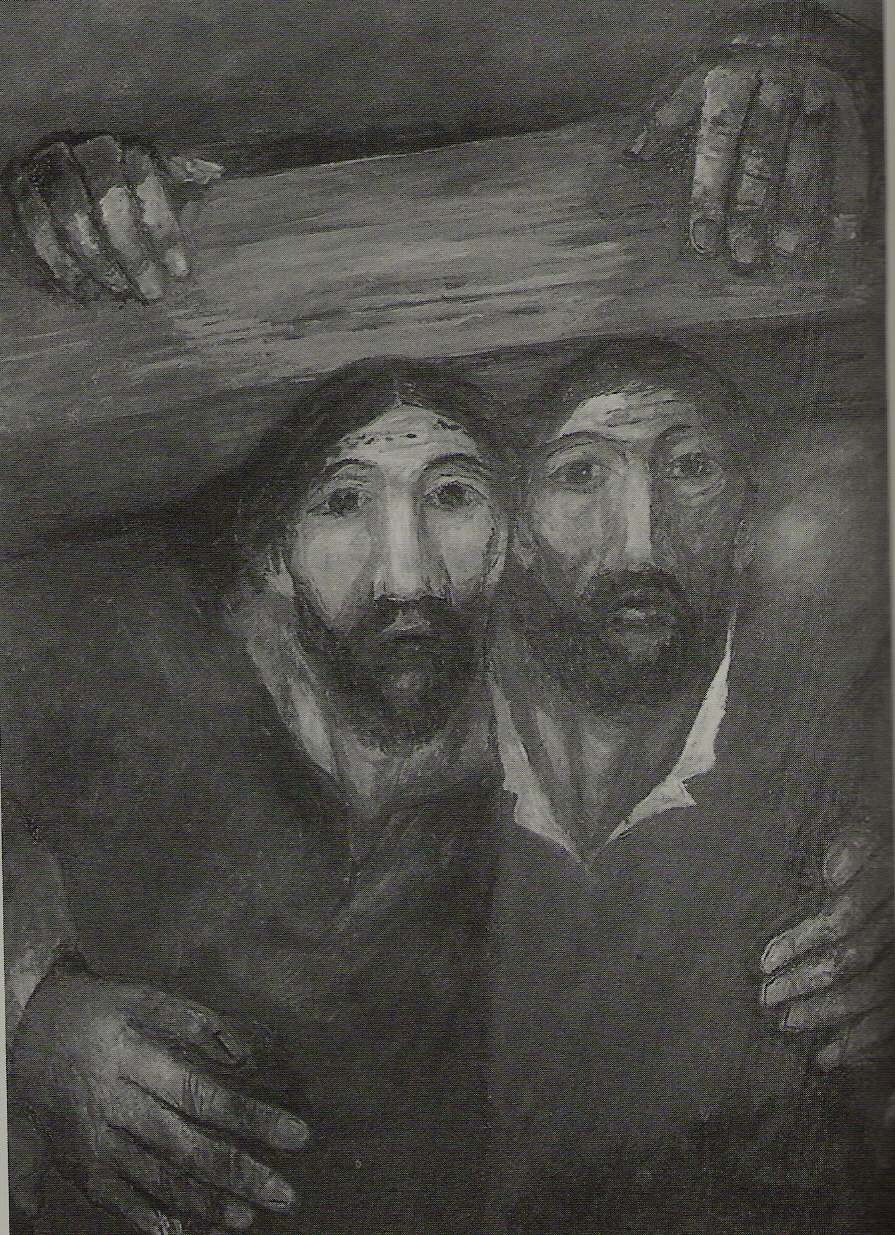
“The directions on the packet of flower seeds read: ‘Seeds need darkness to germinate.’ It makes me think of myself. I want to grow. I want to become more than I am. Yet, so often my self-guided efforts leave me feeling empty, looking for Something More. The ‘germination,’ the better life that I seek, must start in darkness. Lent is that darkness. It is not something dreadful or depressing. Rather, Lent takes us back to what really matters in life. We return to the beginning. You are here. Why? Did you bring yourself about? Is your life a reward from some accomplishment? No. You have been loved into existence by Someone. Why would that Someone want to bring you into being? The answer to all the dissatisfaction and unrest we experience every day is to be found in the love that acted (and acts) to give you life. In the darkness of Lent we meet again this Someone whose love whispers to us, ‘It is necessary that you exist.’ In that desire of the divine heart we discover our truest worth. Which sets us free. We belong to this One who constantly speaks to our wounded heart. . . who constantly calls us in our darkness to come out of our darkness. Lent is for leaving behind our distractions, our delusions. We go into the darkness of Christ’s tomb. What happens there to him will happen, too, to us.” (Father Peter John Cameron)
Category: Lent
I am bending my knee
I Am Bending My Knee
Originally from the Carmina Gadelica I, 3
Taken from Esther de Waal, editor, The Celtic Vision (Liguori, MO: Liguori/Triumph, 1988, 2001), p. 7.
I am bending my knee
In the eye of the Father who created me,
In the eye of the Son who purchased me,
In the eye of the Spirit who cleansed me,
In friendship and affection.
Through Thine own Anointed One, O God,
Bestow upon us fullness in our need,
Love towards God,
The affection of God,
The smile of God,
The wisdom of God,
The grace of God,
The fear of God,
And the will of God
To do on the world of the Three,
As angels and saints
Do in heaven;
Each shade and light,
Each day and night,
Each time in kindness,
Give Thou us Thy Spirit.
You are a zero
One of the Lenten quotes hanging on the walls in our convent:
“Cast away that despair produced by the realization of your weakness. It’s true: financially you are a zero, and socially another zero, and another in virtue, and another in talent . . . But to the left of these zeros is Christ . . . and what an immeasurable figure it turns out to be.” (St. Josemaría Escrivá)
1,ooo,ooo,ooo,ooo,ooo,ooo,ooo,ooo,ooo,ooo
Be near me
“Be near me when I’m dying, O show Thy cross to me.”
(from “O Sacred Head, Once Wounded”–you can listen to it here.)
Something to think about . . .
What e’er the soul has felt or suffered long,
Oh, heart! this one thing should not be forgot:
Christ washed the feet of Judas.
~George Marion McClellan
from “The Feet of Judas” in The Book of American Negro Poetry 1922
As an aide in a rest home caring for the crippled feet of the elderly,
as a medical student in an inner city hospital seeing the homeless whose socks had to be peeled off carefully to avoid pulling off gangrenous toes, as a doctor working with the down and out detox patients from the streets who had no access to soap and water for weeks,
I’ve washed feet as part of my job.
People always protest, just as Peter did when Jesus started to wash his feet.
We never believe our feet,
those homely gnarled bunioned claw-toed calloused parts of us,
deserve that attention.
We are ashamed to have someone…
View original post 107 more words
How to live Holy Week
An excellent Holy Week suggestion from Fr. Peter John Cameron (editor of Magnificat):
One way to approach Holy Week to live it like no other of the year is to unite yourself with one of the holy people who accompany Jesus in his Passion. So perhaps you might identify with one of the disciples sent to prepare the Upper Room, looking at everything in your life in the light of the Eucharist . . . or the woman who anoints Jesus in Bethany, begging for the grace of special compassion . . . or Simon Peter, weeping with true repentance over your sins . . . or Simon of Cyrene, eager to take up Christ’s cross no matter how it may appear . . . or the Good Thief, bursting with hope that Jesus wants us to be with him in paradise . . . or John, daring to remain with Jesus on Calvary and accepting the gift of Mary to be our Mother . . . or the centurion, letting our profession of faith transform our life for ever: This man is the Son of God!
And for those of you who are walking your own way of the Cross, my advice is that you approach Holy Week pondering how Jesus is accompanying you in your passion, helping you to carry your cross, washing your feet and kissing them . . .
Those thorns on Thy brow . . .
My Jesus, I love Thee, I know Thou art mine;
For Thee all the follies of sin I resign.
My gracious Redeemer, my Savior art Thou;
If ever I loved Thee, my Jesus, ’tis now.
I love Thee because Thou has first loved me,
And purchased my pardon on Calvary’s tree.
I love Thee for wearing the thorns on Thy brow;
If ever I loved Thee, my Jesus, ’tis now.
I’ll love Thee in life, I will love Thee in death,
And praise Thee as long as Thou lendest me breath;
And say when the death dew lies cold on my brow,
If ever I loved Thee, my Jesus, ’tis now.
In mansions of glory and endless delight,
I’ll ever adore Thee in heaven so bright;
I’ll sing with the glittering crown on my brow;
If ever I loved Thee, my Jesus, ’tis now.
William R. Featherstone
To hear it sung, you can go here.
Lenten Grace – Wilderness Waiting
reblogged from Barnstorming
This is the wilderness time,
when every path is obscure
and thorns have grown around the words of hope.
This is the time of stone, not bread,
when even the sunrise feels uncertain
and everything tastes of bitterness.
This is the time of ashes and dust,
when darkness clothes our dreams
and no star shines a guiding light.
This is the time of treading life,
waiting for the swells to subside and for the chaos to clear.
Be the wings of our strength, O God,
in this time of wilderness waiting.
– Keri Wehlander from “600 Blessings and Prayers from around the world” compiled by Geoffrey Duncan
“How very much we do not want to be poor”
Well worth pondering from Heather King:
My friend Tensie runs a free clinic for farm workers on the central coast of California. She once told me of a young Hispanic woman named Claudia who was dying of cancer; whose heart was broken at the thought of leaving her two-year-old daughter; whose patient endurance, love, and lack of self-pity were exceptional.
“In our culture,” Tensie observed, “we view suffering as an insult, a humiliation. The people I see at the clinic suffer terribly, but they don’t view it as an insult. They see it as inevitable, as natural almost. In a way, to follow Christ is to examine our relationship to suffering.”
Ash Wednesday marks the season in which we especially ponder our relationship to suffering. Praying, fasting, and giving alms are not arcane holdovers from a time when people more inured to suffering than we are found such practices easy. Fasting has always been hard. Fasting is a reflection of the fact that the more desperate we are, the more open we are to change. Fasting demands that the more keenly aware we are of our empty hands and our empty stomachs, the more likely we are to realize we need help. Fasting helps us to remember that we are all poor, and how very much we do not want to be poor.
I’ll do anything to keep from feeling “poor” myself, and as Lent approached last year, I thought: Those people who say fasting is just an ego-based endurance test are right. This year I’m going to fast in a way that effects some real good. I’m going to fast from criticizing people . . .
Ash Wednesday dawned, I waited to be transformed, and within an hour I was mentally nitpicking, criticizing, and judging any number of people. A few days later I badmouthed someone out loud, the day after that I nakedly passed on a bit of juicy gossip, and from there the whole enterprise rapidly went downhill. Nice try, but unh-unh. Prayer without fasting is a gesture. Mercy without fasting is a gesture. Fasting is not a gesture. Fasting is a consent to be consumed.
To be consume by the fire of our own sin leaves cold, dead ashes. To be consumed by the fire of Christ’s love is to have our delusions about ourselves consumed and to have our true selves left intact, like the burning-bush love that Claudia, who died at twenty-four, left behind for her daughter.
All through Lent a slow, underground fire burns, to burst into flame with the glory of the Resurrection on Easter morning. Remember you are dust, and to dust you shall return. And oh, what hangs in the balance during that interval between the day of our births and the day of our deaths, when for a cosmic instant we, too–beggars all–are called to burst into flame.
(Reprinted with permission)
“Where are you?”
Last week we were talking about Lent at the dinner table, and one of the Sisters shared about how she was suddenly struck this year about how Lent is really primarily all about relationship, our relationship with God. That’s the point of the season: to restore us and strengthen us in our relationship with Him. It’s about a Person.
That reminded me of this article that I wrote that I shared with you last year. I think it’s worth a re-read. (At least, I’m going to re-read it. ;-))
“So . . . what are you giving up for Lent?” The best all-time answer I’ve ever heard to that question comes from Fr. John Peter Cameron, editor of Magnificat: “Here’s what to give up for Lent: the doubt that goes, ‘I can never get closer to God because I’m too sinful, too flawed, too weak.’” Lent really is not about giving up, but about receiving. Fr. John goes on to say: “Lent is not about lamenting our inadequacy. Rather, it is a graced moment to receive from God what he is eager to give us so that we can live the friendship with him that he desires. . . .”
This approach requires a major change of attitude on most of our parts. We are so geared up for what we should do for God, when what is uppermost in the Lord’s mind is his desire to draw near to us, to give himself to us. If what we decide to give up would, in fact, encourage greater friendship with him, that would be one thing, but for many of us, we fall too readily into the following two categories. Either we succeed in doing what we’ve set out to do and just grow stronger in our pride and self-sufficiency, and in a real sense, further from God. Or we fail and grow less confident in God’s mercy. “How could I expect him to show me mercy after I fail to do one simple thing like giving up chocolate for Lent? I mean, how hard is that?”
Of course, I’m not saying that self-discipline isn’t important or that chocolate in someone’s life may not indeed be a stumbling block in his relationship with God, but for so many of us, the main obstacle we face is our lack of confidence in God’s goodness and his love for us. We hide from him, as Adam & Eve did after they sinned. We think that we can’t come to him unless we’ve got everything together. But notice God’s first words to them after their fall. They were not: “What have you done?!” but “Where are you?” (Gen. 3:9) After listening to the serpent, Adam and Eve doubted his goodness rather than placing their trust in his unbounded mercy. Otherwise, they would have run to him like the prodigal son to his father. His first concern was the restoration of relationship with them.
St. Thérèse encourages us along these lines of trust: “Sanctity does not consist in this or that practice, it consists in a disposition of heart which makes us humble and little in the eyes of God, conscious of our weakness but boldly confident in his goodness as Father.” (emphasis added)
Again, I am not minimizing the seriousness of sin. What I am saying is that the first step, and the most important one, is dealing with mistrust in the goodness of God toward us.
So this Lent, you might reconsider what you should give up. Perhaps it should be mistrust or doubt of the Lord’s goodness towards you. Look at the obstacles in the way you think about your relationship with Him. Listen to the Father calling out to you: “Where are you?” If you’re hiding because of lack of confidence in His goodness, try just taking one small step toward Him. Come out from behind the bushes of doubt. Put aside the sin of mistrust and you might be surprised to see Him running toward you with arms wide open.