You can still celebrate Christmas for a few more days! Read this post from last January: “God loves to light little lights”
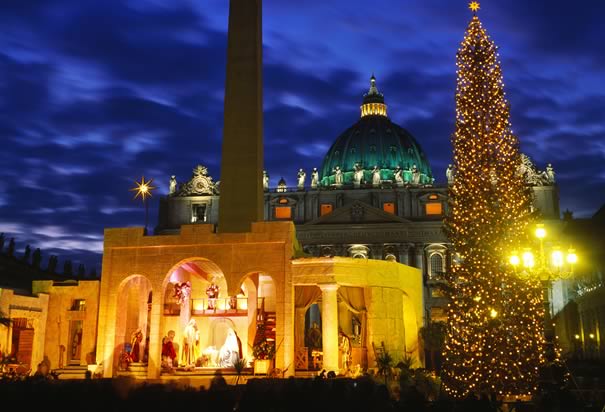
You can still celebrate Christmas for a few more days! Read this post from last January: “God loves to light little lights”
Have a wonderful and blessed ordinary day! Seriously, think about what an “ordinary day” means as a Christian. An ordinary day means incredible things: that we are loved unconditionally and without measure by a God who will never fail us and loved us to death. Don’t let the glory get lost under the ho-hum.
I know it’s the Feast of the Baptism of the Lord, but I couldn’t find a good poem commemorating it, so instead I’ll share this one about Epiphany by Luci Shaw:
Star Song
We have been having
epiphanies like stars
all this year long.
And now, at its close,
when the planets
are shining through frost,
light runs like music
in the bones,
and the heart keeps rising
at the sound of any song.
An old magic flows
at the silver calling
of a bell,
rounding,
high and clear.
Falling. Falling.
Sounding the death knell
of our old year,
telling the new appearing
of Christ, our Morning Star.Now, burst,
all our bell throats!
Toll,
every clapper tongue!
Stun the still night.
Jesus himself gleams through
our high heart notes
(it is no fable).
It is he whose light
glistens in each song sung,
and in the true
coming together again
to the stable
of all of us: shepherds,
sages, his women and men,
common and faithful,
or wealthy and wise,
with carillon hearts,
and, suddenly, stars in our eyes.
I am away on retreat until January 8. Here are some old posts to read if you’d like:
Jesus, what made you so little? Love. (Thérèse)
A blessed Christmas to you all!
In the fourth century, Christians were asked to mark December 17 as the beginning of a twenty-one day period, ending at the Epiphany, in which they focused on the great mystery unfolding in the life of the church, the mystery of God incarnate in human flesh. They were asked to turn themselves away from distraction, from either staying at home and losing themselves in domestic chores, or traveling and being continually stimulated by the change of scenery. Christians were to seek out the church as a place where they could gather as a community not merely to celebrate the birth of Jesus, but to allow the power of the Incarnation to penetrate their lives. (Kathleen Norris, God with Us: Rediscovering the Meaning of Christmas)
This season always seems to bring the unexpected. Obviously that was the case for Mary: to have to travel to Bethlehem so late in her pregnancy. This excerpt from a meditation by Mother Mary Francis underscores the truth that nothing is unexpected to God. May we continue to travel with Mary through the rest of our Advents. (This is a bit lengthy, but well worth reading the whole of it.)
God has a great plan also in what we call the unexpected. It isn’t unexpected to God. He planned it from all eternity. There is no happenstance in life, certainly not in the spiritual life. So often we say, “Oh, I didn’t expect that to happen!” Well, God did. We could think, “Oh, that is what caused everything to go wrong”, but actually that is what is supposed to make everything go right. There is nothing unexpected in all of creation. There is a plan in what we would call the unexpected. Wasn’t the Incarnation the most unpredictable thing that could ever have happened? God has his whole master plan for each of our lives. . . for the whole Church, and we should delight to remember that nothing should ever take us by surprise, except the wonder of God’s plan.
Our Lady was certainly not expecting the Annunciation, and the whole plan of redemption was most unexpected to humanity–the whole idea of it, that the Father’s Divine Son, himself God, should become man, should be incarnated through the agency of this young, unknown girl in a city of which someone was to say, “Can any good come out of that little place?” What was more unexpected? This was the whole plan.
God, speaking through the prophet Jeremiah, says, “I know well the plans I have in mind for you” (Jeremiah 29:11). We don’t, but that’s wonderful. If we trust a human being very deeply, we would accept that. If you were to say to me, “I just don’t get this at all”, I would say, “I can’t explain it to you now, but take my word for it: it’s going to turn out right if you will just do what I’m asking you.” And I would venture to say you would believe me. Can we do less for God, who is saying exactly this to us? “I know well the plans I have in mind for you, plans for your welfare, not for woe! Plans to give you a future full of hope. I don’t reveal all the details of those plans because I cannot deprive you of faith. I cannot deprive you of hope. I cannot deprive you of the glory of trusting in me. I cannot deprive you of the wonder of seeing my plan as it unfolds. I don’t want you to read the whole story and the last page, I want you to keep reading and to enjoy the wonder of what’s coming next in the way that children say, ‘And then what? And then what?'” God knows the next page, the next chapter, and even the last page. It is a plan, and all we have to do is place our lives at the service of that plan so that without presumption we can say, “Yes, the Word will be made a little less unutterable through the word of each of our lives, a little more manifest because we have placed our lives at the service of his plan.”
It is sufficient that God knows this plan. When it is hard to accept things, we should make that part of our prayer. We want to become very intimate with him as the great mystics were in very simple, humble ways, saying, “Dear God, I don’t get this at all, but I’m so glad that you do. And I know that you have a plan and I only want to be at the service of your plan.” And who of us, in her own life, has not had experience of htat? The very things that sometimes seemed so hard, so suffering, so puzzling and bewildering, were the very things out of which would come a wonder that we could never have dreamed of.
In our personal lives there is a wonderful unfolding. It is wonderful to keep going forward. Even our Lady did not know the last page. The morning of the Resurrection was not the last page. She still had much work to do with the infant Church, which held together around her, her life still being placed at the service of his plan. Why didn’t the Lord take her with him right away? Nor was her life at the service of his plan completed at her own Assumption, because she still is the Mother of the Church. The Church is still living and it will go on until the end of time. And even then her work will not be done, because then it becomes the Church triumphant of which she is still the Queen. And so, let us determine in all the events of each day to place our lives at the service of his plan. This is the Happiest way that a person can live. (from Come, Lord Jesus, pp. 198-200)
 A guest post today from Fr. Michael Marsh, an Episcopalian priest: “Mothers of God” on how we are all called to bring Christ to birth in our lives.
There Was a Time: An Advent Poem
There was a time when there was no time,
When darkness reigned as king,
When a formless void was all that there was
in the nothingness of eternity,
When it was night.
But over the void and over the night Love watched.
There was a time when time began.
It began when Love spoke.
Time began for light and life, for splendor and grandeur.
Time began for seas and mountains, for flowers and birds.
Time began for the valleys to ring with the songs of life,
and for the wilderness to echo with the wailing of wind
and howling of animals.
And over the earth, Love watched.
There was a time when time began to be recorded.
A time when Love breathed and a new creature came to life.
A new creature so special that it was in the image and likeness of Love
Of Love who is God.
And so man was born and the dawn of a new day shone on the world.
And over man, Love watched.
But there came a time when the new day faded.
A time when man who was like God tried to be God.
A time when the creature challenged the creator.
A time when man preferred death to life and darkness to light.
And so the new day settled into twilight.
And over the darkness, Love watched.
There was a time of waiting in the darkness.
A time when man waited in the shadows,
And all creation groaned in sadness.
There was waiting for Love to speak again–for Love to breathe again.
And kings and nations and empires rose and faded in the shadows.
And Love waited and watched.
Finally, there came a time when Love spoke again.
A Word from eternity–a Word
Spoken to a girl who belonged to a people not known by the world
Spoken to a girl who belonged to a family not known by her people
To a girl named Mary.
And all creation waited in hushed silence for the girl’s answer.
And Mary spoke her yes.
And Love watched over Mary.
And so there came a time when Love breathed again
When Love breathed new life into Mary’s yes.
And a new day dawned for the World
A day when light returned to darkness, when life returned to dispel death
And so a day came when Love became man–a mother bore a child.
And Love watched over Love–a Father watched His Son.
And, lastly, there came a time when you and I became a part of time.
Now is the time that you and I wait.
Now we wait to celebrate what the world waited for.
And as we wait to celebrate what was at one time, we become a part of that time
A time when a new dawn and a new dream and a new creation began for man.
And as a part of time, Love waits and Love watches over us.
Fr. Joseph Breighner

 Witnesses to Hope