I did it again!

For those times when you say to yourself, “I did it again!”  From St. Faustina’s Diary:

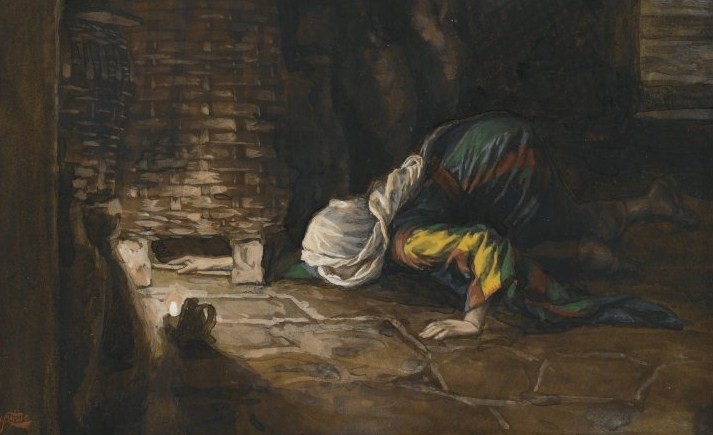
It so happened that I fell again into a certain error, in spite of a sincere resolution not to do so even though the lapse was a minor imperfection and rather involuntary and at this I felt such acute pain in my soul that I interrupted my work and went to the chapel for a while. Falling at the feet of Jesus, with love and a great deal of pain, I apologized to the Lord, all the more ashamed because of the fact that in my conversation with Him after Holy Communion this very morning I had promised to be faithful to Him. Then I heard these words: If it hadn’t been for this small imperfection, you wouldn’t have come to Me (Diary, 1293).

Even there

One of my favorite poems. Always worth reposting. Have a blessed Sunday.

Sr. Dorcee, beloved's avatarWitnesses to Hope

Written by a missionary in Communist China in the early 1950’s, with only 15 cents left in his pocket, a terrible toothache, no fuel and a tiny daughter with scarlet fever.  The beginning reference is to Acts 27:27-32.

In Adria’s tempest-tossed wastes,
My barque through the dark deeps is driv’n;
The canvas all torn from my masts,
My timbers by stormy waves riv’n.
Yet there faith’s assurance rings clear,
E’en there will I trust, EVEN THERE.

All hope for deliverance had gone,
Despair’s chilly gloom shrouded all;
No sun’s ray through threat’ning cloud shone
To brighten the future’s dark pall.
Yet there should my heart quake with fear,
E’en there will I trust, EVEN THERE.

My brook’s daily waters had dried,
All replenishing springs scorched bare;
Resourceless in sore need I cried
To a God who seemed not to care.
Though trembling, triumphant I bow
E’en now will I trust…

View original post 44 more words

Broken Things

barnstormingblog's avatarBarnstorming

broken

God uses broken things.
It takes broken soil to produce a crop,
broken clouds to give rain,
broken grain to give bread,
broken bread to give strength.
It is the broken alabaster box that gives forth perfume.
~Vance Havner

And I might add:
a snail wandering into sidewalk foot traffic,
crushed, cracked and dying, clinging to the pavement,
its broken shell a gift of metaphor
of our own leaking brokenness.

View original post

When your enemy falls into your hands

Very apt advice always:

“When your enemy falls into your hands, do not consider how you can pay him back and let him feel the sharp edge of your tongue before sending him packing; consider rather how you can heal him and restore him to a better frame of mind.  Continue to make every effort both by word and deed until your gentleness has overcome his aggressiveness.  Nothing has more power than gentleness.  As someone has said: A soft word will break bones.  And what is harder than bone?  Well then, even if someone is as hard and inflexible as that, he will be conquered if you treat him gently.  There is another saying: A soft answer turns away wrath.  It is obvious, therefore, that whether your enemy continues to rage or whether he is reconciled depends much more on you than on him.  For it rests with us, not with those who are angry, either to destroy their anger or enflame it.”  (John Chrysostom)

As a general rule

A quick method of discerning what to do with those agitating, discouraging thoughts:

“As a general rule, you ought to regard as coming from the enemy any thought which agitates you, throws you into perplexity, which diminishes your confidence and narrows up your heart.  The best thing in such cases is just to put the matter that perplexes you out of your mind, saying to yourself, ‘When I have the opportunity I shall ask the solution of this difficult from some priest,’ and then go on in peace as you were before.” (Dom Marmion)

I’m sure Dom Marmion would allow the substitution of “a wise person” for “some priest,” someone who is spiritually mature and whose discernment you trust.

Remember Amy Carmichael’s wonderful advice as well:

“The reason why singing is such a splendid shield against the fiery darts of the devil is that it greatly helps us to forget him, and he cannot endure being forgotten.  He likes us to be occupied with him, what he is doing (our temptations), with his victories (our falls), with anything but our glorious Lord.  So sing.  Never be afraid of singing too much.  We are much more likely to sing too little.”