“If we meet unkindness today . . .”

Lk 9.52-53 They went, and entered into a village of the Samaritans, to make ready for Him.  And they did not receive Him, because His face was set toward Jerusalem.

Lk 10.33  But a certain Samaritan, as he journeyed, came where he was: and when he saw him, he had compassion on him.

Of all unkind things, one of the unkindest is to refuse to give a tired traveler a place to rest.  No Indian would do that. [Note: Amy Carmichael lived in India.]  But the Samaritans did it: They did not receive Him.

When anyone has been unkind to us, what do we feel inclined to do?  How do we feel inclined to speak of them?

A little while after this unkindness of the Samaritans, our Lord Jesus told a story about kindness, and of all the people of Palestine He chose a Samaritan as an illustration of true, tender kindness.

If we meet unkindness today, let us react as our dear Lord did.

~Amy Carmichael

“The Mending”

A Sunday-poem by Mother Mary Francis:

The Mending

There is no shattering love cannot mend,
No shards its gentle hands shall not make whole.
Healing, its glances brush like wings across
The deepest rawness of the heart, and leave
At last, at last no trace of briney woe.

What though we walked in ruins of a dream,
What though our tears had faded out the rose
And gold of what was once a splendid bond?
There is no shattering love cannot mend,
No shards its gentle hands shall not make whole.

Sweet is the love that never knew a wound,
But deeper that which died and rose again.

In the land of my captivity

I will give him thanks in the land of my captivity. (Tobit 13.6)

I have been pondering this verse all morning, thinking about how applicable it is to us all who are living in the land of our captivity.  How often do I grumble rather than give thanks?  Tobit goes on to say “I will give him thanks in the land of my captivity and I show his power and majesty to a nation of sinners.”  What a simple but powerful witness we would each be if we could just develop more of an attitude of thanksgiving and trust in the land of our captivity.  Lord, teach us how to do this.  Prompt us by your Holy Spirit to give thanks to you in all circumstances.

First and foremost

I am struck, on this Feast of Exaltation of the Holy Cross, by Sr. Ruth Burrows meditation in Magnificat.  She clarifies the message of the cross:

“Holding up the cross, bidding us gaze into that bleeding, humiliated face, the Holy Spirit’s focus is not first and foremost on suffering, of even on sin and its consequences, but on a love that is absolute, ‘out of this world,’ ‘other,’ ‘what no eye has seen, nor ear heard, nor the human heart conceived.’  We must gaze and gaze with fullest attention and then affirm: this is God; this is what God is really like.”

Do your best today to keep your gaze with fullest attention on this Love.

Still poor

I’m wrestling with my poverty today, and that says a lot because what I really should be doing is just acknowledging that that is my human condition.  Which just goes to show you how poor I am!  So, what do I do?  “Every day I begin again.”

“If I were to live to eighty, I would still be as poor as I am now.” (Thérèse)

He knows

Ps 103.14 For He knows our frame; He remembers that we are dust.
Job 23.10 He knows the way that I take: when he has tried me, I shall come forth as gold.

“Perhaps those words, He knows, are meant for you today because God has allowed you some special trial of faith.  The love of God is very brave.  He does not hold trial off lest we should be overwhelmed.  He lets it come and then gloriously strengthens us to meet it.  And at the end, I shall come forth as gold.”  (Amy Carmichael, Whispers of His Power)

Birth of Mary

A repost:

Today we celebrate the birth of Mary.  I have to say that this morning when I woke up, I felt like breaking into a little song to her, at least “Happy birthday to you . . .”–which sounds so trite–but I knew in my heart that that would be dear to her . . . because she is that kind of Mother.

I want to share the first verse of a poem by Rilke because I think it conveys the sense of joy in the heavens at the birth of this great gift of God to us.

Birth of Mary

O what must it have cost the angels
not suddenly to burst into song, as one bursts into tears,
since indeed they knew: on this night the mother is being
born to the boy, the One, who shall soon appear.

(Rainer Maria Rilke, translated from the German by M.D. Herter Norton)

Over the flocks

And to complete the trilogy:

1 Chron 27.31 And over the flocks was Jaziz the Hagerite.

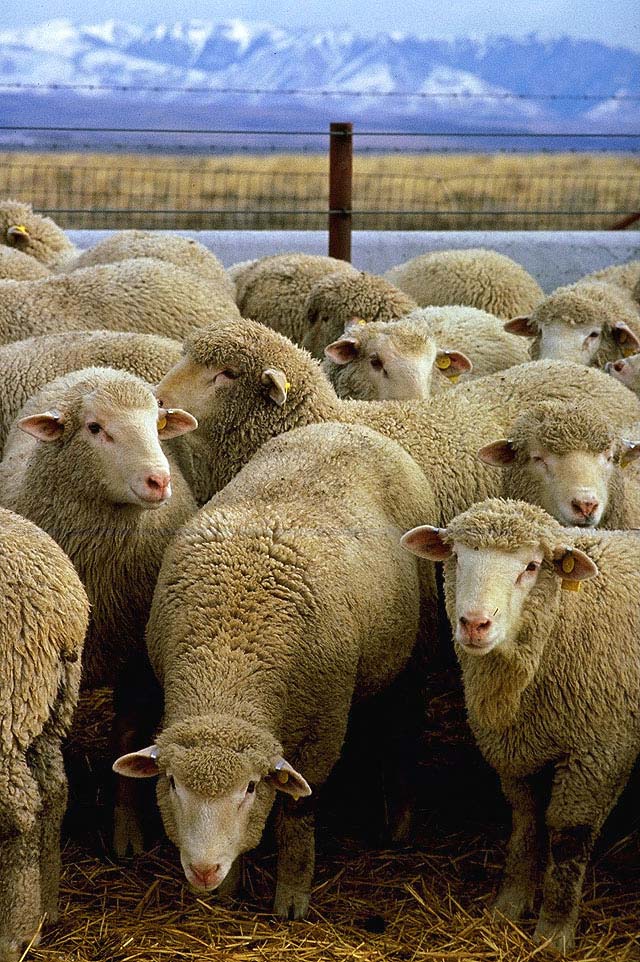
His name meant “Shining.” Most of us have sometimes to do with camels, sometimes to do with asses, but oftenest, thank God, with the flocks of the Good Shepherd.

There was once an unhappy shepherd, Zechariah, who dismissed three under-shepherds in one month, and said, And my soul loathed them, and their soul also abhorred me (Zech 11.8).  We have a very different flock from that committed to poor Zechariah, and quite different fellow-shepherds.  Are we half grateful enough for the joys of good fellowship?

Jaziz had a beautiful name–Shining.  No dullness, no heavy-heartedness as he tended the flocks.  God make us all to be Jazizes–happy shepherds, shining shepherds.  (Amy Carmichael)