A personal feast day

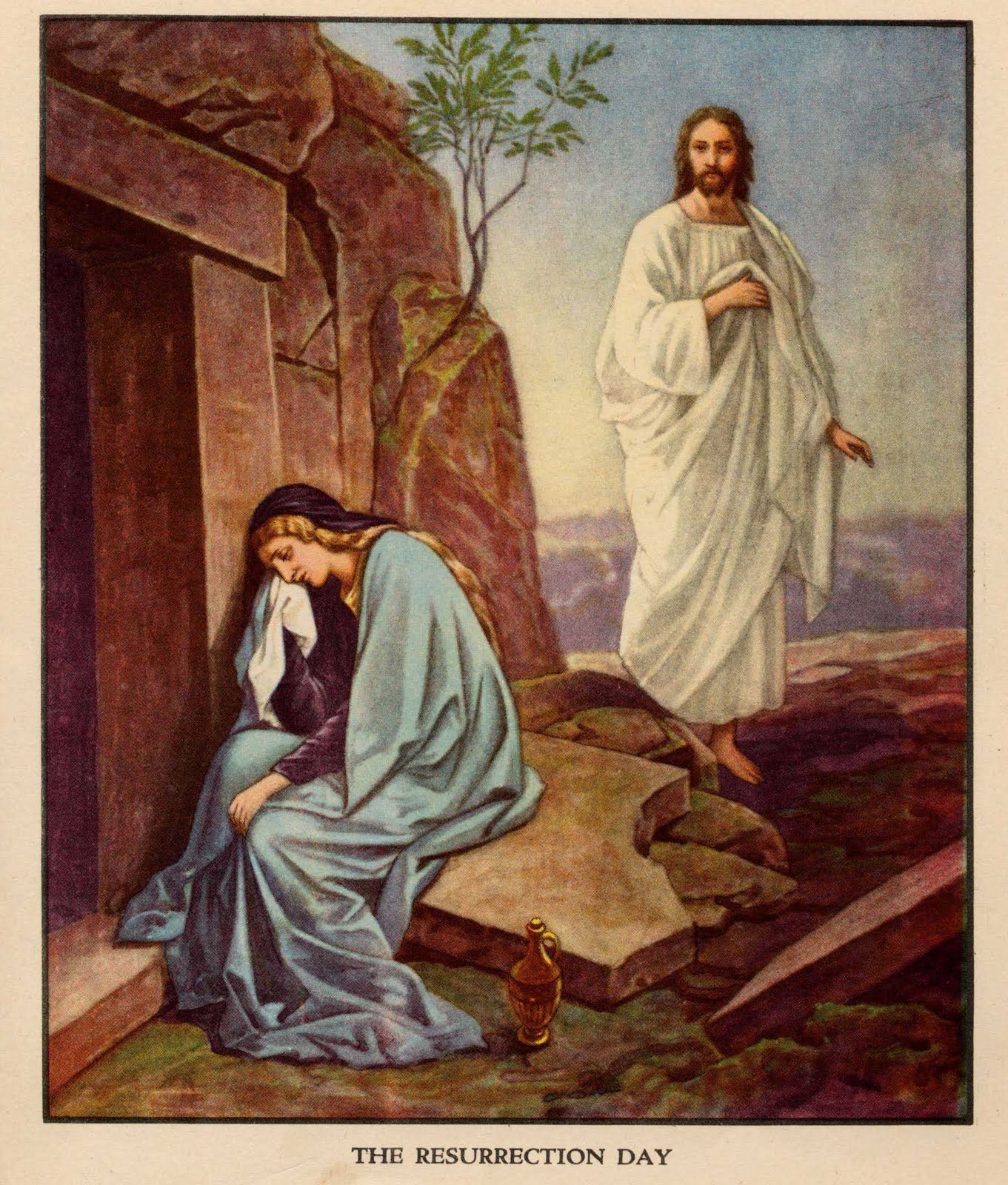
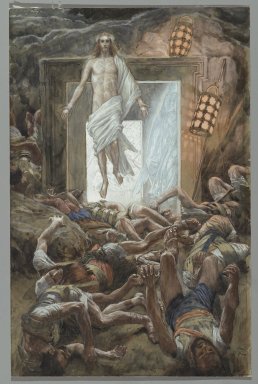
We all have personal feast days, days that we celebrate for different reasons, usually because of a saint we’re named after or one to whom we have great devotion. Over the last few years I have come to look at Holy Saturday as a personal feast day.  Ever since my brother, Tim, died, it has taken on great meaning: this day during which it looks like nothing is happening, when, in fact, great and “terrible” things are happening.  Jesus is setting the captives free. Christ has descended into our loneliness,  into our grief, into those spaces in our lives–and of those we love–where darkness seems to reign. And that is Good News.  We are no longer alone.  He is, indeed, God-with-us.  That is the wonder and consolation of this day.  That was so true for me as I walked through those dark days after Tim took his life.  Christ gave me such an assurance of His being with my brother during those dark, dark moments in his life. . . and an assurance of the same for myself.  “Though I walk through the shadow of death, I fear no evil, for you are with me.” (Ps 23.4)

Christ is there with us, whether we perceive Him or not.

Holy Saturday is the day of the ‘death of God,’ the day which expresses the unparalleled experience of our age, anticipating the fact that God is simply absent, that the grave hides him, that he no longer awakes, no longer speaks, so that one no longer needs to gainsay him but can simply overlook him . . . Christ strode through the gate of our final lonelienss; in his passion he went down into the abyss of our abandonment.  Where no voice can reach us any longer, there is he.  Hell is thereby overcome, or, to be more accurate, death, which was previously hell, is hell no longer.  Neither is the same any longer because there is life in the midst of death, because love dwells in it.

Christ descended into “Hell” and is therefore close to those cast into it, transforming their darkness into light.  Suffering and torment is still terrible and well-nigh unbearable.  Yet the star of hope has risen–the anchor of the heart reaches the very throne of God.  Instead of evil being unleashed within man, the light shines victorious: suffering–without ceasing to be suffering–becomes, despite everything, a hymn of praise.  (Benedict XVI, Spes Salvi)

For further reading on the significance of this day, see these posts: “Where is Christ today?” and “Why Saturday is Mary’s Day”

Trauma Unit

Trauma Unit

It was never meant
to burst from the body
so fiercely, to pour unchanneled
from the five wounds
and the unbandaged brow,
drowning the dark wood,
staining the stones
and the gravel below,
clotting in the air
dark with God’s absence.

It was created for
a closed system–the unbroken
rhythms of human blood
binding the body of God,
circulating hot, brilliant,
saline, without interruption
between heart, lungs,
and all cells.

But because he was once
emptied, I am each day refilled;
my spirit-arteries
pulse with the vital red
of love; poured out,
it is his life
that now pumps through
my own heart’s core.  He bled and died
and I have been transfused.

~Luci Shaw

“The King of glory took as his spouse our souls . . .”

from Venerable Louis of Granada:

Indeed the greatest proof of Christ’s love for his disciples at the Last Supper was the institution of the Blessed Sacrament . . .  O great mystery which is deserving of being impressed on the very core of our hearts!  If a prince were to love a slave and take her as his bride and make her queen of all that he possessed, we would acknowledge that such a love is indeed great.  And if, after marriage, the slave’s love were to grow cold, and the prince were to go in search of something to re-awaken her love, this would be proof that his love is exceedingly great.  So also, the King of glory took as his spouse our souls, which were slaves of the devil, and seeing how cold they were in love, he gave them this mysterious food which has the power to transform souls into himself which has the power to transform souls into himself and make them burn with the living flames of love.  Nothing so manifests love as the desire to be loved, and he so desired our love that he invented this wonderful means of arousing it.

The Bridegroom had to absent himself from his spouse and since love will not tolerate a separation nor the absence of the beloved, he wished to depart from his spouse in such a way that he would not be separated from her completely; to leave her and yet somehow remain with her.  He could no longer remain with her.  He could no longer remain with her and she could not as yet accompany him, but although he was to go and she would remain, they would never henceforth be separated, thanks to this great Sacrament.

A footnote

I was grabbed by a footnote in a book I’m reading.  The author was commenting on the blessing it is for us that the book of Job has survived through the years.  It is a blessing that “God has willed that this great cry of scandal before the ways of Providence should survive until our days.”  He footnotes this statement with:

God has also willed that the only words gathered by the two oldest evangelists from the lips of the dying Jesus were, “My God, my God, why have you forsaken me?” (Mt 27.46; Mk 15.34, so that believers in a state of confusion should never feel that they were intruding, but always find a place to lay down their head in the paradise of Scripture.  (Fr. Dominique Barthélemy)

Keeping Him company

Following up on yesterday’s post, here is another quote from St. Paul of the Cross along the same lines:

I will try with all my strength to follow the footsteps of Jesus.  If I am afflicted, abandoned, desolate, I will keep him company in the Garden.  If I am despised and injured, I will keep him company in the Praetorium.  If I am depressed and afflicted in the agonies of suffering, I will keep him company faithfully on the Mount, and in a generous spirit I will keep him company on the Cross with a lance in my heart.

Fill in the blanks for yourself: “If I’m _________, I will keep him company in the __________________” He is looking for you to be with Him during these days . . .

What is your suffering?

What is your suffering?  Whatever it is, whatever its cause (including your own personal weaknesses), it can be joined to the sufferings of Christ this week.  St. Paul of the Cross was a big advocate of this.  Don’t let your personal sufferings separate you from Christ this week.  Dealing with your tendencies to irritability or depression or anger is a real suffering.  Let it draw you to Christ this week.

Paul connects all sufferings with the Passion, not only pain and distress but everything we do not naturally like.  To make this connection, Paul looked at the different sufferings that Jesus not only endured, but accepted during his Passion: inner anguish, terrible fear and depression, abandonment by his friends, betrayal, deprivation of his freedom, injustice, lies told about him, excommunication, rejection by authority, especially by religious authority, bodily pain, utter fatigue, misunderstanding, helplessness, a sense of failure, the feeling of being abandoned by his Father, and finally death itself.   (Spiritual Direction According to St. Paul of the Cross)

Do not lose heart, O soul

This is the week of penance services.  Along with that can come the temptation–yes, it is a temptation–to overdwell on our sins, on how we have offended God to the point that we never really return to the arms of our loving Father.  We stay in the pig sty rather than running with confidence to the God who comes to meet us.  May this selection from St. Ephrem the Syrian enable you to “leave the city that starves you.”

Do not lose heart, O soul, do not grieve; pronounce not over yourself a final judgment for the multitude of your sins; do not commit yourself to fire; do not say: The Lord has cast me from his face.

Such words are not pleasing to God.  Can it be that he who has fallen cannot get up?  Can it be that he who has turned away cannot turn back again?  Do you not hear how kind the Father is to a prodigal?

Do not be ashamed to turn back and say boldly: I will arise and go to my Father.  Arise and go!

He will accept you and will not reproach you, but rather rejoice at your return.  He awaits you; just do not be ashamed and do not hide from the face of God as did Adam.

It was for your sake that Christ was crucified; so will he cast you aside?  He knows who oppresses us.  He knows that we have no other help but him alone.

Christ knows that man is miserable.  Do not give yourself up to despair and apathy, assuming that you have been prepared for the fire.  Christ derives no consolation from thrusting us into the fire; he gains nothing if he sends us into the abyss to be tormented.

Imitate the prodigal son: leave the city that starves you.  Come and beseech him and you shall behold the glory of God.  Your face shall be enlightened and you will rejoice in the sweetness of paradise.  Glory to the Lord and Lover of mankind who saves us.

The love of God

I have been reading and re-reading one of the homilies that Fr. Cantalamessa gave this Lent to the Roman Curia.  Here are the beginning paragraphs, followed by the link to the whole homily.  In it he stresses–as I have highlighted below–the importance, the necessity, of our being permeated by the knowledge of God’s love for us before we can bring that love to others.  I  find in my own life, and in the lives of many of the women to whom I give spiritual direction, that the most challenging thing can very often be believing in the love of God for me personally.   Sounds so easy, but so hard to do.

The first and essential proclamation that the Church is charged to take to the world and that the world awaits from the Church is that of the love of God. However, for the evangelizers to be able to transmit this certainty, it is necessary that they themselves be profoundly permeated by it, that it be the light of their life. The present meditation should serve this purpose at least in a small part.

The expression “love of God” has two very different meanings: one in which God is object and the other in which God is subject; one which indicates our love for God and the other which indicates God’s love for us. The human person, who is more inclined to be active than passive, to be a creditor rather than a debtor, has always given precedent to the first meaning, to that which we do for God. Even Christian preaching has followed this line, speaking almost exclusively in certain epochs of the “duty” to love God (“De Deo diligere”).

However, biblical revelation gives precedence to the second meaning: to the love “of” God, not to the love “for” God. Aristotle said that God moves the world “in so far as he is loved,” that is, in so far as he is object of love and final cause of all creatures.[1] But the Bible says exactly the contrary, namely, that God creates and moves the world in as much as he loves the world.

The most important thing, in speaking of the love of God, is not, therefore, that man loves God, but that God loves man and that he loved him “first”: “In this is love, not that we loved God but that he loved us” (1 John 4:10). From this all the rest depends, including our own possibility of loving God: “We love, because he first loved us” (1 John 4:19).  (emphasis added)

You can read the whole thing here.

weep and wait

As we approach Holy Week, here is a Sunday-poem by Luci Shaw that will, hopefully, prod us all to never let anything we do keep us from running to Him for mercy–and she is full aware that this often seems the harder path to take:

Judas, Peter

because we are all
betrayers, taking
silver and eating
body and blood and asking
(guilty) is it I and hearing
him say yes
it would be simple for us all
to rush out
and hang ourselves
but if we find grace
to weep and wait
after the voice of morning
has crowed in our ears
clearly enough
to break our hearts
he will be there
to ask us each again
do you love me