
Category: Scripture reflections
Let not your heart be troubled
Is your heart troubled by some way that you have failed the Lord? Amy Carmichael shows us the truth about how the Lord looks upon our failings:
John 13.38: Jesus answered him, . . . The cock shall not crow until you have denied Me three times.
John 14.1: Let not your heart be troubled.
“After speaking of Peter’s fall, which He foresaw, our dear Lord immediately says, Let not your heart be troubled. He saw across that day of grief to the restoration that would follow. His eyes were not fixed on the sad interruption to fellowship and joy, but on the hour when Peter would be back in love again, never again to grieve his Lord like that. And so to the surprised and surely greatly troubled little company He said, Let not your heart be troubled.
“Most of us have things which would naturally greatly trouble us. Let us face these things as our Lord Jesus did in John 13.38 and then go straight on into chapter 14.1.”
Staring at a Mirror
Fr. Pat McNulty from Madonna House’s reflections on the Gospel reading today:
Staring at a Mirror
by Fr. Pat McNulty.
I don’t understand why you’d do somethin’ like that right out before God an’ everybody.
Well, there was a trend in the ‘60’s to learn how to be at home “in your own skin,” your own emotions and fears. Since all of that was quite new to us bourgeois thinking folk we needed some help.
One of the popular methods in psychology at the time was called, “group therapy”—basically like-minded people working things out together with professional guidance.
Why didn’t y’all just go fishin’ and talk it out with God?
I guess because along the way we learned that some inner lies just don’t get unravelled in your life unless you “talk it out” with another human being who can challenge you and support you. (By the way, that’s really part of the genius of confession in our Catholic tradition.).
So one of the things we did in our group was to sit in front of another person and look into that person’s eyes for thirty seconds while repeating our own name over and over slowly without blinking or turning away. Then we changed places and let them do the same with us.
Afterwards we would come back together in the larger group and talk about what was going on during the eyeball-to-eyeball.
You can read the rest here.
“Regardless of the Homily
Wonderful advice from Fr. Pat McNulty on how to listen to any homily:
Regardless of the Homily
by Fr. Pat McNulty.
September. School. Yuk! I hated going to school and I had to go for 25 years—from age 5 to 30. But I loved learning, and it was a blessing whenever I had a teacher who could connect the two.
After I was ordained, when I thought that I had at last finished going to school, I was immediately assigned to teach in one of our diocesan high schools! And I didn’t know the first thing about teaching.
So that September, feeling like a five-year-old going to school for the first time, I was on the lookout for teachers with a reputation for making learning come alive—hoping I might learn to do the same. One such was Sister Mary Eileen, who taught science.
In those days teachers did a little bit of everything, and one of Sister Mary Eileen’s other jobs was bookkeeping, a job she probably got because she had the gift for making every penny count.
Some of those “pennies” were being wasted by students who left lights burning in empty classrooms at the end of the day. So knowing she would never find out who had left them on, she devised a technique to help everyone learn the cost of electricity.
Whenever the lights were left on, Sister Eileen would go to that classroom. Then, in front of the whole class, she would take the class list, pull a long hatpin out of her sleeve, close her eyes, and take a stab at the list.
To read the rest, go here.
Hope

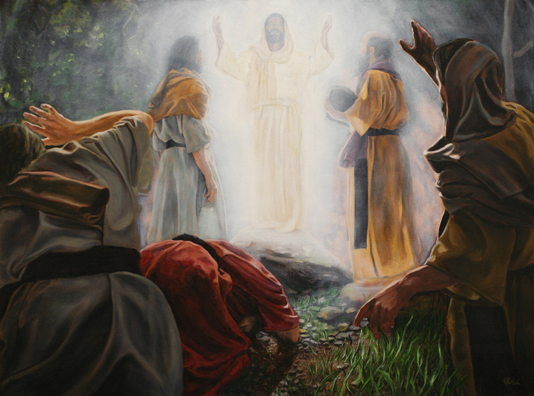
Who was transfigured?
When one thinks of the Transfiguration one usually thinks of Christ being transfigured–almost like Christ turning on a light bulb. But there is a valid line of thinking in the Eastern Church that goes like this: “In a certain way it was really the apostles who were transfigured; it was they who became able to see.” It wasn’t so much Christ whose glory changed; the apostles were just allowed to see Him as He truly is. Christ opened their eyes so that they could see Him in all His glory.
And that’s the point of the Christian life, to have our eyes opened to the Mystery of God. To constantly surrender ourselves to His grace, that the eyes of our hearts may be transfigured and more and more able to perceive the beauty and glory of our God.
Friday: from the archives
The Pharisee becomes the publican
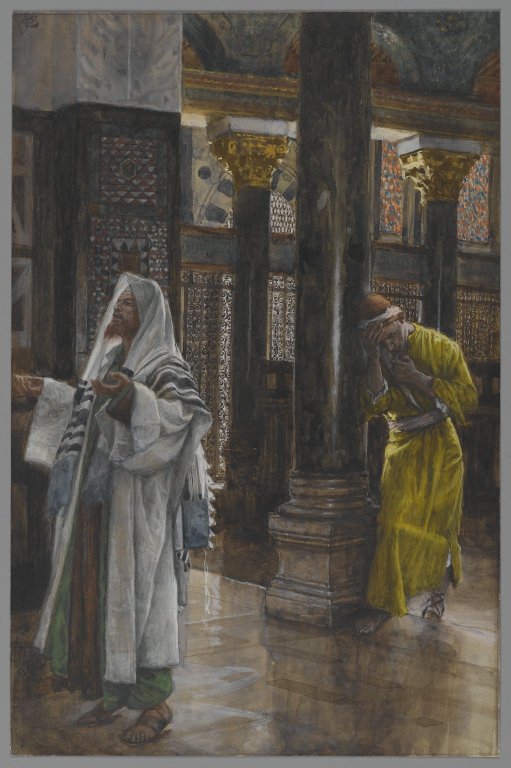 One thing that can cause me discouragement is dealing with besetting sin–you know that thing you keep taking back to confession over and over. One of mine is critical thinking. A few years ago I read Sr. Ruth Burrow’s autobiography, and in it she spoke about this being one of her ongoing faults as well. However, she found what I think is a very clever way to deal with it:
Perceptive, quick to see the flaws in another, I was prone to criticism, finding a certain satisfaction in seeing another at fault as though this, in some way, raised me up. I knew that no fault would so displease our Lord or stop his grace as this harsh judgment on his children. I realized I had the mentality of a pharisee but, I thought to myself, if a pharisee had turned to our Lord and admitted his hardness of heart, his crabbed, mean spirit and asked for help, our Lord would have helped him. So I did the same. The pharisee became the publican. I came to realize that temptations to pride, the sin of the pharisee, could make one a publican. The stone which the builders rejected could become head of the corner. I tried to use these bad tendencies to grow in humility.
And the Angels danced, don’t you think?
Bless the Lord, my soul!

Bless the Lord, my soul!
Lord God, how great you are,
clothed in majesty and glory,
wrapped in light as in a robe!You stretch out the heavens like a tent.
Above the rains you build your dwelling.
You make the clouds your chariot,
and walk on the wings of the wind;
you make the winds your messengers
and flashing fire your servants.Psalm 104
Using our failings

The day before yesterday was the feast of St. Thomas the Apostle. In the Office of Readings, St. Gregory the Great makes the following point: “Do you really believe that it was by chance that this chosen disciple was absent, then came and heard, heard and doubted, doubted and touched, touched and believed? It was not by chance but in God’s providence. In a marvelous way God’s mercy arranged that the disbelieving disciple, in touching the wounds of his master’s body, should heal our wounds of disbelief. The disbelief of Thomas has done more for our faith than the faith of the other disciples.”
Try to remember this the next time you are dismayed by your own failings. God, in His providence, can use them to hearten others as they see His work in your life. Struggle through to touch and believe.
Storms
Storms. God’s own fireworks.
He made the darkness his covering,
the dark waters of the clouds, his tent.
A brightness shone out before him
with hailstones and flashes of fire.
The Lord thundered in the heavens;
the Most High let his voice be heard.
He shot his arrows, scattered the foe,
flashed his lightnings, and put them to flight.
Beautiful words from Psalm 18, one of the psalms from Morning Prayer this morning. But even more marvelous are the verses that follow:
From on high he reached down and seized me;
he drew me forth from the mighty waters.
He snatched me from my powerful foe,
from my enemies whose strength I could not match.
They assailed me in the day of my misfortune,
but the Lord was my support.
He brought me forth into freedom,
he saved me because he loved me.
In the midst of your storm, God is coming to you. He is coming to you to save you. Because He loves you. Be not afraid of the storm.
 Witnesses to Hope