More lost than merry

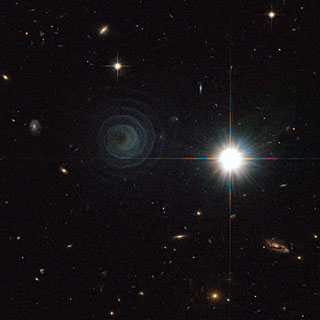
We woke up to this kind of beauty this morning:


Then I opened my Magnificat Advent Companion to the reading for today. God’s timing is always amazing:

Spiritual White Out

The weather report said blizzard, but we heard adventure.  A few days before Christmas, I headed down the shore with a friend, packing provisions and two golden retrievers in the SUV.  The drive was challenging, the roadway slick, and the snowfall heavy.  Within a half hour of our destination, we were driving in a white out.  We both peered between the windshield wipers trying to figure out our location.  The car’s GPS was no help, so I took out my iPad and hit an application to locate us.  Technology knew where we were, and a blue dot guided us the rest of the way.  While modern technology can guide us through weather storms, there are other storms that throw us off course.  Illness, relationship problems, and financial concerns are hardly adventures.  In those moments we can experience a kind of spiritual white out, uncertain where God is.  The birth of Jesus is not a sentimental story.  It is a radical promise that in sharing our life God knows exactly where we are.  It is in the blizzards of your life, not a manger, that Jesus is born again.  These days you may feel more lost than merry.  You might wish for a computer application to help you find the way.  Or you can believe that helping you find the way is the reason Jesus was born.  (Msgr. Gregory E.S. Malovetz)

Have hope

We’re beginning the second week of Advent.  Some of you–perhaps most of you–are necessarily caught up in the swirl of Christmas planning and shopping, making your lists, fighting the crowds, trying to keep your kids focused, etc.  But have hope . . . because you are still living Advent.  How can I so confidently say that?  Because deep in your heart–or sometimes screaming in your head–is a desire to be done with all of this, a longing to just have unfettered time with your Beloved, to sit at His feet and love Him.  That desire of your soul is the truth of your being and the evidence of where your heart is fixed.  As my spiritual director has said to me, “That desire is the Holy Spirit.”  So the next time you are lamenting the duties of your day, take a moment and look deep into your heart that says, “Lord, I really do want You more than anything!  I long for You!”  Some days it’s more like an inarticulate groan, but take heart: “The Spirit himself intercedes for us with sighs too deep for words” (Rom 8.26)  Sigh.

Queen of Craftsmen: An Advent Song

Queen of Craftsmen: An Advent Song

Blow on, exquisite blow,
The crystal hammers of her love,
Fasten the careful joinings of His bones.
Prophets have sung this craft:
How man may number
These bones, but never break any one of them.

What blueprint guides you, Queen of architects,
To trace sure paths for wandering veins
That run Redemption’s wine?

Who dipped your brush, young artist, so to tint
The eyes and lips of God? Where did you learn
To spin such silk of hair, and expertly
Pull sinew, wind this Heart to tick our mercy?

Thrones, Powers, fall down, worshipping your craft
Whom we, for want of better word, shall call
Most beautiful of all the sons of men.

Worker in motherhood, take our splintery songs,
Who witness What you make in litanies:
Queen of craftsman, pray for us who wait.

Mother Mary Francis, P.C.C.

Even now . . .

Take a moment–perhaps with a cup of tea and a lit candle–to sit quietly and read this editorial from this month’s Magnificat by Fr. Peter John Cameron.  If you don’t have time at the moment, print it out or bookmark it to read at a time when you have the space and quiet to read it slowly.  Don’t scan this quickly; it deserves the right pace to speak to your soul.   And may it speak deeply to your soul . . .

The Catechism of the Catholic Church teaches that Jesus knew and loved us each and all during his life, and gave himself up for each one of us (see 478). Which means that from the moment Christ is conceived in the womb of the Blessed Virgin Mary, Jesus is loving us and giving himself to us personally. He is calling to our hearts, wooing us with all his tenderness.At this very moment, the aged Simeon stands at his post in the temple… vigilant… filled with expectation… looking for Mary’s baby. Once the infant Jesus appears, no one will need to tell Simeon that this is the One he has been waiting for all his life.

For five years already a lame man has been lying by the sheep pool in Bethesda, too weak to hoist himself into the stirred up waters. Even now, Jesus begins his approach to him. It will be thirty-three years more before Christ stands beside the man, but even now he asks him the question we are all aching to hear: “Do you want to be healed?”

Any day now a mother and a father will give birth to a little girl who will grow up to acquire a bleeding disease that will baffle all doctors and afflict her for twelve years. Even now, Jesus is pitying her, healing her, and calling her “daughter.”

Who can say how long the leper has lived alone, lurking in the shadows? Yet even now something has happened that will not allow his tortured heart to give way to despair. So even now, from a distance, he starts searching the faces in every crowd, certain that some day Someone will appear to whom he will beg, “Sir, if you will to do so, you can cure me!”

At the moment, the woman destined to be the Gospel’s famous widow is a beautiful young maiden newly betrothed. She spends all her passion in preparing for her wedding – for the day she will be a bride. Yet the days of her marriage will not last long. And with the death of her husband, she will spend her life loving others with a total gift of self. Even now Jesus the Bridegroom is watching, commending her for giving all she has to live on.

Even now Bartimaeus in the abyss of his blindness is crying from his misery, “Son of David! Have pity on me!” The child born in the city of David is readying even now to restore his sight.

Even now Jesus is settling on the tree up which Zacchaeus will scurry. Even now Jesus plans to stop, and look up, and call Zacchaeus from his limb. Even now Jesus is promising him, “I mean to stay with you today.”

At this point in time, the Samaritan woman at the well has not yet married Husband Number One. Little does she know that she will have five husbands and another man besides. But even now Jesus is appealing to the thirst that is her life and promising to slake it with the gift of his very self.

Even now the mere lad Matthew hasn’t any idea about what he will be when he grows up. What leads him one ill-fated day to betray his religion, his nation, and himself in becoming a tax collector we will never know. But even now Jesus is making his way to Matthew’s tax collecting post and summoning him from his heart with the words, “Follow me.”

Even now something makes the centurion restless, uneasy. He cannot truly be himself until he professes, “This man was the Son of God!”

Just about now the little boy Peter is beginning to learn how to fish from his father. But even now Jesus sees him on the seashore and summons him to be a fisher of men. Even now Jesus is forgiving his sins and calling Peter “Rock.”

Even now Jesus is silently beckoning us all: Come to me, you who are weary and find life burdensome, and I will refresh you. Your souls will find rest in me. I am gentle and humble of heart. Do not live in fear. I have come that you might have life and have it to the full. If anyone thirsts, let him come to me. I am the way, and the truth, and the life. I am the Bread of Life. I call you friends. I am with you always.

Even now a wondrous star has arisen in the heavens of the far-off East. Even now Magi have left all else behind, and have begun to make their way to a manger, following a path laid out by the shining star’s luster. Let us go with them.

Rev. Peter John Cameron, O.P.
Copyright Magnificat

Christ in the unexpected

Advent has begun, and things have probably already not gone according to plan.  (You couldn’t find those purple and pink candles in stores that do not sell them anymore . . .)   Here is a beautiful little meditation by Fr. Richard Veras on Christ coming to us in the unexpected:

In Advent the Church turns our attention to the two comings of Christ.  Both were unexpected.  No one expected God to take on flesh and become human; and Jesus warns us that the second coming will be at a time that we do not expect.  The Church also considers the coming of Christ that exists between the two comings, i.e., his coming to us in the present through sacraments, persons, and circumstances of our lives.  As his coming in the past and his coming in the future are unexpected, it would seem reasonable to expect that his coming in the present would happen in unexpected ways.  Reflect on how much of your present life is the fruit of events and encounters that you could not have planned.  Do you believe that these are not just accidents, but rather gifts of God’s love through Christ’s presence?  This would be the reasonable Christian belief.  May our faith and our reason lead us to be especially awake to Christ’s presence this Advent season, and may our hearts be humble and desirous enough to welcome his presence in the yet unimagined ways he will reveal himself.  May he grow in our lives as he grew in the life of Mary. (Magnificat Advent Companion 2008)

A darker house

Today we will take down the rest of our Christmas lights, and the house will be darker.  (See: God loves to light little lights.) Consequently I couldn’t help thinking about this: There were a few manifestations of who Jesus truly was at the beginning of His life, but then years of seemingly nothing. Thirty years of living a hidden life in Nazareth.  Isn’t that how our lives can seem to be as well? We walk mostly by faith, and not by sight. May we remember that no matter what we can see or not see, Christ is still always there in our lives . . . no matter how dark the house may get.

A book to help you get through the darkness: One Thousand Gifts.

Star Song

I know it’s the Feast of the Baptism of the Lord, but I couldn’t find a good poem commemorating it, so instead I’ll share this one about Epiphany by Luci Shaw:

Star Song

We have been having
epiphanies like stars
all this year long.
And now, at its close,
when the planets
are shining through frost,
light runs like music
in the bones,
and the heart keeps rising
at the sound of any song.
An old magic flows
at the silver calling
of a bell,
rounding,
high and clear.
Falling.  Falling.
Sounding the death knell
of our old year,
telling the new appearing
of Christ, our Morning Star.

Now, burst,
all our bell throats!
Toll,
every clapper tongue!
Stun the still night.
Jesus himself gleams through
our high heart notes
(it is no fable).
It is he whose light
glistens in each song sung,
and in the true
coming together again
to the stable
of all of us: shepherds,
sages, his women and men,
common and faithful,
or wealthy and wise,
with carillon hearts,
and, suddenly, stars in our eyes.

The twelve days . . . plus nine

In the fourth century, Christians were asked to mark December 17 as the beginning of a twenty-one day period, ending at the Epiphany, in which they focused on the great mystery unfolding in the life of the church, the mystery of God incarnate in human flesh. They were asked to turn themselves away from distraction, from either staying at home and losing themselves in domestic chores, or traveling and being continually stimulated by the change of scenery. Christians were to seek out the church as a place where they could gather as a community not merely to celebrate the birth of Jesus, but to allow the power of the Incarnation to penetrate their lives. (Kathleen Norris,  God with Us: Rediscovering the Meaning of Christmas)

The Unexpected

This season always seems to bring the unexpected.  Obviously that was the case for Mary: to have to travel to Bethlehem so late in her pregnancy.  This excerpt from a meditation by Mother Mary Francis underscores the truth that nothing is unexpected to God.  May we continue to travel with Mary through the rest of our Advents.  (This is a bit lengthy, but well worth reading the whole of it.)

God has a great plan also in what we call the unexpected.  It isn’t unexpected to God.  He planned it from all eternity.  There is no happenstance in life, certainly not in the spiritual life.  So often we say, “Oh, I didn’t expect that to happen!”  Well, God did.  We could think, “Oh, that is what caused everything to go wrong”, but actually that is what is supposed to make everything go right.  There is nothing unexpected in all of creation.  There is a plan in what we would call the unexpected.  Wasn’t the Incarnation the most unpredictable thing that could ever have happened?  God has his whole master plan for each of our lives. . .  for the whole Church, and we should delight to remember that nothing should ever take us by surprise, except the wonder of God’s plan.

Our Lady was certainly not expecting the Annunciation, and the whole plan of redemption was most unexpected to humanity–the whole idea of it, that the Father’s Divine Son, himself God, should become man, should be incarnated through the agency of this young, unknown girl in a city of which someone was to say, “Can any good come out of that little place?”  What was more unexpected?  This was the whole plan.

God, speaking through the prophet Jeremiah, says, “I know well the plans I have in mind for you” (Jeremiah 29:11).  We don’t, but that’s wonderful.  If we trust a human being very deeply, we would accept that.  If you were to say to me, “I just don’t get this at all”, I would say, “I can’t explain it to you now, but take my word for it: it’s going to turn out right if you will just do what I’m asking you.”  And I would venture to say you would believe me.  Can we do less for God, who is saying exactly this to us?  “I know well the plans I have in mind for you, plans for your welfare, not for woe!  Plans to give you a future full of hope.  I don’t reveal all the details of those plans because I cannot deprive you of faith.  I cannot deprive you of hope.  I cannot deprive you of the glory of trusting in me.  I cannot deprive you of the wonder of seeing my plan as it unfolds.  I don’t want you to read the whole story and the last page, I want you to keep reading and to enjoy the wonder of what’s coming next in the way that children say, ‘And then what?  And then what?'”  God knows the next page, the next chapter, and even the last page.  It is a plan, and all we have to do is place our lives at the service of that plan so that without presumption we can say, “Yes, the Word will be made a little less unutterable through the word of each of our lives, a little more manifest because we have placed our lives at the service of his plan.”

It is sufficient that God knows this plan.  When it is hard to accept things, we should make that part of our prayer.  We want to become very intimate with him as the great mystics were in very simple, humble ways, saying, “Dear God, I don’t get this at all, but I’m so glad that you do.  And I know that you have a plan and I only want to be at the service of your plan.”  And who of us, in her own life, has not had experience of htat?  The very things that sometimes seemed so hard, so suffering, so puzzling and bewildering, were the very things out of which would come a wonder that we could never have dreamed of.

In our personal lives there is a wonderful unfolding.  It is wonderful to keep going forward.  Even our Lady did not know the last page.  The morning of the Resurrection was not the last page.  She still had much work to do with the infant Church, which held together around her, her life still being placed at the service of his plan.  Why didn’t the Lord take her with him right away?  Nor was her life at the service of his plan completed at her own Assumption, because she still is the Mother of the Church.  The Church is still living and it will go on until the end of time.  And even then her work will not be done, because then it becomes the Church triumphant of which she is still the Queen.  And so, let us determine in all the events of each day to place our lives at the service of his plan.  This is the Happiest way that a person can live.  (from Come, Lord Jesus, pp. 198-200)