How an Old Man Got New Eyes: An Easter Story
by Jude Fischer.
Once there was an old man. He was very unhappy and didn’t enjoy life very much. As things were never right, he grumbled and complained.
He grumbled that he had to get up in the morning. Then when nightfall came, it came too soon. He complained when he had to work, and found it boring when he didn’t.
He murmured that people didn’t pay enough attention to him, and when they did, it irritated him. He hated it when it rained, and then, when the sun came out, he found it too hot. In winter he longed for summer and in summer for fall. All in all, life was rather miserable.
One day he stopped at a fruit stand. He found some of the fruit was too ripe, and the rest not ripe enough. And so he decided to leave.
As he was leaving, the fruit seller said to him, “I wish you new eyes, sir, child eyes.”
“New eyes,” thought the old man as he walked away. “Why, my eyesight is perfect. My vision is sharper than that of many folks half my age. I see things every bit as clearly as I did when I was a child.”
A week or so later he stopped at the fruit stand again. The fruit seller had the fruit he didn’t want, and the fruit he wanted wasn’t there. As he was leaving the fruit seller said, “I wish you kingdom eyes, sir.”
“Kingdom eyes?” This puzzled the old man a bit. But no matter. He was a busy man, lots of things to do, and so he let it pass.
Some time later the old man stopped at the fruit stand again. It was the same old story. Everything he didn’t want, nothing he did want, everything too ripe or not ripe enough.
As he left, the fruit seller said, “I wish you treasure-hunting eyes, sir.”
“Treasure-hunting eyes?” Why he had been on a treasure hunt once. And of all in the group, it had been he who had finally spotted the treasure. Why, if anyone had treasure-hunting eyes, he had.
But where had it gotten him? There had been endless squabbling over the treasure, and in the end he had never received his share. Treasure-hunting eyes indeed!
But in spite of himself the old man began to wonder about what the fruit seller had said to him. What did he mean, new eyes, child eyes, kingdom eyes, treasure hunting eyes? The next time he stopped at the stand, he asked the fruit seller to explain.
“Well, you see,” the fruit seller began, “one day there was a stranger in town. Quite a crowd gathered to hear him speak. I joined them. He spoke of many things, but a few things he said really stuck in my mind.
“He said the kingdom of heaven is within you. He said it is like a treasure hidden in a field. And he said that unless you become like a little child you cannot enter it.
“I didn’t understand what he meant, but I wondered on it, and carried his words in my heart.
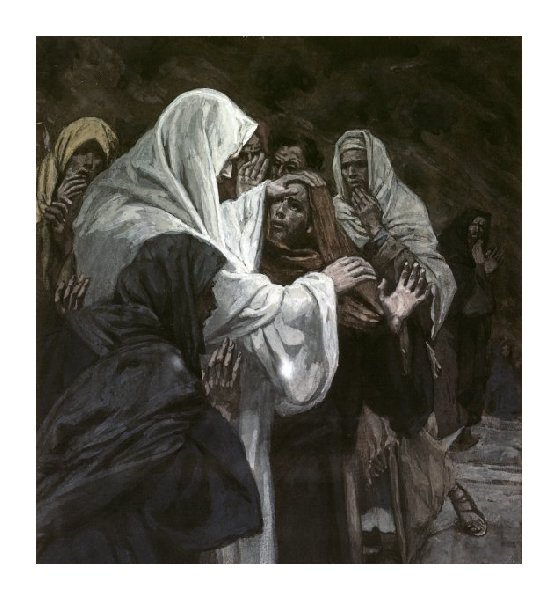
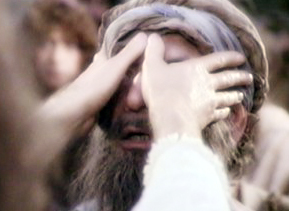
“The next day the stranger was there again. And there was a blind man, a man blind from  birth, I believe. He went up to the stranger and said to him, ‘Sir, if you want to, you can make me see.’ And the stranger answered, ‘Of course I want to,’ and would you believe it, the blind man’s eyes were opened and he could see. He really could.
“How he delighted in all he saw. And it seemed to me then that I did not see rightly. For though I saw, I was not happy with what I saw the way this blind man was.
“And so, without hardly thinking about it, I blurted out to the stranger, ‘Please sir, give me new eyes.’ ‘I will,’ he answered, ‘I give you child eyes, kingdom eyes, treasure-hunting eyes.’ I thanked him and left.
“That was the last time I ever saw the stranger. But from that time on I saw things differently. Where before I saw only darkness, now I saw stars and fireflies. Where before I found only pain, now I discovered a door to joy.
“Where before I had seen nothing worthwhile, now I found much to marvel at. Where before I lived in a desert of doubt and despair, now a fountain of faith and hope sprang up. And where before people annoyed or irritated or bored me, now I saw something in them that reminded me of the stranger. And I rejoiced.”
The old man went away wondering at what the fruit seller had told him. He shrugged it off at first, but no matter how he tried to ignore it, the story kept coming back to mind.
And the more he thought about it, the more he began to long for new eyes for himself. He began to think about the stranger and to hope he would return. And when he did, he would ask for new eyes, too.
The thought excited him. But he began to worry that when he saw the stranger he would be too nervous to ask for anything. So he decided he would practice what to say: “Give me new eyes, sir, child eyes, kingdom eyes, treasure-hunting eyes.”
Yes, that is what he would say. Day and night he practiced this, to be sure he’d never forget, no matter how shaky he was when he saw the stranger.
After a while he put it to music, made it into a little song. Yes, that was the refrain he sang many times a day, day after day, month after month.
He kept alert for news of the stranger, but none came. Over a year went by. But the old man kept hoping and singing his song.
Then one day when he stopped at the fruit stand, he found the fruit seller very sad indeed. “What’s the matter?” he asked.
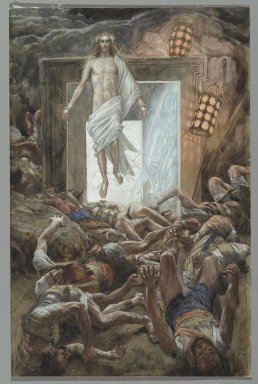
“I’ve just received news,” said the fruit seller, “that the stranger who gave me new eyes has been arrested and is being put to death this very day.”
The old man went home and cried and cried. His chance was gone. Now he would never meet the stranger. Now he would never have new eyes.
Yet the song had become so much a part of him that he continued to sing it. And as he was singing the song on the third day after hearing the tragic news of the stranger, he suddenly felt something like scales fall from his eyes. And he began to see things differently.
Where before he saw only darkness, he saw stars and fireflies. Where before he saw only the injuries done him and resented them, he saw how much he was loved, and he found a forgiveness that healed his wounds. Where before he had seen nothing of value, he found many hidden treasures.
Where before he had passed his days in boredom and suspicion, he now lived in wonderment and trust. And whereas before people had irritated him, he saw something in them that made him think of the stranger.
And so he knew that the stranger lived.
After shadow and darkness, the eyes of the blind will see (Isaiah 29:18).




 Witnesses to Hope