Open

This is a powerful Easter poem by Luci Shaw.  I know it’s not the Easter season, but I think it’s at times like these–as we’re moving into the physically darker seasons of fall and winter, and sometimes simultaneously darker emotional seasons for some of us–that we need to remember that we are always an Easter people.      

                  Open
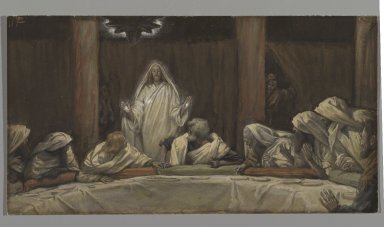
             John 20:19, 26

Doubt padlocked one door and
Memory put her back to the other.
Still the damp draught seeped in, though
Fear chinked all the cracks and
Blindness boarded up the window.
In the darkness that was left
Defeat crouched, shivering,
In his cold corner.

Then Jesus came
(all the doors being shut)
and stood among them.

                              Luci Shaw

The Appearance of Christ at the Cenacle
The Appearance of Christ at the Cenacle (James Tissot)

Lord, have you forgotten me?

“Lord, have you forgotten me?”

Rate this:

Psalm 77 is another of the psalms that express pain and distress (see yesterday’s post for another).  “My soul refuses to be comforted . . . I am so troubled that I cannot speak. . . . Will the Lord spurn for ever, and never again be favorable?  Has his steadfast love for ever ceased?  Has God forgotten to be gracious?” 

I can recall being on retreat quite a few years ago at a Trappistine monastery in Dubuque.  Our Lady of the Mississippi Abbey is a wonderful and beautiful place to spend a retreat.  It is located on top of a bluff overlooking the Mississippi Valley.  Nonetheless, it had been a long season of dry, dry prayer in my life, and at one point that week I prayed my own version of Psalm 77: “Lord, have you forgotten me?”  (Short and to the point. 🙂  And I heard no answer at the time.

Psalm 77, with all its wonderful and clear expressions of anguish–yes, wonderful, because it is so important to find scriptures that actually express all the movements in our hearts–also includes a few lines of instruction for us when we find ourselves in those places of distress: “I will call to mind the deeds of the Lord; yea, I will remember thy wonders of old.  I will meditate on all thy work, and muse on thy mighty deeds” (vv. 11-12).  If we can only stop to remember at least one thing the Lord has done for us–and there are easily more than one, aren’t there?–then we may experience at least a slight lifting up of our hearts. 

Take time today to remember, to call to mind, at least one way the Lord has blessed you in your life, and let your heart be lifted up, at least a little.

The saddest prayer in the psalter

What do we make of Psalm 88, the saddest prayer in the psalter?

Rate this:

I have always found it a comfort that Night Prayer in the Liturgy of the Hours is primarily made up of psalms for the sick, the lonely, and the distressed.  The Church includes Ps 88 for Friday night, a psalm Derek Kidner refers to in these words: “There is no sadder prayer in the psalter.”  It is a psalm I have prayed myself in true earnest.  It begins: “O Lord, my God, I call for help by day; I cry out in the night before thee. . . . For my soul is full of troubles, and my life draws near to Sheol.  I am reckoned among those who go down to the Pit; I am a man who has no strength. . .” and ends with this verse, “You have turned my friends and neighbors against me, no darkness is my one companion left.” (JB) 
      I appreciate the honesty of the pray-er of this psalm, for we all have days or seasons during which we can identify with him.  What is most important is that it is a prayer.  It is always better to pray out of the honesty of our hearts than to feel that we cannot pray, that what we have to say is too sad or anguished or distressing and thus not acceptable to our God.  What father would not want to hear the anguish of his child? 
      Some final comments from Kidner:

With darkness as its final word, what is the role of this psalm in Scripture?  For the beginning of an answer we may note, first, its witness to the possibility of unrelieved suffering as a believer’s earthly lot.  The happy ending of most psalms of this kind is seen to be a bonus, not a due; its withholding is not a proof of either God’s displeasure or His defeat.  Secondly, the psalm adds its voice to the ‘groaning in travail’ which forbids us to accept the present order as final.  It is a sharp reminder that ‘we wait for adoption as sons, the redemption of our bodies’ (Rom 8.22f).  Thirdly, the author, like Job, does not give up.  He completes his prayer, still in the dark and totally unrewarded.

Kidner goes on to point out that, in fact, the author’s rejection was only apparent:

This supposedly God-forsaken author seems to have been one of the pioneers of the singing guilds set up by David, to which we owe the Korahite psalms (42-49; 84f.; 87f.), one of the richest veins in the Psalter.  Burdened and despondent as we was, his existence was far from pointless.  If it was a living death, in God’s hands it was to bear much fruit.

Let your anguish be a prayer.  In His hands it will bear much fruit.