A good goal for Lent–a realizable one–could be to “Come away for awhile” with the Lord. The space of time might be only 3 minutes. Susanna Wesley, mother of John and Charles Wesley and 17 others, used to throw her apron up over her head in the middle of the kitchen as a sign to her children that she was praying. Remember that children pattern themselves on what they see their parents do. (Actions speak louder than words . . .) I read this post from Ann Voskamp this morning and thought it was not only a brilliant idea for children, but also for us who are called to be like a little child: “How to make and take a peace retreat”. Praying that you find a corner or a chair and three minutes today to come away with your Beloved.
Category: prayer
Sometimes
This morning I was digging through one of my old journals of quotes and found this gem. I hope it strikes a chord of hope in the heart that needs it . . . as it did in mine this morning when I re-read it.
God seems to confound our prayers, by putting off deliverance to such a point that it seems removed to a distance from which it cannot reach us. He does not often deal with us thus, because He is merciful, but He does it sometimes, for the very same reasons. (Adolphe Monod)
“When You Can’t Say Your Prayers”
I am going to be “off the air” for a little over a week. All of The Servants of God’s Love will be on retreat this coming week. I’m going to leave you with an article by one of my favorites, Fr. Pat McNulty from Madonna House. He starts out:
When You Can’t Say Prayers
by Fr. Pat McNulty.
What do you say when you think you have just written a significant, deep, wonderful, life-giving, fantastic, momentous, world-changing article and your editor says, “I read it carefully several times and could not get a handle on what you are saying”? to read more, click here.
Look out your window
I really don’t feel inspired this morning . . . so, when in doubt, turn to Amy Carmichael!
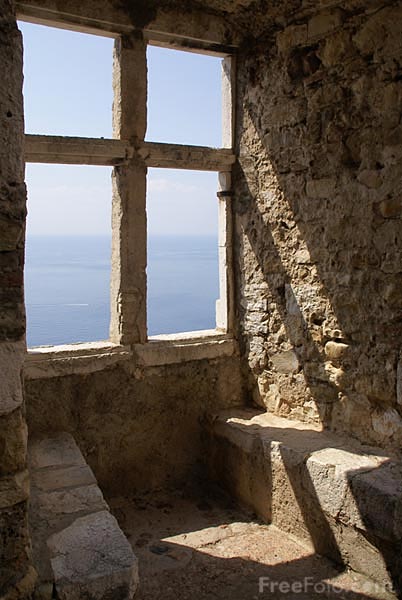
Dan 6.10 His windows being open in his chamber toward Jerusalem.
Daniel had only to kneel down upon his knees beside one of those windows, and at once he had access to the Father. Daniel’s windows almost certainly were very small, set in a thick wall. We often feel that the windows of are chamber are very small–we see so little, know so little of our Heavenly Jerusalem–but a bird can fly through a very small window out into the wide blue air, and if our windows be open toward Jerusalem, we shall in heart and mind thither ascend.
Quiet time
We were talking this morning at breakfast about how busy this Lent has been for some of us. What happened to Lent being a “retreat”? For many of us it’s been a time of providing more spiritual help for others–Sr. Ann has been out of town a lot doing retreats, I’ve had some unexpected spiritual direction meetings, etc. Nonetheless, it is so important to guard our times of personal prayer–especially during this season. Here’s a word about this from Amy Carmichael, commenting on Ps 28.9:
Ps 28.9: Save . . . bless . . . feed . . . lift up . . .
What an inclusive prayer! nothing is left out. The word that speaks to me specially is “feed”.
I do not think there is anything from the beginning of our Christian life to the end, that is so keenly attacked as our quiet with God, for it is in quietness that we are fed. Sometimes it is not possible to get long uninterrupted quiet, but even if it be only ten minutes, “hem it in with quietness.” Enclose it in quietness; do not spend the time in thinking how little time you have. Be quiet. If you are interrupted, as soon as the interruption ceases, sink back into quietness again without fuss or worry of spirit. Those who know this secret and practise it, are lifted up. They go out from that time with their Lord, be it long or short, so refreshed, so peaceful, that wherever they go they unconsciously say to others, who are perhaps cast down and weary, There is a lifting up.
Why set aside time to pray?
In one of her meditations Amy Carmichael answers this question: “There is so much to do. Why set aside so much time just to pray?” This is a question we all deal with. We can have so many demands on our time, some very urgent. Sometimes we find ourselves not praying because we have so much to do. Amy’s answer gives pause for thought, and remember this comes from a woman who was a “mother” to many orphans–not exactly a woman with time on her hands:
The certain knowledge that the suggestion that prayer is waste of time is Satan’s lie; he is much more afraid of our prayer than of our work. (This is proved by the immense difficulties we always find when we set ourselves to pray. They are much greater than those we meet when we set ourselves to work.)
Another little prayer
Continuing on from yesterday:
Ps 119.173: Let Your hand help me.
This little prayer has often been mine. These short Bible prayers are just what we want in days when we are tired or hard-pressed, so I pass this one on for those who need it. You will find it enough. It is like the touch on the electric light switch–just a touch, and the power comes flowing from the power-house–the power that turns to light. (Amy Carmichael, Edges of His Ways, p. 149)
Little prayers
This is one of those mornings: Oh Lord, what am I going to post today? The CTK Women’s Weekend was very good–I love being with all those women–but, being the introvert that I am, it takes a toll on me, and so I’m tired today. Soooo I’m going to pull Amy Carmichael out of my bag, so to speak. This piece is a great one on “Little prayers”:
Sometimes we are very much disappointed with ourselves because we cannot pray proper prayers, only little ones that hardly seem to be prayers at all. I have been finding much comfort in the little prayers of the Gospels. They could not be more little.
There was Peter’s, “Lord save me” [Mt 14.30], and the poor mother’s [Mt 15.25], “Lord, help me”; and sometimes even less, no prayer at all but only the briefest telling of the trouble, “My servant lies at home sick” [Mt 8.6]; and less than that, a thought, and a touch. “She said within herself if I may but touch . . . ” [Mt 9.21].
Again we hear of just feeling. “They were troubled” [Mt 14.26], and a cry, “They cried out in fear”–that was all, but it was enough.
Often in the throng of the day’s work and warfare, there will not be time for more than a very little prayer–a thought, a touch, a feeling, a cry–but it is enough; so tender, so near, is the love of our Lord. (Amy Carmichael, Edges of His Ways, p. 149)
Praying out of the anguish of your heart
A number of months ago, my spiritual director gave me this piece of advice (as I was going through a particularly challenging season of prayer): “Pray out of the anguish of your heart.” It was one of the most helpful things–among many others–he has ever said to me, and it came to mind this morning as I was meditating on Psalm 69, which begins:
Save me, O God!
For the waters have come up to my neck.
I sink in deep mire,
where there is no foothold;
I have come into deep waters,
and the flood sweeps over me.
I am weary with my crying;
my throat is parched.
My eyes grow dim
with waiting for my God.
More in number than the hairs of my head
are those who hate me without cause;
mighty are those who would destroy me,
those who attack me with lies.
O God, thou knowest my folly;
the wrongs I have done are not hidden from thee.
This is a man praying out of the anguish of his heart. David is being entirely honest with God about how he experiences life. He laments: he expresses his grief, his sorrow, his pain. Michael Card, in his book, A Sacred Sorrow, writes about the importance of lamenting in the Bible–and in our own lives. “From the beginning, David was no stranger to pain. And in the end, it was the process of lamenting his pain that led him to unheard of intimacy with God.” (p. 63) Lamenting before God–truly coming before Him and pouring out our anguish–can open the door to a deeper and much more intimate relationship with Him. Derek Kidner’s comments on these first verses of the psalms also shed light on the fruit of doing so:
This distracted beginning demonstrates the value of putting one’s plight into words before God, for David’s account of his crisis clarifies and grows more reflective as he prays. The desperate metaphors of inner turmoil and floundering (vv 1-2) give way to more objective (though still agitated) descriptions of his state and situation (vv. 3-4), and finally to a searching of his conscience (v. 5). Prayer is already doing its work. (Psalms 1-72, An Introduction and Commentary, pp. 245-6).
So, don’t be afraid to pray out of the anguish of your own heart–as long as it is done in sincerity–and before God. Let the prayer of lament do its work in your soul.
Praying for our government
I’ve been waiting for an article I read last month in the print version of Restoration to go online. (Restoration is a Madonna House publication.) It’s entitled “Praying for the American Government” and was written by Cynthia Donnelly, a Madonna House staffer, who lives in a house in Washington, D.C.. The house was set up by Cardinal James Hickey specifically for the purpose of praying for the American government. I share the story here because sometimes I feel overwhelmed thinking about the best way to pray for our government. I suspect there are others of you out there who think the same. After I read this article, I had hope. I thought, “I can do this–and actually I do do this.” You can read it here.
 Witnesses to Hope