Where is He?

I’ve been trying to imagine what it was like for Jesus’ friends shortly after the Resurrection.  As word spread of His appearances to this one and that one, they must have wondered to whom and where He would appear next.  And would they recognize Him when He did–since so many of them failed to recognize Him at first glance?  Thinking about this led me to ponder my own life and take stock of how great my own expectation is of His “appearing” to me in my daily life.  How often do I not recognize Him when He is present to me?  Come, Holy Spirit, and open our eyes to recognize Christ where He is in our lives.

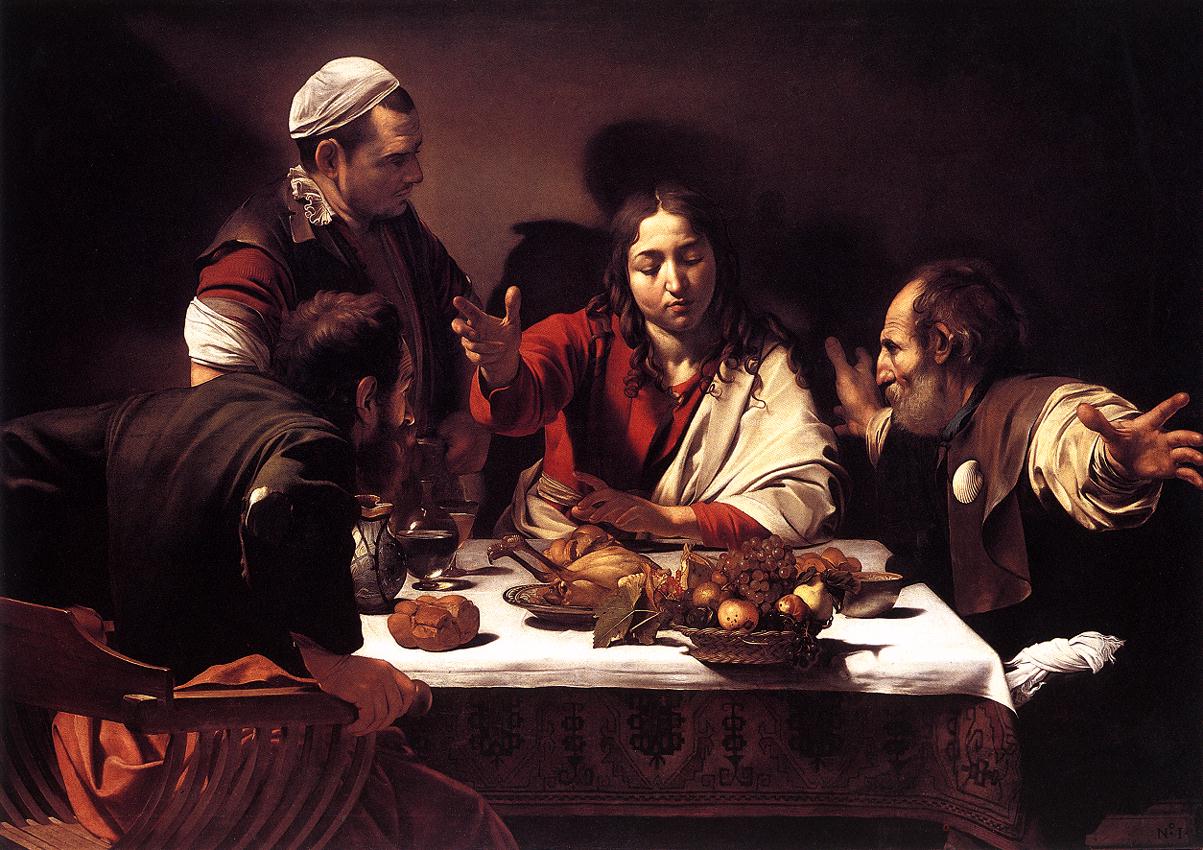
Supper at Emmaus (Caravaggio)

What are you reading?

I just updated the tab above: “What I’m reading” and it occurred to me once again how much what we read affects us and how we must choose carefully in this area.  If you’re like me, you only have a limited time to read–never as much as I would like, I confess.  As well as a selection of inspiring spiritual books that move me to prayer, I am also usually reading someone’s (auto)biography because I find I am so impacted by the lives of others (including my close friends). I need those “witnesses to hope.” What are you reading?  What’s your favorite all-time book?

“I can’t find the words”

Fr. Pat McNulty (Madonna House) on Mercy Sunday:

I Can’t Find The Words

by Fr. Pat McNulty.

A reflection for Mercy Sunday or Holy Week or any time you are having difficulty believing in the mercy of God.

You’re acting a bit strange, Father Pat.

Yeah, I know, Father. I’ve got a problem.

Oh! What was your first clue?

Well, it’s like I can’t find words with which to talk about mercy any more, and here we are looking at this great feast of Divine Mercy again.

You without words? Now that is a problem! But why not just try and see what happens?

I already have: I’ve written about it twice formally and both times I got this look like—I don’t know—like there’s going to be a “burning at the stake” or something, and I’m the prime rib.

Oh, come on, Pat. You’re doing that melodramatic thing again. If you’ve got copies of your articles, why don’t you just read one for me and let me be the judge?

Well, as a matter of fact, I just happen to have a copy of one of the articles right here in the prologue of the little book I wrote. (Ahem.) Are you sure you want me to do this?

Yes, I’d like to hear it.

All right.

Once upon a time, an old man died and went to Hell or Thereabouts. He was deeply grieved and sorry though it seemed a just desert, for he had never really loved God as fully as he was able or his neighbour as he ought. Now Death had “thieved” him, and he had come to naught.

As soon as he arrived There, he began saying the name of Jesus over and over.

The howling creatures who inhabited That Place set about to mock and scorn him with loathing and disgust: “Your religious mumbo-jumbo will cease soon enough when you discover that saying That Name becomes as useless in Eternity as it was in Time.”

Eternity did indeed wear on but so too the old man’s endless cry. It so upset everyone There that they pushed him down, ever deeper down, until he reached a depth where few had ever been—so deep it seemed outside That Place.

And then one night—there are no days There—his cry ceased, and he was never seen or heard from again.

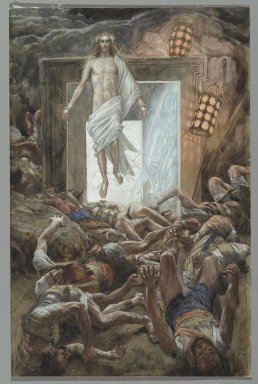
They say that the same angel who accompanied Christ from That Place for His Resurrection still waits There for those simple souls who pass by with the Name of Jesus ever on their lips and carries them away.

Or so they say.

So! What do you think?

(Silence.)

No, tell me what you’re really thinking?

Ah-h-h-h-h, I don’t think it’s a good idea to be too public with that kind of writing, Pat, especially at this time of the year when the wood is nice and dry. You know what I mean?

Why, do you think it’s heretical to push the edges of Divine Mercy like that so we can get closer to it or for it to get closer to us?

Maybe it’s not, but it’s certainly a delicate process about a very holy thing, don’t you think? In any case you said you’ve written about it twice formally. Maybe the second article isn’t so…precarious.

You don’t “just happen to have a copy” of that one with you, too, do you?

No. But I don’t need a copy of that one because I’ll never forget it. It was during that time when I was in the Sinai Desert. One night I had this dream? Nightmare?

Everyone was in line for the Final Judgment. I was watching this very intense, painful, messy encounter between Christ and someone at the front of the line, someone I vaguely recognized but couldn’t quite see what with all the dust and mess going on.

As I stretched for a better view I heard, “McNulty,” and I knew the time for my Finals had arrived!

I slowly made my way into the open area with my head bowed. I stopped there before Jesus Christ. He lifted my face to look into my eyes and as he did, I could see the person who had just finished his Finals and was now standing at the Pearly Gates looking back at Christ.

The man’s body language spoke loud and clear: “Are you sure I’m supposed to go in Here?” Christ motioned him on and then I recognized who it was.

I couldn’t believe it! I went into a tirade about truth and justice, right and wrong, fair and unfair, until Christ interrupted me, and said, very gently, “Patrick, my mercy is mine to do with as I see fit. And, it’s yours, too, if you want it.”

At that I woke up in a panic crying out there in the desert, “No-o-o-o-o-o-o-o-o!”

The man I had seen in my dream who was about to go in through the Pearly Gates was none other than Adolph Hitler!

What? That’s crazy!

I know.

And why would you want to imagine someone dying, as if they went to Hell, and then got out. That’s borderline heresy in my book.

No! No! That’s the whole point: we dare not try to fit Divine Mercy into any category which we already have. We have to look at it in such a way that it is truly divine and in no way mine!

But we’re not saying, “No need to worry, Jesus will forgive everyone in the end anyway!” No. It’s like…. Oh, forget it. It’s too much for words.

Yes, indeed, I think it is too much for words, Pat. And I think maybe it’s time for you to write about lesser things like maybe vigil lights or charcoal for the censor, that sort of thing.

After all, it’s a sign of a good writer to know when he is out of his element. And it’s obvious (to me) that when it comes to Divine Mercy, you’re definitely out of your element, Pat.

That’s it! You just found the perfect words, my friend! That’s it! “When it comes to Divine Mercy we are definitely out of our element.” Of course! There are no words! That’s why the Spirit so generously allows us to imagine these extreme things about it, because “we’re out of our element.” It is Divine Mercy!

Thank you, my friend. Thank you. Thank you. Now I can go back to just resting in the name of Jesus all day long as I always do and let all these wonderful, extreme images come and go as God sees fit. It’s all part of Divine Mercy. Amen!

Ah-h-h-h-h-h. I’ve got a friend, Pat, who does professional counselling, if you’d like to talk to someone further about all of this…..

Strange, because you know what I was thinking when you said, “friend?”

No.

I was thinking, “What a friend we have in Jesus!” and it suddenly dawned on me, what other Word is there to explain Divine Mercy than the One Who is Mercy. Jesus. Just think, I could have done this whole article in one Word! Maybe next time. Thanks, Father.

Ah-h-h-h-h-h-h-h-h-h-h….

All the doors being shut

A Sunday-poem along yesterday’s lines:

Open

Doubt padlocked one door and
Memory put her back to the other.
Still the damp draught seeped in, though
Fear chinked all the cracks and
Blindness boarded up the window.
In the darkness that was left
Defeat crouched, shivering,
In his cold corner.

Then Jesus came
(all the doors being shut)
and stood among them.

~Luci Shaw

Locked doors

I always find this kind of reflection on the Easter appearances full of great hope for folks like me: “Jesus moves among men and women–even if it means passing through doors locked from within” (Jn 20.19-23). (Fr. William M. Joensen)  Many of us frequently–or continually–bolt the doors of our hearts from within, yet we long for Christ to come to us.  We can have great hope . . . for He is the One who can enter “through doors locked from within.”

With the eyes of faith

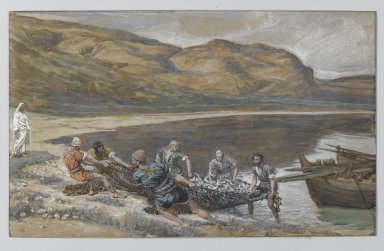
I love pondering the post-Resurrection appearances of Christ.  I guess I feel in good company when those who had spent three solid years with Christ failed to recognize Him.  It’s always a reminder to me of the need to sharpen our eyes of faith, to look for Him in His many disguises.  In today’s Gospel, we see Jesus showing a sense of humor (in my opinion).  He repeats advice that He had given them when He first met them: put the net down on the other side.  How many times does that happen to us, that God comes to us in a familiar way?  Let’s not miss His appearances to us in our every day life.

“He stood as a common person . . . “

For those who may be mourning a loss:

“He did at first conceal himself from her.  He stood as a common person, and she looked upon him accordingly.  She turned herself back from talking with angels and sees Jesus himself standing, and yet she knew not that it was Jesus. ‘The Lord is nigh unto them that are of a broken heart’ (Ps 34.18), nearer than they are aware.  Those that seek Christ, though they do not see Him, may yet be sure that he is not far from them.”  (Matthew Henry)

This is the day

One of the things I love about the week after Easter is that the Church relates to each day of the octave as though it is Easter Day.  In the Preface of Easter I, the priest is directed to pray during the octave: “We praise you with greater joy than ever on this Easter day when Christ became our paschal sacrifice.”  (Unfortunately most of the priests where I attend daily Mass pray “in this Easter season.”)  In the Liturgy of the Hours, we pray Morning, Evening, and Night Prayer of Easter Day all week.  To me this is a foretaste of heaven when each day will be as the first.  “This is the day the Lord has made.  Let us be glad and rejoice in it!”

“How an old man got new eyes”

An Easter story for young and for old from Madonna House:

How an Old Man Got New Eyes: An Easter Story

by Jude Fischer.

Once there was an old man. He was very unhappy and didn’t enjoy life very much. As things were never right, he grumbled and complained.

He grumbled that he had to get up in the morning. Then when nightfall came, it came too soon. He complained when he had to work, and found it boring when he didn’t.

He murmured that people didn’t pay enough attention to him, and when they did, it irritated him. He hated it when it rained, and then, when the sun came out, he found it too hot. In winter he longed for summer and in summer for fall. All in all, life was rather miserable.

One day he stopped at a fruit stand. He found some of the fruit was too ripe, and the rest not ripe enough. And so he decided to leave.

As he was leaving, the fruit seller said to him, “I wish you new eyes, sir, child eyes.”

“New eyes,” thought the old man as he walked away. “Why, my eyesight is perfect. My vision is sharper than that of many folks half my age. I see things every bit as clearly as I did when I was a child.”

A week or so later he stopped at the fruit stand again. The fruit seller had the fruit he didn’t want, and the fruit he wanted wasn’t there. As he was leaving the fruit seller said, “I wish you kingdom eyes, sir.”

“Kingdom eyes?” This puzzled the old man a bit. But no matter. He was a busy man, lots of things to do, and so he let it pass.

Some time later the old man stopped at the fruit stand again. It was the same old story. Everything he didn’t want, nothing he did want, everything too ripe or not ripe enough.

As he left, the fruit seller said, “I wish you treasure-hunting eyes, sir.”

“Treasure-hunting eyes?” Why he had been on a treasure hunt once. And of all in the group, it had been he who had finally spotted the treasure. Why, if anyone had treasure-hunting eyes, he had.

But where had it gotten him? There had been endless squabbling over the treasure, and in the end he had never received his share. Treasure-hunting eyes indeed!

But in spite of himself the old man began to wonder about what the fruit seller had said to him. What did he mean, new eyes, child eyes, kingdom eyes, treasure hunting eyes? The next time he stopped at the stand, he asked the fruit seller to explain.

“Well, you see,” the fruit seller began, “one day there was a stranger in town. Quite a crowd gathered to hear him speak. I joined them. He spoke of many things, but a few things he said really stuck in my mind.

“He said the kingdom of heaven is within you. He said it is like a treasure hidden in a field. And he said that unless you become like a little child you cannot enter it.

“I didn’t understand what he meant, but I wondered on it, and carried his words in my heart.

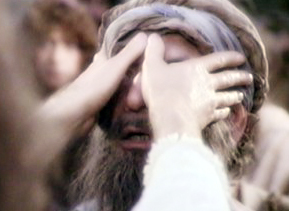
“The next day the stranger was there again. And there was a blind man, a man blind from birth, I believe. He went up to the stranger and said to him, ‘Sir, if you want to, you can make me see.’ And the stranger answered, ‘Of course I want to,’ and would you believe it, the blind man’s eyes were opened and he could see. He really could.

“How he delighted in all he saw. And it seemed to me then that I did not see rightly. For though I saw, I was not happy with what I saw the way this blind man was.

“And so, without hardly thinking about it, I blurted out to the stranger, ‘Please sir, give me new eyes.’ ‘I will,’ he answered, ‘I give you child eyes, kingdom eyes, treasure-hunting eyes.’ I thanked him and left.

“That was the last time I ever saw the stranger. But from that time on I saw things differently. Where before I saw only darkness, now I saw stars and fireflies. Where before I found only pain, now I discovered a door to joy.

“Where before I had seen nothing worthwhile, now I found much to marvel at. Where before I lived in a desert of doubt and despair, now a fountain of faith and hope sprang up. And where before people annoyed or irritated or bored me, now I saw something in them that reminded me of the stranger. And I rejoiced.”

The old man went away wondering at what the fruit seller had told him. He shrugged it off at first, but no matter how he tried to ignore it, the story kept coming back to mind.

And the more he thought about it, the more he began to long for new eyes for himself. He began to think about the stranger and to hope he would return. And when he did, he would ask for new eyes, too.

The thought excited him. But he began to worry that when he saw the stranger he would be too nervous to ask for anything. So he decided he would practice what to say: “Give me new eyes, sir, child eyes, kingdom eyes, treasure-hunting eyes.”

Yes, that is what he would say. Day and night he practiced this, to be sure he’d never forget, no matter how shaky he was when he saw the stranger.

After a while he put it to music, made it into a little song. Yes, that was the refrain he sang many times a day, day after day, month after month.

He kept alert for news of the stranger, but none came. Over a year went by. But the old man kept hoping and singing his song.

Then one day when he stopped at the fruit stand, he found the fruit seller very sad indeed. “What’s the matter?” he asked.

“I’ve just received news,” said the fruit seller, “that the stranger who gave me new eyes has been arrested and is being put to death this very day.”

The old man went home and cried and cried. His chance was gone. Now he would never meet the stranger. Now he would never have new eyes.

Yet the song had become so much a part of him that he continued to sing it. And as he was singing the song on the third day after hearing the tragic news of the stranger, he suddenly felt something like scales fall from his eyes. And he began to see things differently.

Where before he saw only darkness, he saw stars and fireflies. Where before he saw only the injuries done him and resented them, he saw how much he was loved, and he found a forgiveness that healed his wounds. Where before he had seen nothing of value, he found many hidden treasures.

Where before he had passed his days in boredom and suspicion, he now lived in wonderment and trust. And whereas before people had irritated him, he saw something in them that made him think of the stranger.

And so he knew that the stranger lived.

After shadow and darkness, the eyes of the blind will see (Isaiah 29:18).
While it is still dark

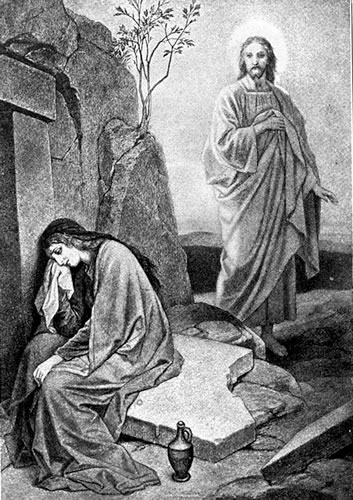
Some of us can wake up on Easter morning or Easter Monday or any other morning, for that matter, and wonder where the risen Christ is.  For one reason or another, we may feel like Mary Magdalene weeping outside the tomb wondering where they have taken Him.  I wrote this a few years back on Easter morning and thought I might share it with you:

“Now on the first day of the week Mary Magdalene came to the tomb early, while it was still dark . . . “ (Jn 20:1)

While it was still dark she came. She did not wait at home. She did not wait for Him or for others to come to her. And she expected to find what? Surely the stone still blocking her from Him. And yet she came. In the darkness. In her grief. She sought Him out even if only to lean her head and heart upon that stone that separated Him from her. In the darkness, in her grief she came.

And what did she find? The stone rolled away—but He was not there. He was not there. “I sought him, but found him not. I called him, but he gave no answer” (Song of Songs 5:6b). “Where have they laid him? They have taken away my Lord, and I do not know where they have laid him” (Jn 20:13b).

Her sorrow is now greater, yet she does not return home. She stands there weeping. And seeking. While it was still dark.

And no one else can solace her. Not angels. Not gardeners . . . She still seeks Him. While it is still dark. And that seeking, that longing of her soul, that anguish at His absence is the latch Christ uses to open her heart when He says her name: “Mary.” While it was still dark.

So go to Him. While it is still dark. While you are still weeping. Even when you cannot find Him. Stand there weeping and seeking Him. And listen for your name. Even now He is saying it.

While it is still dark.

“Blessed are those who have not seen and yet believe.”