Light-through-darkness

We all go through periods of darkness. I hope what Dom Hubert vanZeller has to say in his book, The Inner Search, helps you as much as it has helped me.

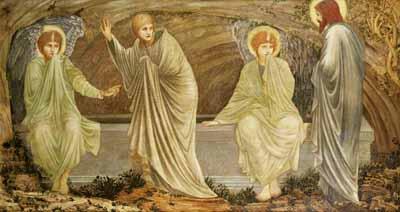
Sunrise on the Mole, Nico Angleys

“Darkness is not only prayer going wrong; it is everything going wrong. And over and above this it is having to believe that everything is going right.”

“Darkness is failure . . . Darkness is fear, is regret, is doubt. Darkness is looking back an saying: ‘I have been deluded from the start; it has all been a mistake.’ Darkness is looking forward and saying: ‘I do not know what to do next; I have lost m way and it is too late now to find it.’ It is the endlessness of darkness that constitutes a peculiar pain.”

“Darkness is not only when our ideals are shown to be unattainable, but when they are shown to be not ideals at all. When they are seen to be selfish ambitions.
“Darkness is not only when our motives are misunderstood and condemned, but when they are seen by ourselves to have been worthy of condemnation–when we realize that we have ourselves misunderstood them all along.
“Darkness is not only when our zeal for souls is blocked at every turn, but when we discover that it never has been zeal for souls. Darkness is seeing what a zeal we have for self.
“Only when we know that we have nothing of our own to show for our service of God, that we have no offering to make but our failures, sins, helplessness and folly are we made empty enough to be restocked with new graces. It is light-through-darkness that brings us to this stage.”

“We have to be disillusioned.”

“The essential vocation, the primary call to which our response is of supreme moment, is not to this or that exercise but to love. This is the initial grace–love. To work out this grace on our own is beyond us. We need more grace. We need Love itself to do it for us.
“Love works in faith, and faith means the night . . . . Anyone can give a notional assent to the proposition: ‘I am a weak man’; what God want is a more absolute recognition than that.”

“Neither books nor directors nor penance nor systems of prayer can do service for the training which the Spirit Himself imparts. The soul must ‘be still and wait for the Lord.’ Always there will be that pendulum swing of darkness and light, knowing and unknowing, learning and unlearning, losing and finding again.”

A Year of Jubilee

It’s Sunday, and since it is indeed a Year of Jubilee, I thought it would be appropriate to share this poem by Anne Porter. My favorite part is her ending.

A Year of Jubilee

You grew up like a sapling
With fishermen and shepherds
And the God-haunted mountains
Of your small holy country.

You looked the same
As all your people
So for a time
You went unnoticed
You who were later killed
Most cruelly

One Sabbath morning
You stood up in the temple
Young village rabbi
From the provinces

And you unrolled the scroll
And read aloud form it
The Word welled up to us
Out of Isaiah’s book
As fresh as the clear streams
That well up in the mountains

“The Spirit of the Lord
Has come upon me
He has anointed me
To bring glad tidings
To the poor
To heal the brokenhearted
To give the blind their sight
To free the captives
Release the prisoners and proclaim
A year of jubilee.”

We recognized the voice
This was the Promised One
This was the Shepherd
Our hearts were burning

We listened when you told us
About our heavenly Father
Who wishes us
To cherish one another
To be forgiving, generous
As he is himself

And festive, carefree
As the meadow-flowers
Lights as the swallows

He wishes us 
To be like children

You also told us
Our Father
Blesses us most of all
When we are poor

As even when our bodies
Have grown old
And our heads are filled with confusion

He will not love us 
Any the less for that.

004-jesus-nazareth

Look at Him who is looking at you

“Holiness consists in enduring God’s glance. It may appear mere passivity to withstand the look of an eye; but everyone knows how much exertion is required when this occurs in an essential encounter. Our glances mostly brush by each other indirectly, or they turn quickly away, or they give themselves not personally but only socially. So too do we constantly flee from God into a distance that is theoretical, rhetorical, sentimental, aesthetic, or, most frequently, pious. Or we flee from him to external works. And yet, the best thing would be to surrender one’s naked heart to the fire of this all-penetrating glance. The heart would then itself have to catch fire, if it were not always artificially dispersing the rays that come to it as through a magnifying glance. Such enduring would be the opposite of a stoic’s hardening his face: it would be yielding, declaring oneself beaten, capitulating, entrusting oneself, casting oneself into him. It would be childlike loving, since for children the glance of the father is not painful: with wide-open eyes they look into his. Little Thérèse–great little Thérèse–could do it. Augustine’s formula on the essence of eternity: videntem videre–‘to look at him who is looking at you.'” (von Balthasar)

A Song for Caitlin

Sharing this lovely poem by J.B. Toner. May you be blessed.

Song for Caitlin

God’s earth is full of beauty, that I know;
   It scintillates and dances in my eyes,
   Her laughter rolls and rings and multiplies
And makes the turning vistas chime and glow–
But little peace it grants me, even so:
   I cannot cling to bright salvation’s prize;
   The Heaven-light that lights my way soon dies,
For want of faith (perhaps) through which to flow.
And yet my world holds hope and purity,
   Our Lady’s Son redeemed the depths of Hell–
And traces of her grace I still can see,
   Like sun-sparked droplets from a silver well:
This medal round my neck which is, to me,
Three strands of hair from my Galadriel.

Break the box and shed the nard!

A blessed Easter to all of you, my friends. May you be prodigal in your rejoicing over these next 50 days!

Easter

Break the box and shed the nard;
Stop not now to count the cost;
Hither bring pearl, opal, sard;
Reck not what the poor have lost;
Upon Christ throw all away:
Know ye, this is Easter Day.

Build His church and deck His shrine,
Empty though it be on earth;
Ye have kept your choicest wine—
Let it flow for heavenly mirth;
Pluck the harp and breathe the horn:
Know ye not ’tis Easter morn?

Gather gladness from the skies;
Take a lesson from the ground;
Flowers do ope their heavenward eyes
And a Spring-time joy have found;
Earth throws Winter’s robes away,
Decks herself for Easter Day.

Beauty now for ashes wear,
Perfumes for the garb of woe,
Chaplets for dishevelled hair,
Dances for sad footsteps slow;
Open wide your hearts that they
Let in joy this Easter Day.

Seek God’s house in happy throng;
Crowded let His table be;
Mingle praises, prayer, and song,
Singing to the Trinity.
Henceforth let your souls alway
Make each morn an Easter Day.
 
Gerard Manley Hopkins

Pray with us

This is absolutely beautiful and so powerful.

In collaboration on a first-of-its-kind project for Holy Week, Wintershall Theatre Company and @christianart have joined forces on The Stations of the Cross: Pray with us, a short film depicting the fourteen scenes from Christ’s Passion. Filmed at Wintershall Estate against a striking 20-foot cinematic backdrop, each scene from the Stations of the Cross was carefully arranged, lit, and filmed to create the effect of a tableau vivant—a living painting.

“The tradition of tableaux vivants, or “living pictures,” dates back to the Middle Ages and gained popularity in the 18th and 19th centuries as a theatrical artform. In these staged scenes, actors would pose silently and motionlessly to recreate famous artworks or dramatic moments, often with elaborate costumes, lighting, and minimal movement. The tableau vivant artform has found new life in video, where the boundary between stillness and motion can be artfully explored, inviting the viewer to contemplation and often emotive experience.

“Written by Presented by Fr. Patrick van der Vorst”