“Be near me when I’m dying, O show Thy cross to me.”
(from “O Sacred Head, Once Wounded”–you can listen to it here.)
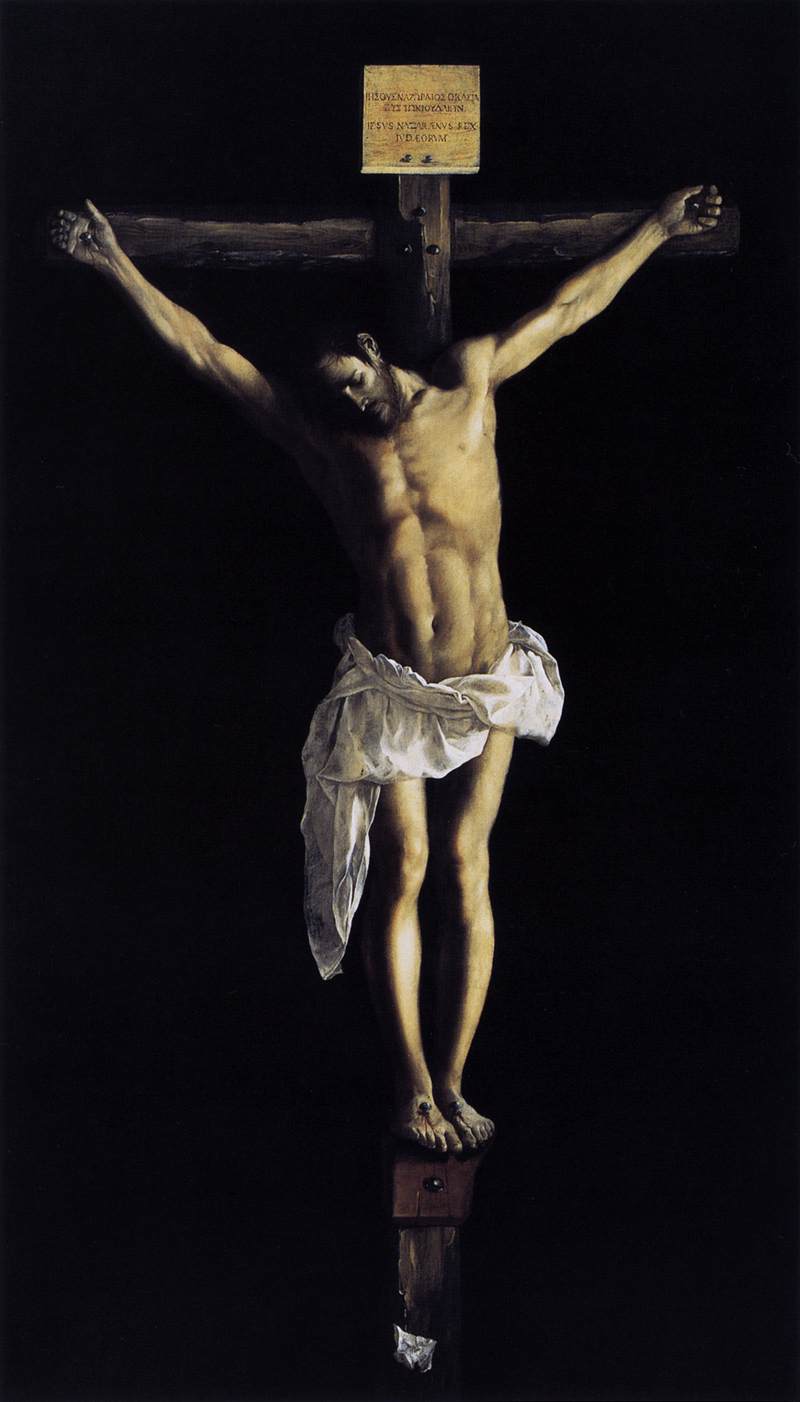
“Be near me when I’m dying, O show Thy cross to me.”
(from “O Sacred Head, Once Wounded”–you can listen to it here.)
Something to think about . . .
What e’er the soul has felt or suffered long,
Oh, heart! this one thing should not be forgot:
Christ washed the feet of Judas.
~George Marion McClellan
from “The Feet of Judas” in The Book of American Negro Poetry 1922
As an aide in a rest home caring for the crippled feet of the elderly,
as a medical student in an inner city hospital seeing the homeless whose socks had to be peeled off carefully to avoid pulling off gangrenous toes, as a doctor working with the down and out detox patients from the streets who had no access to soap and water for weeks,
I’ve washed feet as part of my job.
People always protest, just as Peter did when Jesus started to wash his feet.
We never believe our feet,
those homely gnarled bunioned claw-toed calloused parts of us,
deserve that attention.
We are ashamed to have someone…
View original post 107 more words

An excellent Holy Week suggestion from Fr. Peter John Cameron (editor of Magnificat):
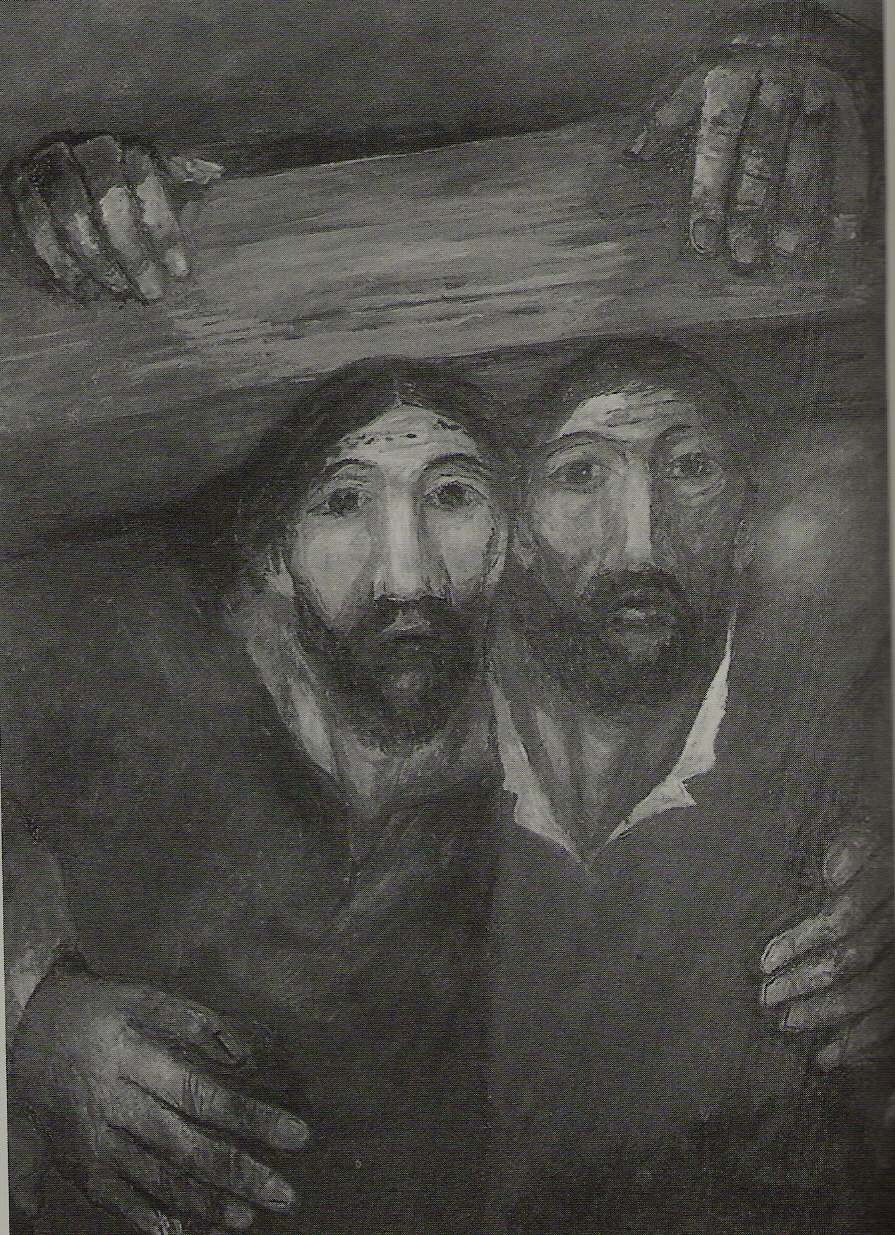
One way to approach Holy Week to live it like no other of the year is to unite yourself with one of the holy people who accompany Jesus in his Passion. So perhaps you might identify with one of the disciples sent to prepare the Upper Room, looking at everything in your life in the light of the Eucharist . . . or the woman who anoints Jesus in Bethany, begging for the grace of special compassion . . . or Simon Peter, weeping with true repentance over your sins . . . or Simon of Cyrene, eager to take up Christ’s cross no matter how it may appear . . . or the Good Thief, bursting with hope that Jesus wants us to be with him in paradise . . . or John, daring to remain with Jesus on Calvary and accepting the gift of Mary to be our Mother . . . or the centurion, letting our profession of faith transform our life for ever: This man is the Son of God!
And for those of you who are walking your own way of the Cross, my advice is that you approach Holy Week pondering how Jesus is accompanying you in your passion, helping you to carry your cross, washing your feet and kissing them . . .
My Jesus, I love Thee, I know Thou art mine;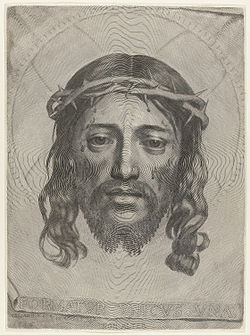
For Thee all the follies of sin I resign.
My gracious Redeemer, my Savior art Thou;
If ever I loved Thee, my Jesus, ’tis now.
I love Thee because Thou has first loved me,
And purchased my pardon on Calvary’s tree.
I love Thee for wearing the thorns on Thy brow;
If ever I loved Thee, my Jesus, ’tis now.
I’ll love Thee in life, I will love Thee in death,
And praise Thee as long as Thou lendest me breath;
And say when the death dew lies cold on my brow,
If ever I loved Thee, my Jesus, ’tis now.
In mansions of glory and endless delight,
I’ll ever adore Thee in heaven so bright;
I’ll sing with the glittering crown on my brow;
If ever I loved Thee, my Jesus, ’tis now.
William R. Featherstone
To hear it sung, you can go here.
Friday: from the archives
From a profound book, Lament for a Son, written by Nicholas Wolterstorff on the death of his 25-year-old son from a mountaineering accident: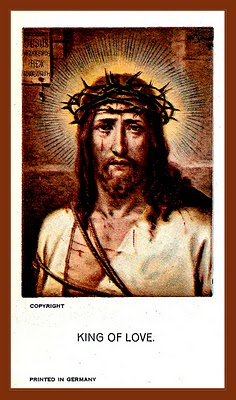
It is said of God that no one can behold his face and live. I always thought this meant that no one could see his splendor and live. A friend said perhaps it meant that no one could see his sorrow and live. or perhaps his sorrow is splendor.
And great mystery: to redeem our brokenness and lovelessness the God who suffers with us did not strike some mighty blow of power but sent his beloved son to suffer like us, through his suffering to redeem us from suffering and evil.
Instead of explaining our suffering, God shares it.

A beautiful and encouraging piece from Gerard Manley Hopkins:
[Christ] is the true-love and the bridegroom of men’s souls: the virgins follow him whithersoever he goes, the martyrs follow him through a sea of blood, through great tribulation; all his servants take up their cross and follow him. And those even that do not follow him, yet they look wistfully after him, own him a hero, and wish they dared answer to his call. Children as soon as they can understand ought to be told about him, that they may make him the hero of their young hearts . . .
From all that might be said of Christ’s character I single out one point and beg you to notice that. He loved to praise, he loved to reward. He knew what was in man, he best knew men’s faults and yet he was the warmest in their praise. When he worked a miracle he would grace it with “Thy faith hath saved thee,” that it might almost seem the receiver’s work, not his. He said of Nathaniel that he was an Israelite without guile; he that searches hearts said this, and yet what praise that was to give! He called the two sons of Zebedee Sons of Thunder, kind and stately and honorable name! We read of nothing thunderlike that they did except, what was sinful, to wish fire down from heaven on some sinners but they deserved the name or he would not have given it, and he has given it them for all time. Of John the Baptist he said that his greater was not born of women. He said to Peter, “Thou art Rock,” and rewarded a moment’s acknowledgement of him with the lasting headship of his Church. He defended Magdalen and took means that the story of her generosity should be told for ever. And though he bids us say we are unprofitable servants, yet he himself will say to each of us “Good and faithful servant, well done.”
And this man whose picture I have tried to draw for you, brethren, is your God. He was your maker in time past; hereafter he will be your judge. Make him your hero now.
reblogged from Barnstorming
There will be rest, and sure stars shining
Over the roof-tops crowned with snow,
A reign of rest, serene forgetting,
The music of stillness holy and low.
~Sara Teasdale
May we sit in silence,
content to know
the heavenly realms
circle slowly above us,
continuous and consistent,
in reign of rest fulfilled
in His serene forgetting our sins
and forgiving our flaws.
We hear Him now,
still and low,
saying our name,
inviting us to rest
with Him and
in Him
forever.


 Witnesses to Hope