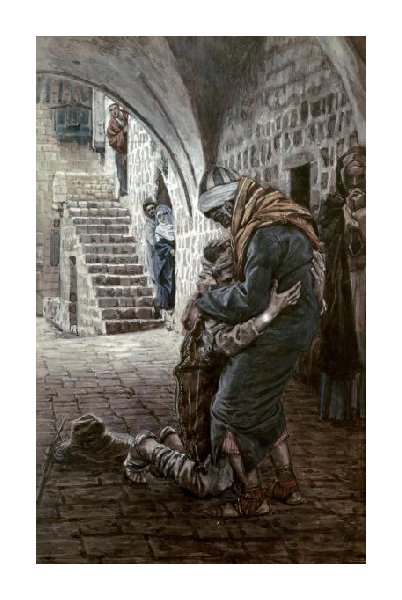
Come soon

My mom had only one sibling, a younger sister, my Aunt Dorothy.  After my mom died ten years ago, my aunt became my other mother.  I would tell her: “You’re the closest thing to my mother that I have, and I’m the closest thing to my mother that you have.”  I could go visit her and feel like I was at my mom’s.  I could find the same unconditional love there as I did at my mom’s.  She’s been sick the last couple of months with recurrence of cancer, and I was able to spend some good times with her.  My cousin, Matt, called yesterday and said that she had taken a turn for the worse, so I drove up immediately to see her.  She was unresponsive, but I was able to tell her I loved her and God loved her and thank her for everything.  This morning I found out that she died peacefully a half hour after I left, with her two youngest children holding her, one of them with her hand on my aunt’s heart. 

I can’t help but think that I’m starting Advent early.  Advent is all about Christ’s coming, His first coming and His second coming, and these kinds of comings at the moment of death.  Of course, I’m mourning her loss.  I’ve lost my other mother.   I’m now the oldest on that side of the family.  But she’s with the One who loves her the most.  The One we all long to be with.  This poem has been going through my mind the past few hours. 

Come Soon

I set my candle where the shadows loom,
A flame of faith between the eyes of fate,
And I am waiting in the windy gloom;
O come, my Love, for it is growing late.
Small doubts on darkling wings flit here and there
Uncertainly in the grey, lingering light;
Mysterious music haunts the troubled air,
And none but you can comfort me tonight.

I wait upon the moment’s hazard now;
Is there no power can hold the darkness back
Until you come?  O do not disavow
Your promised love–the one thing I most lack.
The hour is late, dear Love, come soon, come soon;
Then shall the night be lovelier than noon.

               ~Hazel Littlefied Smith

My aunt now knows the one thing she most lacked, for her Love has come for her.  May He come soon for all of us “waiting in the windy gloom.”

King’s Council

Today is the Feast of Christ the King.  “The King of love my shepherd is  . . . ” 

The poem for this Sunday speaks of a personal response to this King of ours:

King’s Council

From the four zones of my universe
They come, the rulers of my dioceses:
Fine-featured dreams and hawk-nosed fears,
Shabby compromises with scrawny necks.

Ageing hopes pull back their rounded shoulders.
Love comes in borrowed crimson, having spent
Her robes on the unbeautiful.  And, last
That patriarch, old faith, comes shuffling in.

Here is the council of me, God.  Look!  see,
Them all cast down their mitres at Your feet!

      ~Mother Mary Francis, P.C.C. (Summon Spirit’s Cry, p. 125)

New every morning

Some mornings it’s just hard.  It’s hard to get up.  It’s hard to pray.  It’s hard to face another day of living for others rather than yourself.   That’s where my thinking was going this morning.  So I did as I usually do when I wake up early, I reached for my Amy Carmichael devotional, Edges of His Ways.  (One of the main reasons I like to read her is because she always draws me deeper into Scripture.  I don’t end up with reading just some nice words, but I end up reading God’s word.)  Today’s entry is entitled “Ps 22.  Title LXX [in the Septuagint] Concerning the Morning Aid”  Well, that obviously struck home.   I stopped reading and grabbed my RSV.  The RSV reads “According to the Hind of the Dawn.”  So I then pulled out my Kidner commentary, in which he said that indeed the more faithful translation according to the Greek is “On the help at daybreak”.   Psalm 22, as you know–and as Amy reminds us–makes us think of the darkness and suffering of Calvary.  I’ll let you read the rest of what she wrote, and may you experience it as I did this morning, as the prophet writes in the Book of Lamentations: “His mercies are new every morning.” 

When we think of Psalm 22, we think most of the darkness and suffering of Calvary.  We know that it was in our Savior’s mind through those most awful hours; He quoted the first verse, He fulfilled all the verses.  Even though there is a burst of triumphant joy in that psalm of pain, it is chiefly the pain that comes to mind when we think of it.  But its title is not about pain, it is a word of beautiful joy: Concerning the Morning Aid. As I pondered this, my thoughts were led on to a familiar New Testament story: “It was now dark and Jesus was not come to them . . . They see Jesus walking on the sea”.  Looking back on that night the most vivid memory must have been, not the darkness or the weariness, not the great wind and the rough sea, but the blessed Morning Aid that came before the morning.
     So let us not make too much of the storm of the night.  “Even the darkness is not dark to Thee” [Ps 139.12]; “And He saw that they were distressed in rowing” [Mk 6.48].  The wind was contrary unto them then, perhaps it is contrary to us now.  But just when things were hardest in that tiredest of all times (between 2 a.m. and 6 a.m.), just then, He came.
      “I will not leave you comfortless: I will come to you” [Jn 14.18], He said, and He does come.  He always will come.  “His coming is as certain as the morning” [Hosea 6.3].  His Morning Aid comes before the morning.  If we do not see Him coming, even so, He is on His way to us.  More truly, He is with us.  “I am with you all the days, and all the day long” [Mt 28.20 Moule].

As I say in my sidebar, I started this blog to share things that have increased my hope during challenging times–those challenging times are not just in the past, but also in my present.  My prayer is that you, especially any of you who are so aware of your need for Him this morning, may know His help at daybreak, and to know that He is coming, and is indeed already with you.

Why set aside time to pray?

In one of her meditations Amy Carmichael answers this question: “There is so much to do.  Why set aside so much time just to pray?”   This is a question we all deal with.  We can have so many demands on our time, some very urgent.  Sometimes we find ourselves not praying because we have so much to do.  Amy’s answer gives pause for thought, and remember this comes from a woman who was a “mother” to many orphans–not exactly a woman with time on her hands:

The certain knowledge that the suggestion that prayer is waste of time is Satan’s lie; he is much more afraid of our prayer than of our work.  (This is proved by the immense difficulties we always find when we set ourselves to pray.  They are much greater than those we meet when we set ourselves to work.)

It is no small reason

There is one thing we can put our hope in, and that is no small reason for rejoicing.

Rate this:

As they say in the traffic report, this post is thanks to “tipster” Lupe.  Lupe grabbed me after Mass yesterday and asked me if I had read the Office of Readings for the day–which I hadn’t yet.  (The Office of Readings is part of the Liturgy of the Hours.)  So, of course, I did as soon as I got home.  The readings this time of year, as we close the liturgical year, are mostly about the Lord coming again or about our going to meet Him in death.  The second reading for yesterday, Wednesday of the thirty-third week of Ordinary Time, is from a sermon by St. Augustine.  He preaches about the sure promise we have of seeing the Lord, but now we walk by faith, not by sight. 

We walk by faith, and not by sight.  When will it be by sight? Beloved, says John, we are now the sons of God; what we shall be has not yet been revealed, but we know that when it is revealed we shall be like him, because we shall see him as he is.  When this prophecy is fulfilled, then it will be by sight.

Then Augustine goes on to point out that we have great reason for rejoicing–and the reason for our rejoicing is that this promise will be fulfilled:

Nevertheless, even now, before that vision comes to us, or before we come to that vision, let us rejoice in the Lord; for it is no small reason for rejoicing to have a hope that will some day be fulfilled.

This got me thinking about the many things we put our hope in, and how often we are then disappointed when they are not fulfilled.  That can lead us to discouragement and to an attitude of “Why hope?”  It is true that we will face many disappointments in life–but this one thing we can–and must–put our hope in: that we shall see Him as He is.  This is a hope that will one day be fullfilled.  We–you–will see Him as He is.  And that is no small reason for rejoicing.

The Reality of Hope

I would like to refer you to an excellent article I read yesterday at First Things, entitled “The Reality of Hope.”  It’s written by Amy Julia Becker who lost her mother-in-law to cancer six years ago.  She writes about what the word “hope” really means as you live through the experience of losing someone you dearly love. 

After she died, it was as if I had broken my arm. A part of me ached all the time, and something that had been functional was now useless, and everything about my daily routine needed to be navigated differently. It was difficult, for instance, to stand in line at the post office or buy groceries or make dinner. Nothing seemed to matter anymore.

I had spent much of the final six months of her life with her, my mother-in-law, my friend: Penny. And once she was gone, I missed her. I missed the Penny I knew when she was healthy—the woman who had enjoyed kick-boxing, who loved ice cream and didn’t like cilantro, who had hand-addressed our wedding invitations. I missed the Penny I came to know in the midst of her battle against cancer, who, after surgery, laughed so hard in response to a get-well card that staples holding her wound together were dislodged, who walked around the block in sneakers and a nightgown just to get outside, who held my hand as she slept, who said, “thank you” even at the very end.

You can read the rest here.

Another “defect” of Jesus

“Jesus always acts out of love.”

Rate this:

Following up on my November 14 post, another of Jesus’ “defects” that Cardinal van Thuan mentioned in his spiritual exercises to the papal household was: Jesus doesn’t understand finances or economics.  He started his reflection by recalling the parable of the workers in the vineyard (Mt 20:1-16)–remember? Those who get hired at the last hour get paid the same as those who worked all day.  Cardinal van Thuan continued:

If Jesus were named the administrator of a community or the director of a business, the institution would surely fail and go bankrupt.  How can anyone pay someone who began working at 5:00 PM the very same wage paid to the person who has been working since early morning?  Is this merely an oversight?  Is Jesus’ accounting wrong?  No!  He does it on purpose, as he explains, “Can I not do what I want with what is mine?  Or are you jealous because I am generous?” (Mt 20.15) (Testimony of Hope, p. 18)

And then he goes on to answer an important question.

Perhaps we can ask ourselves why Jesus has these defects.  Because he is love (cf. 1 John 4.16).  Real love does not reason, does not measure, does not create barriers, does not calculate, does not remember offenses, and does not impose conditions.
     Jesus always acts out of love.  From the home of the Trinity he brought us a great love, infinite, divine, a love that reaches–as the Fathers of the Church used to say–even to the point of folly, throwing our human measurements into crisis. (Testimony of Hope, p. 18)

And this is the same Jesus who has to do with you.  “Jesus always acts out of love.”

God’s choice of building materials

Saturday I posted about the “defects of Jesus”.  Here’s another example, posed by G.K. Chesterton, of God doing something exactly the opposite of how you would expect–that is, until you really get to know Him. 

When Christ at a symbolic moment was establishing His great society, He chose for its cornerstone neither the brilliant Paul nor the mystic John, but a stutterer, a snob, a coward–in a word, a man.  And upon this rock He has built His Church, and the gates of Hell have not prevailed against it.  All the empires and the kingdoms have failed, because of this inherent and continual weakness, that they were founded by strong men and upon strong men.  But this one thing, the historic Christian Church, was founded on a weak man, and for that reason it is indestructible.  For no chain is stronger than its weakest link.  (Heretics, Collected Works 1:70)

God desires to build something beautiful on your weakness, if you’ll just give it to him today.

I have more than I prayed for

The poem I chose for this Sunday could more accurately be termed “poetic prose.”  It’s a piece by Catherine Doherty, and I’m not sure of its source.  Her perspective on God’s work in our souls during dark times gives great food for thought.  It is obvious, at least to me, that the place at which she arrives is absolutely a work of grace–but one which God can do for each of us.  It is one of the great paradoxes of the spiritual life, one which Luci Shaw addressed in her poem, “Of Consolation” which starts: “It is down/makes/up seem/taller . . .” 

   I prayed to God for songs and laughter.  He gave me tears instead.  I prayed for life in valleys green, full of harvest rich.  He led me through deserts arid and heights where snow alone could feel at home.

   I prayed for sun, lots of dancing, and sparkling rivers to sail upon.  He gave me night, quite dark, starless, and thirst to guide me through its waste.

   But now I know that I was foolish, for I have more than I prayed for.

   I have the Son for bridegroom.  The music of his voice is a valley green, and river sparkling on which I sail.  My soul is dancing, dancing with endless joy in the dark night he shares with me.

An unknown Puritan many years before had written something similar in a poem entitled, “The Valley of Vision”, which includes this line: “Let me learn by paradox/that the way down/is the way up . . .”  The poem ends:

Lord, in the daytime stars can
     be seen from deepest wells,
          and the deeper the wells
               the brighter thy stars shine;
Let me find thy light in my darkness,
               thy life in my death,
               thy joy in my sorrow,
               thy grace in my sin,
               thy riches in my poverty,
               thy glory in my valley.

May you find His light in your darkness. . .

The defects of Jesus

Jesus has a terrible memory. . .

Rate this:

I know that sounds heretical, but I’m just quoting a cardinal, Cardinal Francis Xavier Nguyen Van Thuan to be exact.  If you have never heard of him, go here to find out more about his astounding life.  He wrote about the “defects of Jesus” in his book, Testimony of Hope, which is a compilation of the spiritual exercises he gave to John Paul II and the papal household in the year 2o00.  The first “defect” he mentions is “Jesus has a terrible memory.

     On the cross, during his agony, Jesus heard the voice of the thief crucified on his right, “Jesus, remember me when you come into your kingdom” (Lk 23.42).  If I had been Jesus, I would have told him, “I certainly will not forget you, but your crimes have to be expiated with at least twenty years of purgatory.”  Instead, Jesus tells him, ” Today you will be with me in paradise” (Lk 23:43).  He forgets all the man’s sins.
     He does exactly the same thing with the sinful woman who has anointed his feet with perfume.  Jesus does not ask her anything about her scandalous past.  He simply says “her many sins have been forgiven because she loved much” (cf. Lk 7.47).
     . . . Jesus does not have a memory like mine.  He not only pardons, and pardons every person, he even forgets that he has pardoned.  (Testimony of Hope,  pp. 14-15)