
Be still . . .
I
Night on the mountain. Soon I may not see
The sharp and spreading map,
The chequer-world of man’s hard husbandry.
Comes white as wool the cloud veil that shall cap
The peak whereon I stand and stretch to thee.
Night on the mountain. Soft and silently
Out from their little dens the furred things creep:
They will not sleep
With valley-dwelling man, but wake to thee.
The fox from out its hole, the night bird from its nest,
I with the rest,
Yet not from any dear and hearted home
But from long exile come.
Long exile in the puzzling world, when all
Thy veils were close and bright
And picture set; yea, as a storied pall
Concealed thy night.
Long pilgrimage within the twisting lanes,
The deep and scented lanes, that wandered slow
Athwart the sleek profusion of the plains
But dared not seek
The solitary peaks
To which thy lovers go.
Now the old words that once were mine and thine
Come to the lips and echo in the ear,
Now the white cloud draws near
And stills the restless limbs and shuts the peering sight
From all thing save thy night–
The caverned door of our unshuttered shrine.
II
Strange, holy night, Eternity’s caress,
Most apt for happy lovers to enjoy;
Thou dost redeem the foolish dreams of men
Bewildered by the dreadful day’s employ.
How the white flowers upon thy breast do burn
And tell thy dark excesses. Thou dost turn
Each candid primrose to a moon of light;
Thou dost enchant the fingers of the fern
Stretched from the woodland to assoil our sight
From the sharp day’s distress.
When homely shapes pout on a priestly dress,
When from the dewy fields new presences arise
And grave trees standing there
Lift up great arms in prayer;
When the dim ground
Hath soft mysterious movements of desire
And every hill converses with the skies;
‘Tis then
Our little star at home in heaven is found,
And we and it are gathered to thy heart.
Then muted adoration hat its part,
Then comes the hush of grace and wraps us round,
Then comes the flame of love and gives us of its fire.
Then, undistracted by the heady sun,
We are with thee as once ere all began,
Made partners with the ardent worlds that run
Across thy bosom’s span;
Knowing themselves to be
Radiant of love and light because they rest in thee.
Dear night, I love thee. Take me by the hand,
Make thou the ferment of my thought to cease.
Teach me thy wisdom. Let me understand
Thine unstruck music. Give my soul release
From the day’s glare and din.
Lift thou the latch, that I may push the gate
And let my Darling in.
He stands without, he wearies not to wait
Before my threshold till
Thou hast made all things proper to our state
And every voice is still.
Then thou and he shall enter side by side,
Thy banner shall be set above his bride,
The curtains of thy splendor shall be spread
About our marriage bed.
~ Evelyn Underhill
We praise thee, Lord, for all the martyred throng,
those who by fire and sword or suffering long
Laid down their lives, but would not yield to wrong:
Alleluia!
For those who fought to keep the faith secure,
For all those whose hearts were selfless, strong and pure,
For those whose courage taught us to endure:
Alleluia!
For fiery spirits, held and God-controlled,
For gentle natures by his power made bold,
For all whose gracious lives God’s love retold:
Alleluia!
Thanks be to thee, O Lord, for saints unknown,
Who by obedience to thy word have shown
That thou didst call and mark them for thine own.
Alleluia!
Bishop R. Weber
Pope Francis on hope:
During his morning Mass at Casa Santa Marta today, Pope Francis reflected on the nature of hope, saying that it is not optimism but rather “an eager expectation towards the revelation of the Son of God.” The Holy Father drew his words from the first reading of St. Paul’s Letter to the Romans.
The Pope emphasized that hope does not disappoint, it is secure. However, the Holy Father clarified to have hope does not meant to be optimistic. “Hope is not an optimism, it is not the capacity to see things with a good spirit and go forward. No, that is optimism, it is not hope. Nor is hope a positive attitude in front of things,” the Pope said. “This is good! But it is not hope.”
“It is not easy to understand what is hope. It is said that it is the most humble of the three virtues, because it is hidden in life. Faith is seen, is felt, it is known what it is. Charity can be one, it is known what it is. But what is hope? What is this attitude of hope? To approach this a bit, we can say firstly that hope is a risk, it is a risky virtue, it is a virtue, as Saint Paul says, ‘of an eager expectation towards the revelation of the Son of God.’ It is not an illusion.”
Pope Francis went on to explain that the early Christians depicted hope as an anchor that is fixed on the shore of the afterlife. The goal of a Christian is to walk towards this anchor. The Holy Father then asked those present to contemplate on where are they anchored in there own lives.
“Are we anchored just beyond the shore of that ocean far away or are we anchored in an artificial lagoon, that we have made ourselves, with our rules, our behaviors, our schedules, our clericalism, our ecclesiastical attitudes, not ecclesial? Are we anchored there? All comfortable, all secure That is not hope.”
Another image of this hope the Holy Father said that St. Paul indicates is that of going into labor. Hope, he stressed, is within this “dynamic of giving life.” The fruits of this labor, however, are unseen. The Holy Father compared this image of St. Paul to the life of the Blessed Virgin Mary.
“I think of Mary, a young girl, when after hearing that she was a mother, her attitude changes and she goes, she helps and sings that hymn of praise,” the Pope said.
“When a woman becomes pregnant, she is a woman, but she is never (only) just a woman: she is a mother. And hope is something like this. It changes our attitude: it is us, but we are not ourselves; it is us, looking over there, anchored over there.”
Concluding his homily, Pope Francis addressed a group of Mexican priests who were present at the Mass celebrating their 25th anniversary of priestly ordination. “Ask Our Lady, Mother of hope, that your years be years of hope, to live as priests of hope,” he said to them.

I come in the little things,
Saith the Lord:
Not borne on morning wings
Of majesty, but I have set My Feet
Amidst the delicate and bladed wheat
That springs triumphant in the furrowed sod.
There do I dwell, in weakness and in power:
Not broken or divided, saith our God!
In your straight garden plot I come to flower:
About your porch My Vine
Meek, fruitful, doth entertwine;
Waits, at the threshold, Love’s appointed hour.
I come in the little things,
Saith the Lord:
Yea, on the glancing wings
Of eager birds, the softly pattering feet
Of furred and gentle beasts, I come to Meet
Your hard and wayward heart. In brown bright eyes
That peep from out the brake, I stand confest.
On ever nest
Where feathery Patience is content to brood
And leaves her pleasure for the high emprize
Of motherhood–
There doth my Godhead rest.
I come in the little things,
Saith the Lord:
My starry wings
I do forsake,
Love’s highway of humility to take:
Meekly I fit MY stature to your need.
In beggar’s part
About your gates I shall not cease to plead–
As man, to speak with man–
Till by such art
I shall achieve My Immemorial Plan.
Pass the low lintel of the human heart.
~Evelyn Underhill
Friday: from the archives
Did you ever wonder about Mizar in Ps 42–where it was and what was its significance? (Maybe you didn’t, but have I piqued your curiosity?) Here’s Amy Carmichael’s take on it:
Ps 42.6 The Hill Mizar
Did you ever feel that you had nothing great enough to be called a trouble, and yet you very much needed help? I have been finding much encouragement in the hill Mizar. For Mizar means littleness–the little hill. The land of Jordan was a place where great floods (the swelling of Jordan) might terrify the soul, and the land of the Hermonites was a place of lions and leopards [FYI: these are the places mentioned in this verse]; but Mizar was only a little hill: and yet the word is, I will “remember You from . . . the hill Mizar”, from the little hill.
So just where we are, from…
View original post 47 more words
“Do not entertain the notion that you ought to advance in your prayer. If you do, you will only find you have put on the brake instead of the accelerator. All real progress in spiritual things comes gently, imperceptibly, and is the work of God. Our crude efforts spoil it. Know yourself for the childish, limited and dependent soul you are. Remember that the only growth that matters without our knowledge and that trying to stretch ourselves is both dangers and silly. Think of the Infinite Goodness, never of your own state. Realize that the very capacity to pray at all is the free gift of the Divine Love and be content with St. Francis de Sales’ favorite prayer in which all personal religion is summed up. ‘Yes, Father! Yes and always Yes!’ . . .
“Let us rejoice in the great adoring acts and splendid heroisms of God’s great lovers and humbly do the little bit we can. We too have our place.” (Evelyn Underhill)


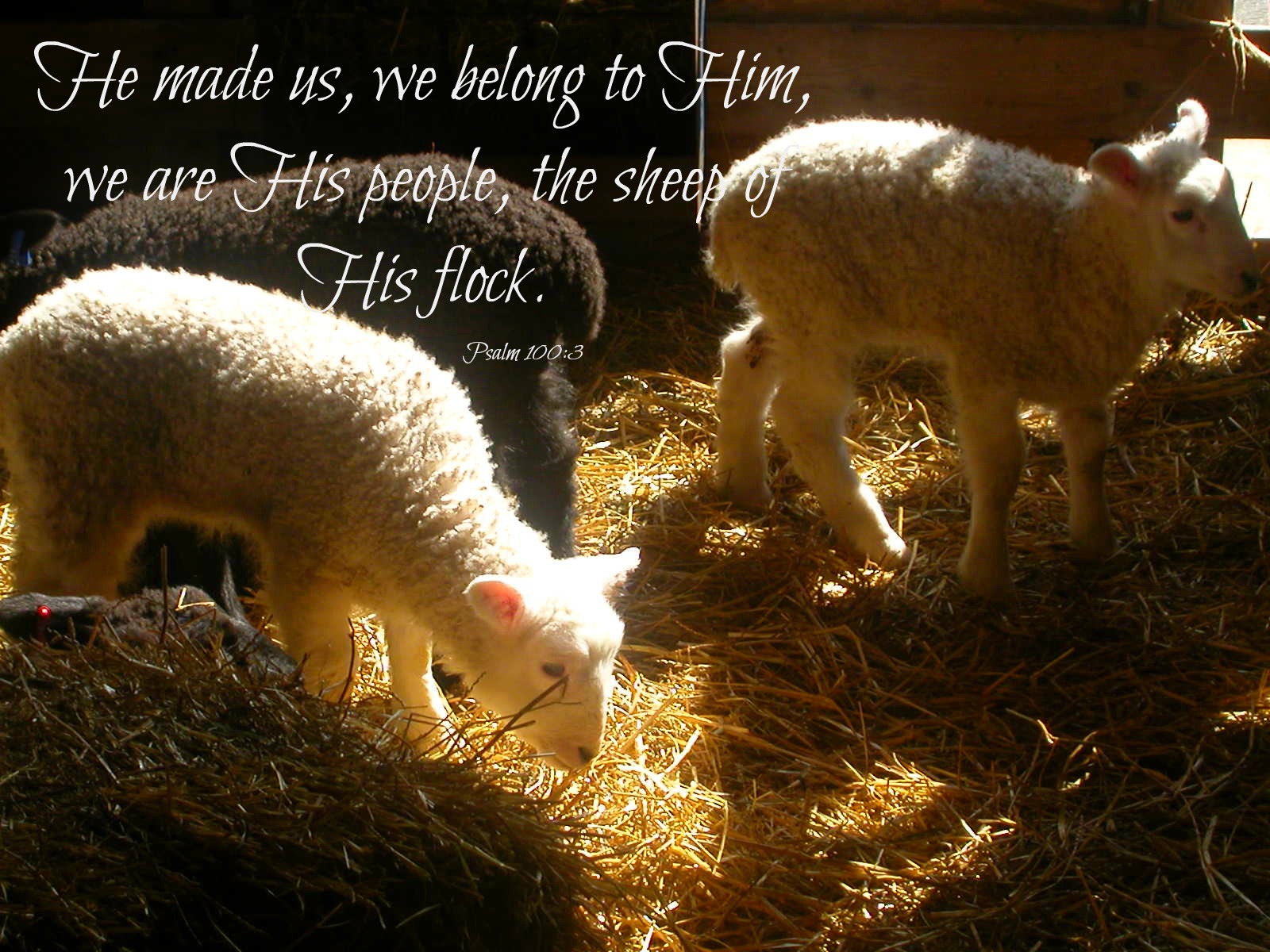

 Witnesses to Hope