This morning I was meditating on Joseph and Mary’s Advent journey to Bethlehem. So often, I think, we would like our own Advents to be peaceful and calm and balk interiorly–if not exteriorly as well–at inconveniences and grouchy children (and husbands), at interruptions and long lines, etc. And then there are those even more serious situations that we may be facing: the death of a loved one, possible foreclosure on our house, unemployment . . . When we think about what the journey to Bethlehem realistically consisted of, we might do well to join ourselves spiritually to Mary and Joseph in their journey, begging God to give us those same graces.
Here is an excerpt from Come, Lord Jesus–Meditations on the Art of Waiting, by Mother Mary Francis, published posthumously:
We think about our Lady on the way to Bethlehem. Do we really think deeply enough about what she suffered? And about Saint Joseph’s suffering? How do we think he felt to take her off in her condition of expectancy, riding the mule to Bethlehem? Her heart must have been tempted to question, “Why is this?” And surely his heart was tempted to question. Neither was supine; these were real people.
There are struggles asked of us, as were asked of them. And the answer is faith. We will see later on, of course, in the Scriptures, that it says very plainly that she didn’t understand what Jesus said to them after those three days’ loss. And she asked him, “Why did you do that?” Those words, in a sense, sum up her whole relationship with the Son of God, who was the Son of her womb. And he gives her an answer that she doesn’t understand at all. He says to all of us, in a different place in the Scriptures, “What I am doing you cannot understand now, but later you will understand.” That is a precious thought to hold in our hearts. How many times we say, “I just don’t understand this”, and he says, “One day you will understand.”
In the inevitable struggles of life–and the struggles of these special days–we don’t need to understand. We just need to respond, and then to hear him say, “One day you will understand. One day I will explain everything to you–except when that day comes, you won’t need to ask.” (pp. 103-104)
I’m getting ready to leave town tomorrow, and I almost forgot to post today! I can’t help re-posting my favorite picture portraying Jesus and His Sacred Heart, done by James Tissot.
We are all in the Heart of Jesus Christ, since He loves us all, for the way of love is for the lover to lodge the beloved in his heart. (Fr. Timothée de Raynier)
Today is the Feast of the Most Holy Trinity. How can one use any words to describe this mystery. The icon above is considered the pre-eminent icon in the Eastern Church written by Rublev to depict the Holy Trinity. It is based on the visit of the three angels to Abraham. You can read more about it here (which ends with a short meditation by Henri Nouwen).
And here is the poem I chose for this Sunday:
Mute
Must we use words for everything?
Can there not be
A silent, flaming leap of heart
Toward Thee?
It’s still the time, the season, of remembering Christ’s appearances to those He loved. Let us not move too quickly back into ordinary time. (Is there ever an “ordinary” time with Christ in our lives?) Luci Shaw captures this need to learn to recognized Him in this Sunday-poem. We, too, need to “get beyond the way he looks” in our everyday lives:
He who has seen Me has seen the Father (James Tissot)
“. . . for they shall see God”
Matthew 5.8
Christ risen was rarely
recognized by sight.
They had to get beyond the way he looked.
Evidence strong than his voice and face and footstep
waited to grow in them, to guide
their groping from despair,
their stretching beyond belief.
We are as blind as they
until the opening of our deeper eyes
shows us the hands that bless
and break our bread,
until we finger
wounds that tell our healing,
or witness a miracle of fish
dawn-caught after our long night
of empty nets. Handling
his Word, we feel his flesh,
his bones, and hear his voice
calling our early-morning name.
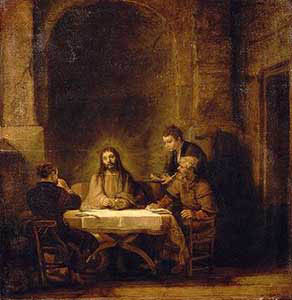
The poem for this Sunday describes the experience of the two disciples on the road to Emmaus:
Companion
When first He joined us, coming, it seemed from nowhere,
and yet, somehow, as if he had followed us a long, long time,
immediately, He was one of us, no stranger, but
a close companion, speaking softly, familiar with our lives,
these days, the answers to our doubts.
And when we moved Him to at least partake of food,
he stood there at the table, not as guest, but host,
and broke the bread to portions, one for each,
then poured the wine, His dark-marked hands
blessing the wine and us. Was it that act,
His broken hands raised up against the wooden walls,
the prayer-bowed head, the gently spoken word
or some reflection trembling in the wine,
a thickening of air, a luminosity not of wavering light,
that pierced our hearts with joy,
that filled our mouths with praise? O praise!
O joy! Then suddenly the light withdrawn,
no longer form and lifted hands above the bread.
Stumbling, we found the road to town,
knowing that never, never would we walk alone again.
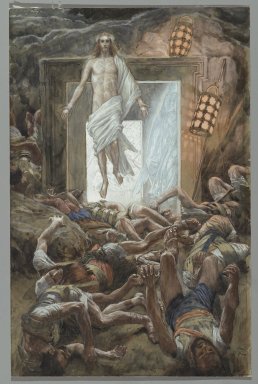
I’ve been trying to imagine what it was like for Jesus’ friends shortly after the Resurrection. As word spread of His appearances to this one and that one, they must have wondered to whom and where He would appear next. And would they recognize Him when He did–since so many of them failed to recognize Him at first glance? Thinking about this led me to ponder my own life and take stock of how great my own expectation is of His “appearing” to me in my daily life. How often do I not recognize Him when He is present to me? Come, Holy Spirit, and open our eyes to recognize Christ where He is in our lives.
Doubt padlocked one door and
Memory put her back to the other.
Still the damp draught seeped in, though
Fear chinked all the cracks and
Blindness boarded up the window.
In the darkness that was left
Defeat crouched, shivering,
In his cold corner.
Then Jesus came
(all the doors being shut)
and stood among them.
I love pondering the post-Resurrection appearances of Christ. I guess I feel in good company when those who had spent three solid years with Christ failed to recognize Him. It’s always a reminder to me of the need to sharpen our eyes of faith, to look for Him in His many disguises. In today’s Gospel, we see Jesus showing a sense of humor (in my opinion). He repeats advice that He had given them when He first met them: put the net down on the other side. How many times does that happen to us, that God comes to us in a familiar way? Let’s not miss His appearances to us in our every day life.

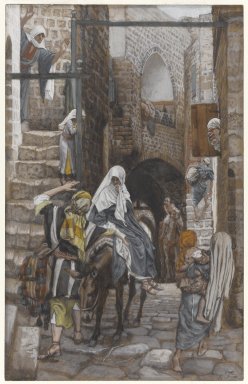 This morning I was meditating on Joseph and Mary’s Advent journey to Bethlehem. So often, I think, we would like our own Advents to be peaceful and calm and balk interiorly–if not exteriorly as well–at inconveniences and grouchy children (and husbands), at interruptions and long lines, etc. And then there are those even more serious situations that we may be facing: the death of a loved one, possible foreclosure on our house, unemployment . . . When we think about what the journey to Bethlehem realistically consisted of, we might do well to join ourselves spiritually to Mary and Joseph in their journey, begging God to give us those same graces.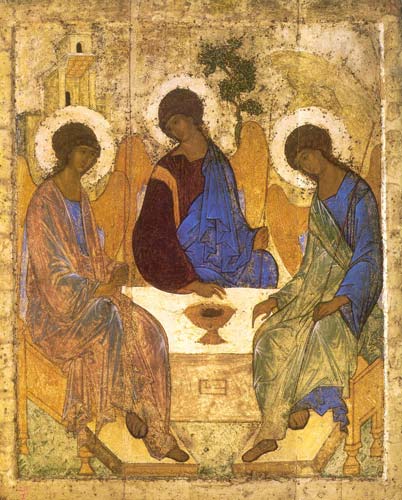
And when we moved Him to at least partake of food,
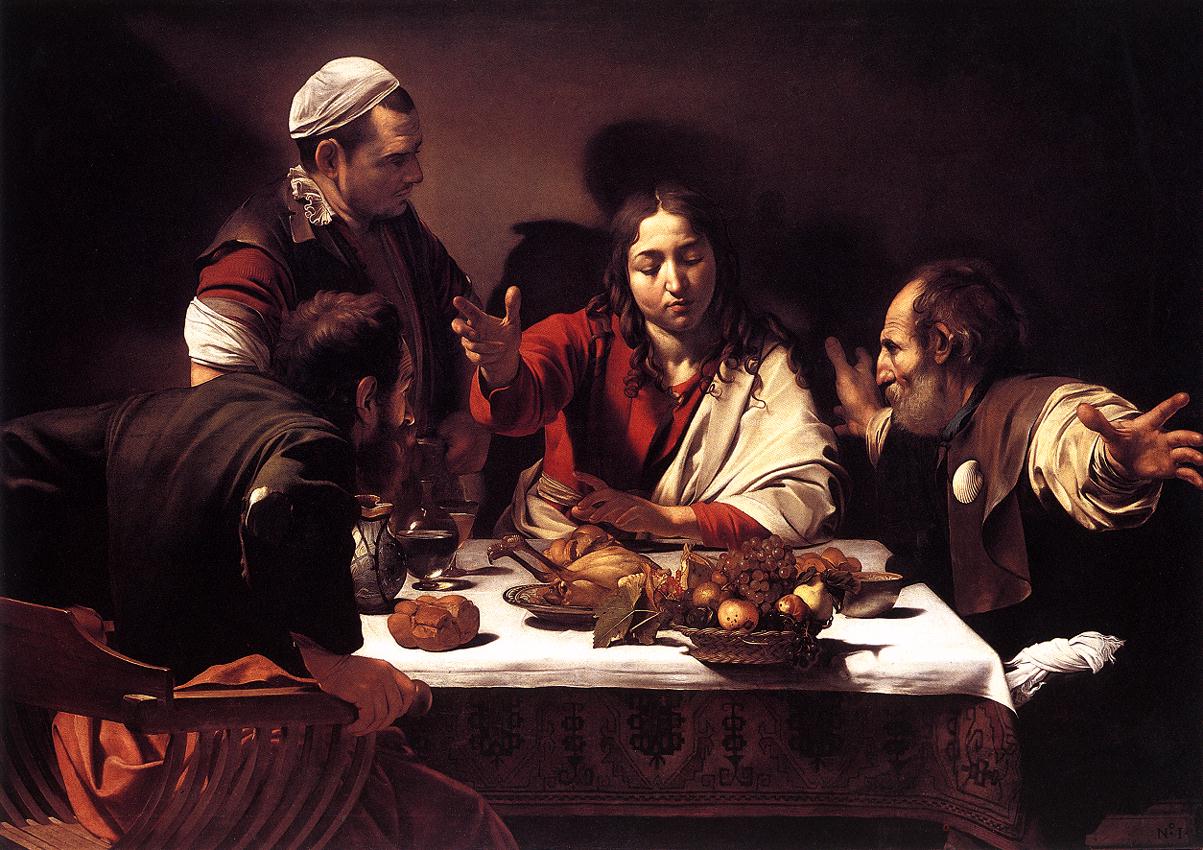

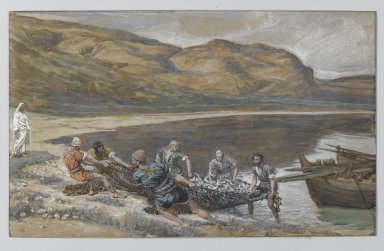 I love pondering the post-Resurrection appearances of Christ. I guess I feel in good company when those who had spent three solid years with Christ failed to recognize Him. It’s always a reminder to me of the need to sharpen our eyes of faith, to look for Him in His many disguises. In today’s Gospel, we see Jesus showing a sense of humor (in my opinion). He repeats advice that He had given them when He first met them: put the net down on the other side. How many times does that happen to us, that God comes to us in a familiar way? Let’s not miss His appearances to us in our every day life.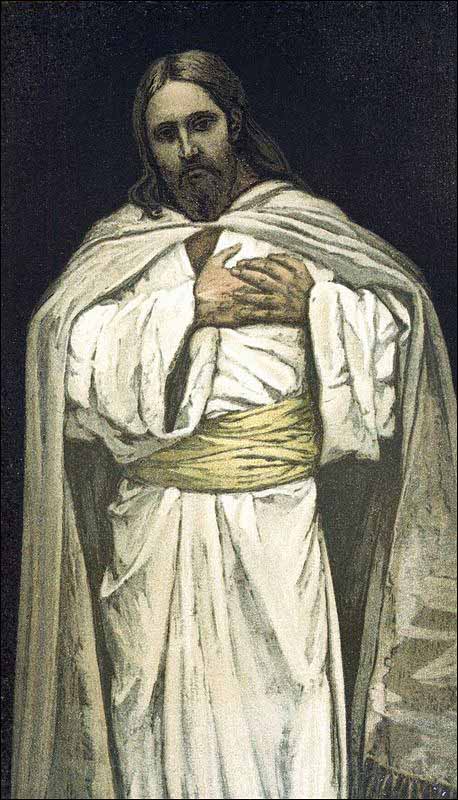
 Witnesses to Hope