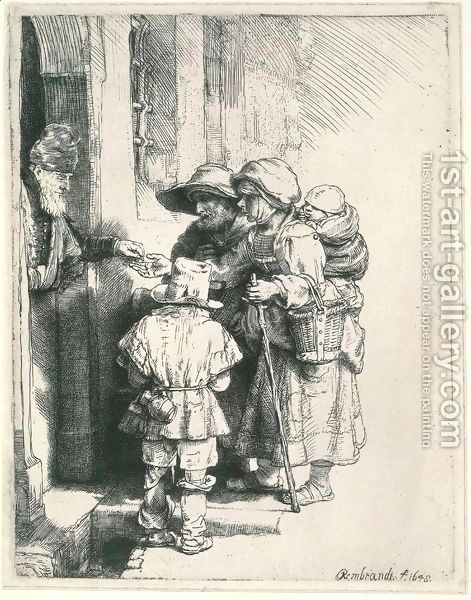
Walking and loving in darkness

Catherine Doherty writes about the love that finds us in the darkness:

Through faith we are able to turn our faces to God and meet his gaze.  Each day becomes more and more luminous.  The veil between God and man becomes less and less until it seems as if we can almost reach out and touch God.

Faith is a pulsating thing; a light, a sun that nothing can dim if it exists in the hearts of men.  That’s why it’s so beautiful.  God gives it to me saying, “I love you.  Do you love me back?  Come and follow me in the darkness.  I want to know if you are ready to go into the things that you do not see yet, on faith alone.”

Then you look at God, or at what you think is God in your mind, and you say, “Look, this is fine, but you’re inviting me to what?  An emptiness?  A nothingness?  There is nothing to see.  I cannot touch you.  I cannot feel you.”  Then God goes on to say, “I invite you to a relationship of love: your love of me, my love of you.”  Yes, God comes to us as an invitation to love. . . .

At this moment love surges in our heart like a tremendous sea that takes us in and lays us in the arms of God whom we haven’t seen but in whom we believe.  Across the waves we hear, “Blessed are they who have not seen and yet believe” (John 20.29).  Now I walk in the darkness of faith and I see.  I see more clearly than is possible with my fleshly eyes.

(Catherine Doherty, Re-entry into Faith: “Courage–be not afraid!”)
“It is easy, nonetheless, to run for the shade.”

I thought I might entice you by a quote or two from Contemplative Provocations by Fr. Donald Haggerty.  (I’d really like to quote the whole book!)

Contemplative prayer is initiated undramatically–one might say in a concealed, subtle, confusing manner.  One symptom is a dry discomfort in prayer like the bodily ache of a fever that does not subside.  The aridity contrast with the prior experience of prayer, when a consoling sense of God’s presence was enjoyed.  Now there is little felt contact with God, nothing savored in emotion.  God seems to disappear more and more into hiding.  Other symptoms as well seem incongruous as signs of growth in prayer.  A focused attention on Our Lord becomes difficult. Noisy distractions disturb prayer.  Petty concerns interfere with prayer and replace quiet reflections about God.  The gospel pages no long offer vivid attraction.  Anxious thoughts and unwelcome memories intrude, and the mind is unable to settle down.  The struggle for an attentive silence and some serenity can burden an entire period of prayer.  The sense of being alone, somehow separated from God, unable to prayer, does not let up.

The return each day to silent prayer in this condition means to face the discomfort of silence.  There can be a strong temptation to give up prayer or to find some activity in silent prayer to counter frustration.  A more superficial prayer can be adopted which discards the effort of listening in silence to God.  One might opt, for instance, to spend time in prayer simply reading.  In that case the dryness and distraction may lift to a degree because they are less noticed.  This may seem to restore relations with God.  It would be a poor exchange, however, a step backward.  The soul would forfeit a grace it was beginning to taste of a deeper thirst for God.  The thirst of the soul for God is stronger in the desert.  It is easy, nonetheless, to run for the shade.

The deaf musician

St. Francis de Sales, whose feast we celebrate today, has so many wonderful stories.  Here is one of my favorites:

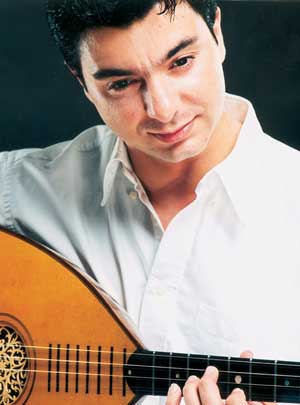
tzouganaki“One of the world’s finest musicians, who played the lute to perfection, in a brief time became so extremely deaf that he completely lost the use of hearing. However, in spite of that he did not give up singing and playing the lute, doing so with marvelous delicacy by reason of his great skill which his deafness had not taken away.  He had no pleasure either in singing or in the sound of the lute, since after his loss of hearing he could not perceive their sweetness and beauty.  Hence, he no longer sang or played except to entertain a prince whose native subject he was and whom he had a great inclination as well as an infinite obligation to please since he had been brought up from his youth in the prince’s court.  For this reason he had the very greatest pleasure in pleasing the prince and he was overjoyed when the prince showed that he enjoyed his music.  Sometimes it happened that to test this loving musician’s love, the prince would command him to sing and immediately leave him there in the room and go out hunting.  The singer’s desire to fulfill his master’s wishes made him continue his song just as attentively as if the prince were present, although in fact he himself took no pleasure out of singing.  He had neither pleasure in the melody, for his deafness deprived him of that, nor that of pleasing the prince, since the prince was absent and hence could not enjoy the sweetness of the beautiful airs he sang.”  (Treatise on the Love of God, Book 9, Chapter 9)

Be it understood

“Be it understood and remembered that the darkness of trials is not evil, that dryness of spirit is not sin, and that confusion of mind is not malice. They are invitations to patience, calls to resignation, beckonings to the healing Cross, and admonitions to be humble and obedient to the will of God.”

William Ullathorne from Patience and Humility, Sophia Institute Press

An even greater fullness of His love

These days my prayer is FULL of distractions.  I remember two things to help me.  One is advice from St. Francis de Sales.  He says that when we encounter distractions, the best thing to do is to gently bring our minds back to the Lord.  I think often our temptation when we find ourselves thinking of anything but the Lord, is to start yelling at ourselves and getting upset.  St. Francis, who always seemed to understand human nature so well, seems to consider being distracted a normal part of prayer.  Hence, his wise advice: gently bring your thoughts back to the Lord and keep praying.

The other thing that comes to mind is a little piece by St. Thérèse.  (Some of you may not find it helpful–if so, just skip it. 😉  Her lack of concern and attitude of confidence encourage me.   She compares herself to a little bird who has not strayed far from God, but does get distracted:

“[But You know] that very often the imperfect little creature, while remaining in its place (that is, under the Sun’s rays), allows itself to be somewhat distracted from its sole occupation.  It picks up a piece of grain on the right or on the left; it chases after a little worm; then coming upon a little pool of water, it wets its feathers still hardly formed.  It sees an attractive flower and its little mind is occupied with this flower.  In a word, being unable to soar like the eagles, the poor little bird is taken up with the trifles of earth.”

Ah, yes, the trifles of earth.  We all know what they are.

But for me the even more beautiful and encouraging part of this piece by St. Thérèse is what follows.  Her description of her confidence in the good Lord’s love encouraged me to have greater expectation:

“And yet after all of these misdeeds, instead of going and hiding away in a corner, to weep over its misery and to die of sorrow, the little bird turns toward its beloved Sun, presenting its wet wings to its beneficent rays.  It cries like a swallow and in its sweet song it recounts in detail all its infidelities, thinking in the boldness of its full trust that it will acquire in even greater fullness the love of Him who came to call not the just but sinners.”

What a beautiful thought: to expect even greater love from the Lord because of our weaknesses.   We, too, can in confidence recount in detail all of our infidelities and expect the same: to “acquire in even greater fullness the love of Him who came to call not the just but sinners.”

“Strengthened by Faith”

It may happen that for a certain time a man is illumined and refreshed by God’s grace, and then this grace is withdrawn.  This makes him inwardly confused and he starts to grumble; instead of seeking through steadfast prayer to recover his assurance of salvation, he loses patience and gives up.  He is like a beggar who receives alms from the palace, and feels put out because he is not asked inside to dine with the king.  “Blessed are those who have not seen and yet have come to believe” (John 20.29).  Blessed also are those who, when grace is withdrawn, find no consolation in themselves, but only continuing tribulation and thick darkness, and yet do not despair; but, strengthened by faith, they endure courageously, convinced that they do indeed see him who is invisible.  (St. John of Karpathos)

The dry places

Ps 105.41  He opened the rock, and water gushed forth; it flowed through the desert like a river.

Have any of us any dry places?  They may be out of sight of even loving eyes.  We may be ashamed to think there are such places when we have so much to fill our lives with song and praise, and yet there they are, dry places of longings, weariness, disappointment, difficulty of any sort, failure.

Oh, blessed be the love of God; ‘the waters . . . ran in dry places like a river.’  There is no need to go on in dryness.  ‘For the Lord shall comfort Zion: He will comfort all her waste places; and He will make her wilderness like Eden, and her desert like the garden of the Lord; joy and gladness shall be found therein, thanksgiving and the voice of melody’ [Is 31.3].  (Amy Carmichael, Edges of His Ways)

May this promise be fulfilled soon in each of us.

“But I do not know how to love the Lord any more!”

Dipping into my past journals, I am finding many quotes on prayer.  Here’s one by Fr. Gabriel of St. Mary Magdalene:

It [the soul] should learn to be content to remain in the presence of the Lord, attending to Him simply with a regard full of love.  It should remain there to keep Him company, satisfied to speak some words of love to Him from time to time.  Little by little it will become accustomed to make its prayer in this way.  Then it will become aware of being in contact with Him in a way, in essence, that is better than the former.

“But I do not know how to love the Lord any more!”

Do not believe it!  It is true, you do not love more sensibly than you did at first, when  your heart was moved at the thought of God’s love for you.  But remember that the Love of supernatural charity is not a sensible love, it is a love of the will, which it is not necessary to feel.  It consists only in an interior decision of the will, with which the soul gives God preference above all creatures and wants to consecrate itself wholly to His service.  This love is there in you, and this is true love, the love that leads to the sense of God.

More than that, St. John of the Cross believes that with the crisis of aridity there begins to be born int he soul that which he calls infused love, that love with which the soul not only thrusts its will towards God, protesting that it wants to love Him, that that happens to be in a certain way secretly drawn to God.  In such a state the soul’s love greatly increases and it progresses rapidly in the ways of the spirit.  While from one side it is pushed on, for the other side it is drawn, it travels quickly!

“You don’t see Him, but He is there.”

You know, most of the time–as I freely admit in the sidebar–I am writing these posts mainly for myself.  This is a post I actually wrote quite awhile ago, but somehow never posted.  Again, we hear from Amy Carmichael.  This seems to be taken from a letter she wrote in response to someone else’s, someone who was experiencing dryness in prayer, and someone who had sent her some dried myrtle.

You are sitting on the well-side with your Lord who once was weary and sat thus on the well.  You don’t see Him, but He is there.  You are His honoured one: “Blessed are they that have not seen and yet have believed.”

bog myrtle

The bog myrtle you gave me is in my Daily Light, and every day its sweetness is a special little joy to me.  It knows nothing of that.  It only knows it is dried up, a withered thing.  I wonder if in its freshest days it was sweeter than it is now.

Times of dryness are times when we are meant to live in the middle line of Zephaniah 3.17 RV margin: “He will rejoice over thee with joy.  He will be silent in His love, He will joy over thee with singing.”  Our dear Lord does not misunderstand silence.  Offer Him your silence and accept His, “I will be silent in My love.”  Songs are not far away.  They are on either side of the Silence.  It is folded up in song.

Now be at rest.  he is not looking at your with dis-pleased eyes.  Oh now, I can all but see just the opposite.

“Our wound is the place where God dwells”

I did a series of posts on Fr. Iain Matthew’s writing back in July.  I have been re-reading him again.  He’s one of the people I go back to regularly–especially if I’m experiencing some kind of pain.  Because pain is precisely where, Fr. Iain says, Christ is waiting to meet us.  “The place of poverty within us is the threshold where Christ stands.”  He advises us strongly not to avoid our woundedness.  Each wound in our lives is the place where Christ wants to meet us.  The best thing to do is to make that place of pain a place of prayer,

the place within us where not everything is all right, where the wound that is in you aches. John [of the Cross] says: go there.  Go to that place of need, because that is a threshold at which Christ stands; our need is an evidence of God.

It is natural to flee from the place where that hunger throbs. Still, John encourages us to go there. It is what beckons the divine. It is the threshold at which Christ stands. We hunger for him because he has touched us; we want him because he wants us. The wound is the print of the pledge upon us, the pledge of the Spirit who holds us from the abyss. John comments on his poem: we “have our feeling of longing, the sense of God’s absence” precisely there, “within our heart, where we have the pledge.”

And so, we simply stand before God in our pain, with our pain, making our need a prayer.  God loves to hear and answer the cry of the poor.