Pray with us

This is absolutely beautiful and so powerful.

In collaboration on a first-of-its-kind project for Holy Week, Wintershall Theatre Company and @christianart have joined forces on The Stations of the Cross: Pray with us, a short film depicting the fourteen scenes from Christ’s Passion. Filmed at Wintershall Estate against a striking 20-foot cinematic backdrop, each scene from the Stations of the Cross was carefully arranged, lit, and filmed to create the effect of a tableau vivant—a living painting.

“The tradition of tableaux vivants, or “living pictures,” dates back to the Middle Ages and gained popularity in the 18th and 19th centuries as a theatrical artform. In these staged scenes, actors would pose silently and motionlessly to recreate famous artworks or dramatic moments, often with elaborate costumes, lighting, and minimal movement. The tableau vivant artform has found new life in video, where the boundary between stillness and motion can be artfully explored, inviting the viewer to contemplation and often emotive experience.

“Written by Presented by Fr. Patrick van der Vorst”

The Bridegroom’s wedding feast

A beautiful commentary from Leiva-Merikakis on the Bridegroom’s love for us in his Passion: “The arrival of this Passover has on Jesus the same effect as would the arrival of his wedding date on a bridegroom who is madly in love. The leaders say, ‘Not during the feast!’ But Jesus insists: ‘Yes! During the feast! For this Passover is my wedding feast with my Bride, mankind, a union to be consummated in my blood.'”

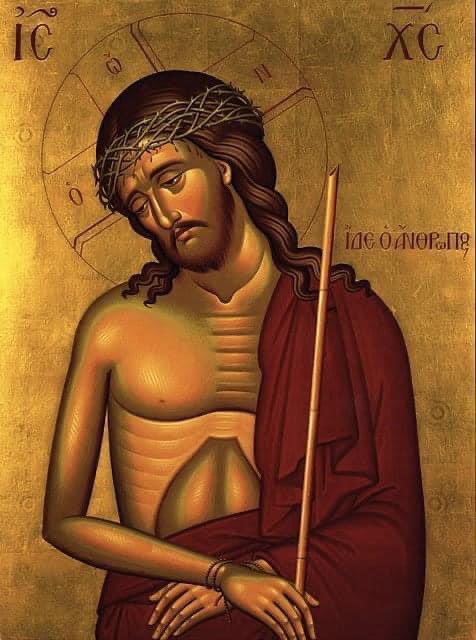
Christ the Bridegroom

The yearning such a fragrance brings

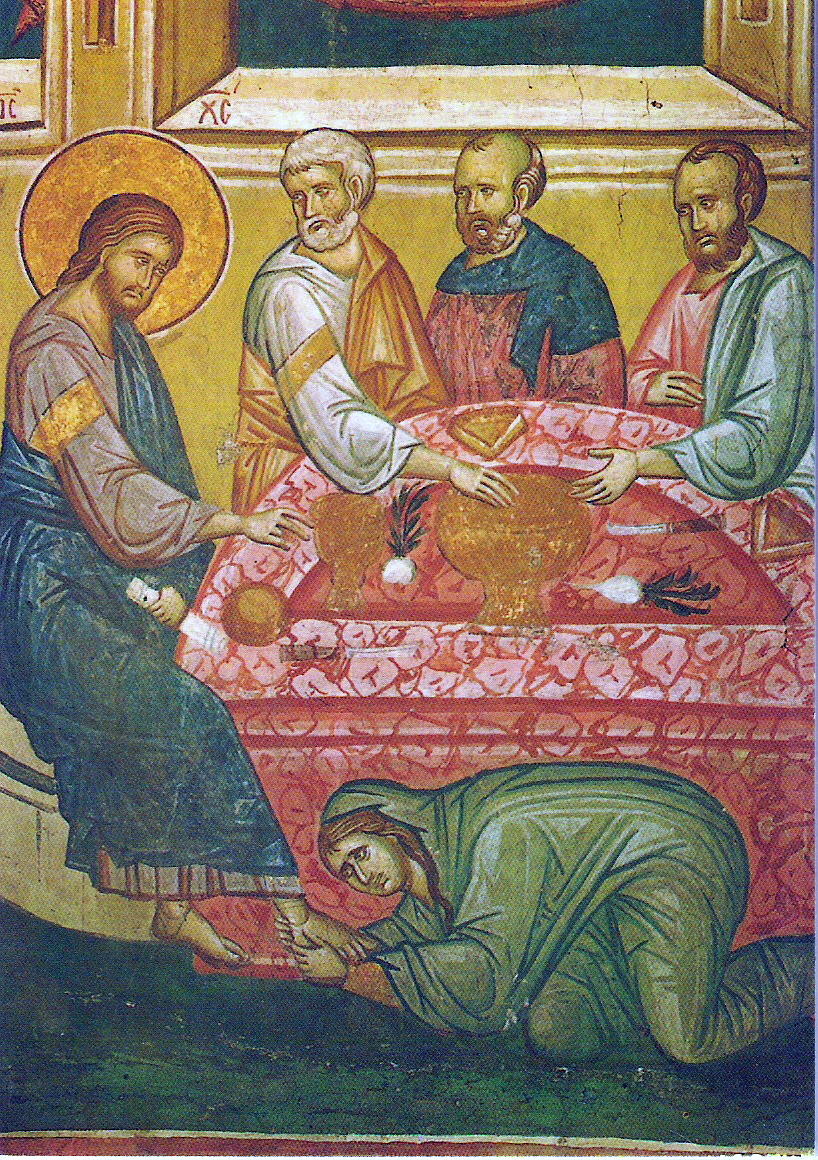
This passage has always held great significance for me, especially because of Christ’s invitation to me to live a consecrated life for him. But we, each in his or her own way, are invited by him to pour out what is most precious to us upon his feet, to enter into that intimacy with him, and this week is a most important time for us to do just that.

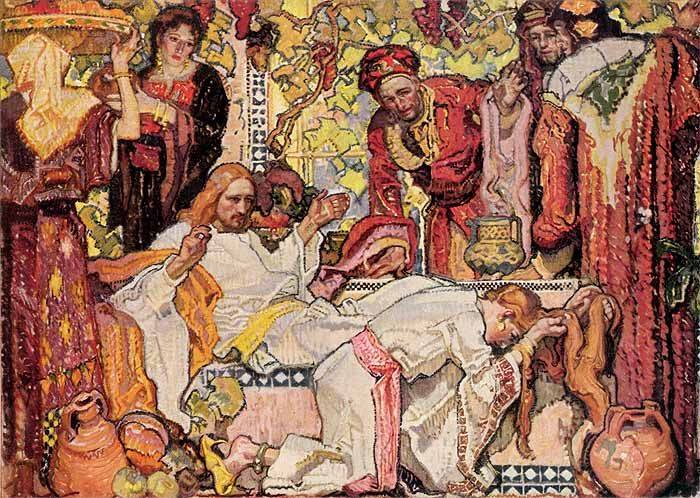
The Anointing at Bethany

Come close with Mary, Martha ,  Lazarus
So close the candles stir with their soft breath
And kindle heart and soul to flame within us
Lit by these mysteries of life and death.
For beauty now begins the final movement
In quietness and  intimate encounter
The alabaster jar of precious ointment
Is broken open for the world’s true lover,

The whole room richly fills to feast the senses
With all the  yearning such a fragrance brings,
The heart is mourning but the spirit dances,
Here at the very centre of all things,
Here at the meeting place of love and loss
We all foresee, and see beyond the cross.

Malcolm Guite

Royalty

A blessed Palm Sunday and Holy Week.  One of my favorite poems by Luci Shaw. 

Royalty

He was a plain man
and learned no latin.

Having left all gold behind
he dealt out peace
to all us wild ones
and the weather.

He ate fish, bread,
country wine and God’s will.

Dust sandaled his feet.

He wore purple only once
and that was an irony.

~Luci Shaw

Lent is meant to be about love

Sarah Clarkson for the win every single time.

Lent is the season in which I rediscover love.

But when I first began to attempt the ‘practise’ of Lent, I mostly equated Lent with law. With repentance, yes, and under grace, I know. After all, Lent ends with Easter and a feast to mark salvation. But since discovering this season of the church, I’ve often seen ‘the penitential season’ as a time in which I made laws of discipline to express my true contrition, to prove to God that my sorrow over all the ways I sin and fail is real.

Lent dawned bright this year in England, bright as my good intentions. On the day when much of the church begins a season of repentance, the sun blinked and gleamed in a stark blue sky and birds whistled as if it were May and the daffodils in the vase on my desk finally bloomed.

But that evening, after a long day, after a service in which the ashes of repentance were crossed into my forehead and those of my children, I looked down the long trail of the coming days, and all I saw was grey. I was weary and afraid, doubtful that I could keep strict laws or great fasts. Part of me so yearned for spiritual renewal that I felt willing to attempt a great effort in order to gain a deeper sense of spiritual life. But my body, my heart felt too busy and sleep-deprived to keep up the strictures of dawn devotion or the renunciation of chocolate. (You know?)

You can read the rest here

Beloved is where we begin

This has to be one of my most favorite poems of Jan Richardson’s. We are always, always beloved to God.

Beloved Is Where We Begin

If you would enter
into the wilderness,
do not begin
without a blessing.

Do not leave
without hearing
who you are:
Beloved,
named by the One
who has traveled this path
before you.

Do not go
without letting it echo
in your ears,
and if you find
it is hard
to let it into your heart,
do not despair.
That is what
this journey is for.

I cannot promise
this blessing will free you
from danger,
from fear,
from hunger
or thirst,
from the scorching
of sun
or the fall
of the night.

But I can tell you
that on this path
there will be help.

I can tell you
that on this way
there will be rest.

I can tell you
that you will know
the strange graces
that come to our aid
only on a road
such as this,
that fly to meet us
bearing comfort
and strength,
that come alongside us
for no other cause
than to lean themselves
toward our ear
and with their
curious insistence
whisper our name:

Beloved.
Beloved.
Beloved.

—Jan Richardson
from Circle of Grace

It’s Lent, but I feel incapable of praying

In her usual beautiful prose, Sarah Clarkson writes about her struggle, her incapacity to pray.

THE NIGHT BURNS BRIGHT and dark in my memory, a contrast of moods and scenes like a Caravaggio painting. The cathedral; bright, honeyed stone and gold instruments glinting on the altar. The kindness of my friend and his saving of an excellent seat for me as I skidded in, breathless, the sweet furor of bedtime rituals with my four children still an echo in my brain, a slight wildness in my eye. And the music, a many-layered brightness of harmony and word, hued like a crimson sunset to my synesthetic mind as a small choir sang a selection of ancient Orthodox chants and prayers.

I let myself breathe deeply as the music surged forward, let my eyes rove the warm, dappled space of the medieval church that summer night. But the longer I looked, the more darkness I saw. The shadows like dirty flocks of ravens in the high corners, the vivid stained glass windows I loved so well in the daytime obscured by night, the pain at the back of so many prayers I heard chanted, pleas for God to put an end to despair and death. And the darkness of my own weary heart when the concert had ended and I sat outdoors at a nearby pub and confessed to my long-time mentor and friend, a priest, that I found myself almost unable to pray.

You can read the rest here.