First and foremost

I am struck, on this Feast of Exaltation of the Holy Cross, by Sr. Ruth Burrows meditation in Magnificat.  She clarifies the message of the cross:

“Holding up the cross, bidding us gaze into that bleeding, humiliated face, the Holy Spirit’s focus is not first and foremost on suffering, of even on sin and its consequences, but on a love that is absolute, ‘out of this world,’ ‘other,’ ‘what no eye has seen, nor ear heard, nor the human heart conceived.’  We must gaze and gaze with fullest attention and then affirm: this is God; this is what God is really like.”

Do your best today to keep your gaze with fullest attention on this Love.

Still poor

I’m wrestling with my poverty today, and that says a lot because what I really should be doing is just acknowledging that that is my human condition.  Which just goes to show you how poor I am!  So, what do I do?  “Every day I begin again.”

“If I were to live to eighty, I would still be as poor as I am now.” (Thérèse)

He knows

Ps 103.14 For He knows our frame; He remembers that we are dust.
Job 23.10 He knows the way that I take: when he has tried me, I shall come forth as gold.

“Perhaps those words, He knows, are meant for you today because God has allowed you some special trial of faith.  The love of God is very brave.  He does not hold trial off lest we should be overwhelmed.  He lets it come and then gloriously strengthens us to meet it.  And at the end, I shall come forth as gold.”  (Amy Carmichael, Whispers of His Power)

Birth of Mary

A repost:

Today we celebrate the birth of Mary.  I have to say that this morning when I woke up, I felt like breaking into a little song to her, at least “Happy birthday to you . . .”–which sounds so trite–but I knew in my heart that that would be dear to her . . . because she is that kind of Mother.

I want to share the first verse of a poem by Rilke because I think it conveys the sense of joy in the heavens at the birth of this great gift of God to us.

Birth of Mary

O what must it have cost the angels
not suddenly to burst into song, as one bursts into tears,
since indeed they knew: on this night the mother is being
born to the boy, the One, who shall soon appear.

(Rainer Maria Rilke, translated from the German by M.D. Herter Norton)

Over the flocks

And to complete the trilogy:

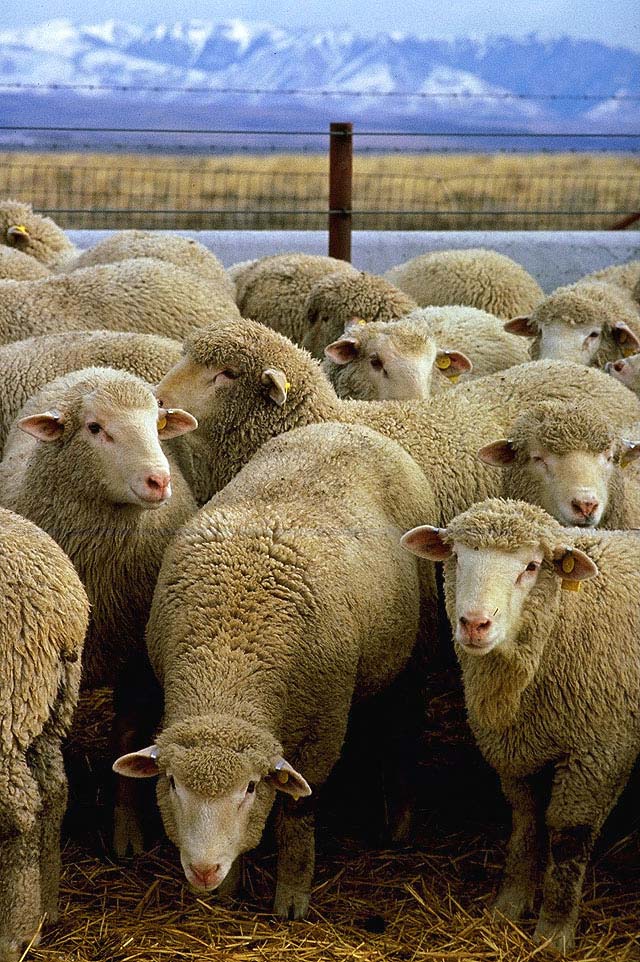
1 Chron 27.31 And over the flocks was Jaziz the Hagerite.

His name meant “Shining.” Most of us have sometimes to do with camels, sometimes to do with asses, but oftenest, thank God, with the flocks of the Good Shepherd.

There was once an unhappy shepherd, Zechariah, who dismissed three under-shepherds in one month, and said, And my soul loathed them, and their soul also abhorred me (Zech 11.8).  We have a very different flock from that committed to poor Zechariah, and quite different fellow-shepherds.  Are we half grateful enough for the joys of good fellowship?

Jaziz had a beautiful name–Shining.  No dullness, no heavy-heartedness as he tended the flocks.  God make us all to be Jazizes–happy shepherds, shining shepherds.  (Amy Carmichael)

Over the asses

Continuing from yesterday:

1 Chron 27.30  And over the asses was Jehdeiah the Meronothite.

Jehdeiah’s name meant “Union of Jah”. [Note: “Jah” is shortened version of Yahweh.]  I once had a letter from a man who was trying to run a big political organization in India.  He said he had sympathy with Paul, who wrote in 1 Cor 15.32 that he had fought with wild beasts at Ephesus, but he was quite sure it was still harder to fight with asses.

I am glad that we do not have to fight with asses, but we certainly have to look after them sometimes.  I wonder if Jehdeiah found comfort in his name?  Work like his needs patience, firmness, kindness, and these good things are not naturally in us.  John 15.5, WITHOUT Me you can do nothing, is a word all who have to do with asses understand.  But WITH Me–that is the secret.  God in us can be patient and kind, even with poor asses.

God make all of us who have to do with asses His Jehdeiahs.

Over the camels

I just discovered a new collection of Amy Carmichael writings that I had not known about.  (I hope none of you are groaning. 😉  My disclaimer is that I write most of these posts for myself . . .  I always experience such wonder at what she discovers in Scripture and such hope from her words.  Here’s the first of a series of three.  This one makes me smile.

1 Chronicles 27.30 Over the camels was Obil the Ishmaelite

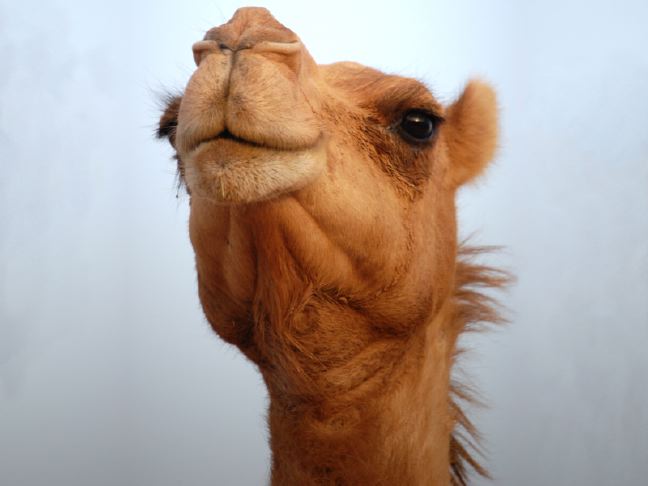
Have you to try to help people who are rather like camels?  You want them to go one way, and they go another.  You try persuasion and they turn sulky.  It is difficult to be patient with an animal that never looks pleased.  It is very difficult to be patient with human camels.

But God knows all about you and your difficulties, and your name is not forgotten to Him.  He htought the name of a camel driver who lived three thousand years ago worth writing in His Book.  The names of thousands of great kings are buried and forgotten, but the name of David’s camel driver is remembered to this day: Over the camels was Obil.

Obil means “driver” or “leader.”  I expect he sometimes found leading better than driving, and so sometimes shall we.  God give His Obils patience to deal with their camels.

🙂

“Still as poor”

I always find this quote from St. Thérèse so encouraging:  “If I were to live to eighty, I would still be as poor as I am now.”  Encouraging because she is referring to her spiritual poverty and so we need not worry if we are feeling spiritually poor. . . and refocusing as well if I am experiencing a “striving” moment which is leading nowhere.  “Every day I begin again.”