Making helplessness a prayer

Another dip into my journal, regarding prayer:

If prayer is the acknowledgement of one’s own helplessness and the awaiting of everything from God, then prayer is the existential calling of spiritual poverty and inner emptiness of a person so that the Holy Spirit may fill him with His presence and strength.  As one’s faith develops, prayer becomes purer and more ardent.  (Fr. Tadusz Dajczer, Gift of Faith)

When you face your helplessness today, do your best to stop and make it a prayer, a turning to God in the very midst of your helplessness, and then await everything from God.


“But I do not know how to love the Lord any more!”

Dipping into my past journals, I am finding many quotes on prayer.  Here’s one by Fr. Gabriel of St. Mary Magdalene:

It [the soul] should learn to be content to remain in the presence of the Lord, attending to Him simply with a regard full of love.  It should remain there to keep Him company, satisfied to speak some words of love to Him from time to time.  Little by little it will become accustomed to make its prayer in this way.  Then it will become aware of being in contact with Him in a way, in essence, that is better than the former.

“But I do not know how to love the Lord any more!”

Do not believe it!  It is true, you do not love more sensibly than you did at first, when  your heart was moved at the thought of God’s love for you.  But remember that the Love of supernatural charity is not a sensible love, it is a love of the will, which it is not necessary to feel.  It consists only in an interior decision of the will, with which the soul gives God preference above all creatures and wants to consecrate itself wholly to His service.  This love is there in you, and this is true love, the love that leads to the sense of God.

More than that, St. John of the Cross believes that with the crisis of aridity there begins to be born int he soul that which he calls infused love, that love with which the soul not only thrusts its will towards God, protesting that it wants to love Him, that that happens to be in a certain way secretly drawn to God.  In such a state the soul’s love greatly increases and it progresses rapidly in the ways of the spirit.  While from one side it is pushed on, for the other side it is drawn, it travels quickly!

“The only way to pray is to pray . . .”

From a letter by Dom Chapman on prayer:

My dear . . .

As to advice, I can only tell you what I think.

I recommend you pray, because it is good for everybody, and our Lord tells us to pray.  As to method, do what you can do, and what suits you.  It seems obvious that most spiritual reading and meditation fails to help you; and the simplest kind of prayer is the best.  So use that.

But prayer, in the sense of union with God, is the most crucifying thing there is.  One must do it for God’s sake; but one will not get any satisfaction out of it, in the sense of feeling “I am good at prayer”, “I have an infallible method”.  That would be disastrous, since what we want to learn is precisely our own weakness, powerlessness, unworthiness.  Nor ought one to expect “a sense of the reality of the supernatural” of which you speak.  And one should wish for no prayer, except precisely the prayer that God gives us–probably very distracted and unsatisfactory in every way!

On the other hand, the only way to pray is to pray; and the way to pray well is to pray much.  If one has no time for this, then one must at least pray regularly.  But the less one prays, the worse it goes.  And if circumstances do not permit even regularity, then one must put up with the fact that when one does try to pray, one can’t pray–and our prayer will probably consist of telling this to God.

. . .

Room in this inn

A Sunday-poem from Mother Mary Francis, from a longer poem entitled “The Mysteries of the Rosary”:

XIII. The Descent of the Holy Spirit

Fiat!  there’s room in this inn
Of huddled community, Mary,
For you and your telling of Jesus
Over and over again
Until there’s a splitting of heavens
And fire comes and Spirit, and souls

Are drenched with the wine of that Fiat!
That suits men for martyrs.  Is there
Space for us, too, in that upper
Room of your love where first Fiat!
Let God be Man, where first Fireing
Of Spirit enkindled Redeemer?

“I have loved thee”

I have been thinking about starting a kind of series for you all: some musings on prayer, some thoughts, some gleanings, probably in random order.  I pulled an article out of my files this morning by Jessica Powers, OCD, entitled “Who Hath First Loved Us.”  Those five words are the key and the basis for prayer.  Prayer is nothing but a response to Him “who hath first loved us.”  And so we must start by steeping ourselves in His love, by consciously opening ourselves up to His love, by paying attention to that desire at the core of our being for His love.  For that desire is, in and of itself, a response to His love touching our lives.  “Quest is the condition of the wayfarer, of the lover.  The mind points out the search, and the heart goes seeking; it reaches out toward the lovable known.  This is the fundamental attitude of the Christian.”

The condition of search . . . presupposes another condition that the words of the Mystical Doctor [St. John of the Cross] always imply.  It is the condition of being sought.  God is there in the shadows; He has been seeking the soul, inviting it, calling it to Himself with the cry of infinite and incomprehensible love.  He says to ever soul: “I have loved thee by name; thou art Mine.”  And this is no sudden movement on the part of God!  It is a search that had no beginning.  “I have loved thee,” He says, “with an everlasting love.”

Just sit with that last sentence for a minute . . . a long minute . . . and let it speak deeply to your heart.  That is prayer.

Just listen.

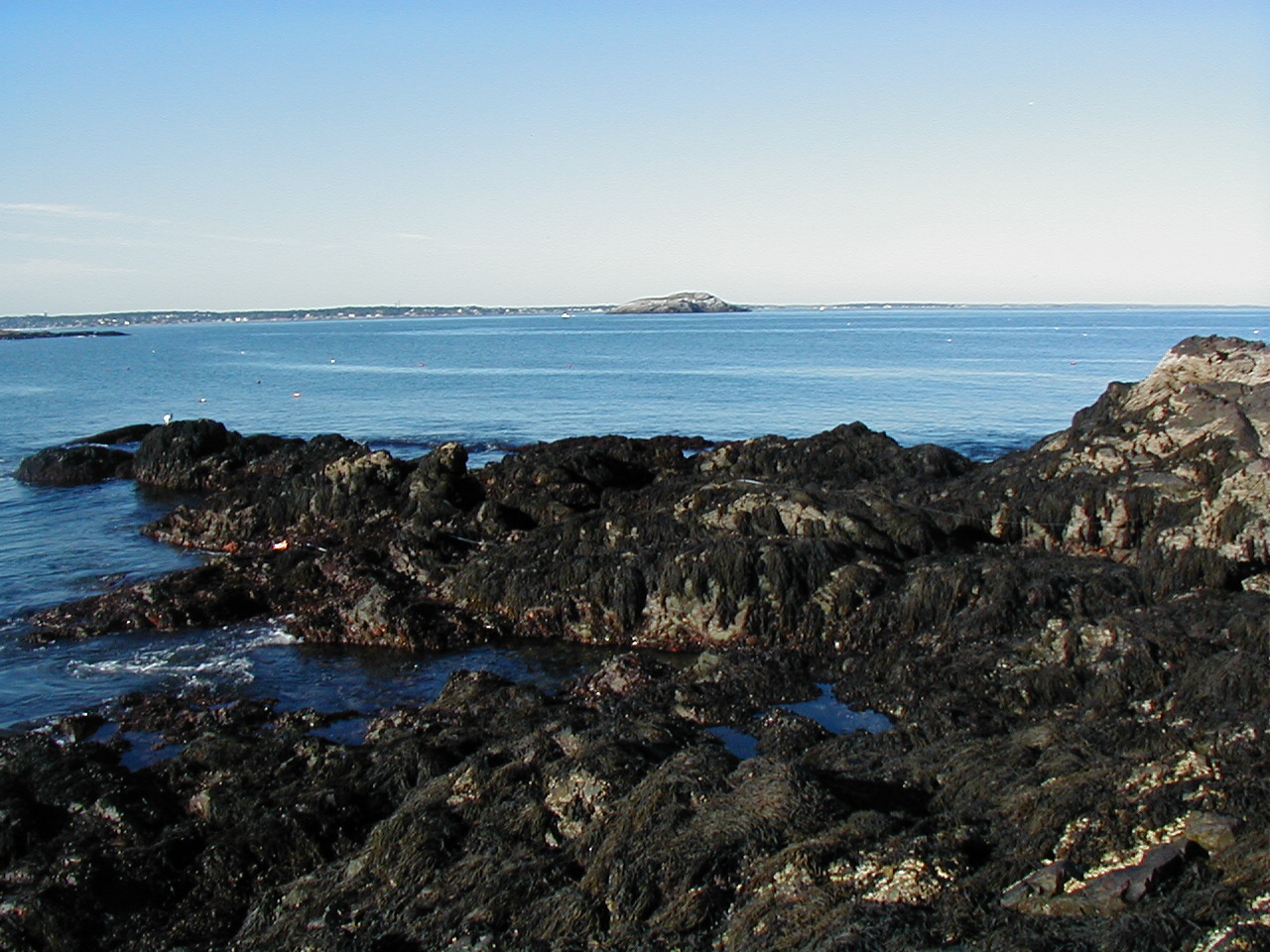
I am just beginning a novel by Peter Kreeft: An ocean Full of Angels.  One section I read today reminded  me of a concept I have blogged about before: the idea that everything created is a revelation of God, if we can but look for it.  The narrator of the book is describing a small island he lives on off the coast of Boston:

Tiny Nahant is a complete world that can teach you everything you need to know, everything the whole planet can teach.  The rocks teach you fidelity.  The waves teach you the relentless, unceasing heartbeat of love.  The winds teach you the power of the invisible.  The high cliffs teach you to hope.  The caves teach you that all things have a dark and buried side.  The grass teaches you humility.  The sun teaches you glory.  The sand teaches you time.  The trees teach you to think tall.  The ants and bees teach you industry.  The flowers teach you the morality of superfluity, the wild adventure of hospitality, and the beauty of prodigality.  The seasons teach you that change and stability are two sides of the same reality.  The night teaches you mystery and the day teaches you mindfulness.  The tiny town teaches you modesty.  And the surrounding sea teaches you that you are rocked at every moment int he arms of a giant angel.

But you learn all these things here only because you learn the precious Lesson One that my Mama used to call “hushing”: the wisdom of slowing down, getting all quiet inside, and entering the holy silence, where you can listen.  I believe this is the single most potent of all learning arts.  Most follies, of both thought and deed, cannot endure that place, that holy silence.  Addictions, aggressions, and aggravations fall out of your soul like birds with broken wings, when the air is fresh with silence. . . .

It means nothing mystical or esoteric.  Just listen.  Don’t listen for anything, just listen.  You must learn to listen, for listening is life’s second greatest art.  Only loving is greater.  But listening well is the best aid to loving well.

May you find the time, however small, to listen, to listen to God in all that you encounter today.

Hope to see you at Witnesses to Hope tonight!

“Our Lady of the Ascension”

A singular poem about what it was like for our Lady after the Ascension.  How could she stand this separation?

Our Lady of the Assumption

Fold your love like hands around the moment.
Keep it for conference with your heart, that exit
Caught on clocks, by dutiful scribes recorded
Less truly than in archives of yor soul.

Turn back from His going, be His still-remaining.
Lift the familiar latch on cottage door . . .
Discover His voice in corners, hear His footfalls
Run down the porches of your thoughts.  No powers

However hoarse with joy, no Dominations
Curved with adoration guess what whispers
Of “Mother, look!” and “Mother, hurry!”
Glance off the cottage walls in shafts of glory.

How shall your heart keep swinging longer, Mary?
Quickly, quickly, take the sturdy needle
Before your soul crowds through your flesh!  the needle
And stout black thread will save you.  Take the sandal

Peter left for mending.  After that,
The time is short, with bread to bake for John.

Mother Mary Francis

But then I remember

I have intermittent internet access in my office.  Yesterday, it was mostly non-connected.  I finally began this at 8:30 last night.  Then I had to take a non-expected long distance phone call.  Just to let you know, I really am trying to post. 🙂

I picked up a book at the library–a children’s book–called Psalms for Young Children.  I’m usually wary of “paraphrased” scripture books for children.  I think it’s better to just expose them to the Word of God directly.  On the other hand, I have found concepts so brilliantly distilled in books for children.  So this book caught my attention.  The first page says: “This selection of Psalms, paraphrased for young readers, uses language and imagery appropriate for children while remaining faithful to the spirit of the biblical texts.”

Psalm 13

Sometimes when I’m very sad,
I worry that you will
forget about me, God.
But then I remember that
you love me always.
So I will sing and be happy!

Derek Kidner, in his commentary on the psalms, points out that in almost every psalm in which the psalmist is complaining of trials and hardships, there comes a turning point, a “but” point, when the attitude of the psalmist changes.  One can see that point so clearly in this rendition of Psalm 13.  May it be an encouragement to any of you who are worrying that God will forget about you.  May you remember that He does love you always, and may a song rise in your hearts.