Do not lose heart, O soul

This is the week of penance services.  Along with that can come the temptation–yes, it is a temptation–to overdwell on our sins, on how we have offended God to the point that we never really return to the arms of our loving Father.  We stay in the pig sty rather than running with confidence to the God who comes to meet us.  May this selection from St. Ephrem the Syrian enable you to “leave the city that starves you.”

Do not lose heart, O soul, do not grieve; pronounce not over yourself a final judgment for the multitude of your sins; do not commit yourself to fire; do not say: The Lord has cast me from his face.

Such words are not pleasing to God.  Can it be that he who has fallen cannot get up?  Can it be that he who has turned away cannot turn back again?  Do you not hear how kind the Father is to a prodigal?

Do not be ashamed to turn back and say boldly: I will arise and go to my Father.  Arise and go!

He will accept you and will not reproach you, but rather rejoice at your return.  He awaits you; just do not be ashamed and do not hide from the face of God as did Adam.

It was for your sake that Christ was crucified; so will he cast you aside?  He knows who oppresses us.  He knows that we have no other help but him alone.

Christ knows that man is miserable.  Do not give yourself up to despair and apathy, assuming that you have been prepared for the fire.  Christ derives no consolation from thrusting us into the fire; he gains nothing if he sends us into the abyss to be tormented.

Imitate the prodigal son: leave the city that starves you.  Come and beseech him and you shall behold the glory of God.  Your face shall be enlightened and you will rejoice in the sweetness of paradise.  Glory to the Lord and Lover of mankind who saves us.
The love of God

I have been reading and re-reading one of the homilies that Fr. Cantalamessa gave this Lent to the Roman Curia.  Here are the beginning paragraphs, followed by the link to the whole homily.  In it he stresses–as I have highlighted below–the importance, the necessity, of our being permeated by the knowledge of God’s love for us before we can bring that love to others.  I  find in my own life, and in the lives of many of the women to whom I give spiritual direction, that the most challenging thing can very often be believing in the love of God for me personally.   Sounds so easy, but so hard to do.

The first and essential proclamation that the Church is charged to take to the world and that the world awaits from the Church is that of the love of God. However, for the evangelizers to be able to transmit this certainty, it is necessary that they themselves be profoundly permeated by it, that it be the light of their life. The present meditation should serve this purpose at least in a small part.

The expression “love of God” has two very different meanings: one in which God is object and the other in which God is subject; one which indicates our love for God and the other which indicates God’s love for us. The human person, who is more inclined to be active than passive, to be a creditor rather than a debtor, has always given precedent to the first meaning, to that which we do for God. Even Christian preaching has followed this line, speaking almost exclusively in certain epochs of the “duty” to love God (“De Deo diligere”).

However, biblical revelation gives precedence to the second meaning: to the love “of” God, not to the love “for” God. Aristotle said that God moves the world “in so far as he is loved,” that is, in so far as he is object of love and final cause of all creatures.[1] But the Bible says exactly the contrary, namely, that God creates and moves the world in as much as he loves the world.

The most important thing, in speaking of the love of God, is not, therefore, that man loves God, but that God loves man and that he loved him “first”: “In this is love, not that we loved God but that he loved us” (1 John 4:10). From this all the rest depends, including our own possibility of loving God: “We love, because he first loved us” (1 John 4:19).  (emphasis added)

You can read the whole thing here.

weep and wait

As we approach Holy Week, here is a Sunday-poem by Luci Shaw that will, hopefully, prod us all to never let anything we do keep us from running to Him for mercy–and she is full aware that this often seems the harder path to take:

Judas, Peter

because we are all
betrayers, taking
silver and eating
body and blood and asking
(guilty) is it I and hearing
him say yes
it would be simple for us all
to rush out
and hang ourselves
but if we find grace
to weep and wait
after the voice of morning
has crowed in our ears
clearly enough
to break our hearts
he will be there
to ask us each again
do you love me

Allow Jesus to love you

If you are surprised or discouraged because of falls, that means that you trusted in your own strength instead of allowing yourself to be carried in Jesus’ arms. . . . ‘What does it matter, dear Jesus, if I fall at each moment?’ writes St. Thérèse: ‘I see my weakness through this and this is a great gain for me [. . .] You can see through this what I can do and now You will be more tempted to carry me in your arms.’

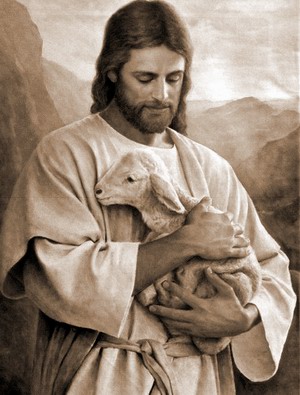
If you feel that you are sinful and weak, you have a special right to Jesus’ arms because He is the Good Shepherd, who looks for lost sheep and those who are weak and helpless and who can’t keep up with the flock.  Allow Jesus to take you upon His shoulders.  Allow Him to love.  Believe in His love.   (Fr. Tadeuz Dajczer, Gift of Faith)

Royalty

Royalty

He was a plain man
and learned no latin.

Having left all gold behind
he dealt out peace
to all us wild ones
and the weather.

He ate fish, bread,
country wine and God’s will.

Dust sandaled his feet.

He wore purple only once
and that was an irony.

~Luci Shaw

Hope for the pharisee

Today’s gospel reading is the story of the tax collector and the Pharisee, which brought to mind this hope-filled reflection by Sr. Ruth Burrows will encourage those of you who find it easier to identify with the Pharisee than the publican:

Perceptive, quick to see the flaws in another, I was prone to criticism, finding a certain satisfaction in seeing another at fault as though this, in some way, raised me up.  I knew that no fault would so displease our Lord or stop his grace as this harsh judgment on his children.  I realized I had the mentality of a pharisee but, I thought to myself, if a pharisee had turned to our Lord and admitted his hardness of heart, his crabbed, mean spirit and asked for help, our Lord would have helped him.  So I did the same.  The pharisee became the publican.  I came to realize that temptations to pride, the sins of the pharisee, could make one a publican.  The stone which the builders rejected could become head of the corner.  I tried to use these bad tendencies to grown in humility.

The power of an apron

A good goal for Lent–a realizable one–could be to “Come away for awhile” with the Lord.  The space of time might be only 3 minutes.  Susanna Wesley, mother of John and Charles Wesley and 17 others, used to throw her apron up over her head in the middle of the kitchen as a sign to her children that she was praying.  Remember that children pattern themselves on what they see their parents do.  (Actions speak louder than words . . .)  I read this post from Ann Voskamp this morning and thought it was not only a brilliant idea for children, but also for us who are called to be like a little child: “How to make and take a peace retreat”. Praying that you find a corner or a chair and three minutes today to come away with your Beloved.

It’s really all about you

I was going to start out this post by reminding you–and me, of course–that Lent is not all about you; it’s all about Christ.  It’s so easy to get focused on what we’re doing for Lent, etc. But then I got to thinking and realized again that actually it is all about us.  The love of the Father is always about us, about drawing us to Himself, about manifesting His love to us through His Son.  These 40 days of retreat are meant to draw us into a deeper knowledge of that love.

The Bridegroom

“Whatever he did, whatever he said on earth, even the insults, even the spitting, the buffeting, even the Cross and the tomb, were nothing but yourself [Father] speaking in the Son, appealing to us by your love, stirring up our love for you.”

~William of St. Thierry