Advent is a time of longing. As you long for God’s coming, consider how much more he longs for you.

Advent is a time of longing. As you long for God’s coming, consider how much more he longs for you.
Today’s Sunday poem is in memoriam of Luci Shaw, God rest her soul.
The world has lost a great poet, but her poetry will impact us for ever. I have posted Luci Shaw’s poems for years now. (Just search her name in the search box.) Luci passed last night. She was almost 97 and still writing poetry. Emily, who lived close by, gives her a beautiful tribute. May she rest in peace.
This first Sunday of Advent, I thought I would share this lovely sonnet by Hazel Littlefield Smith. Hazel was born not too far from where I was raised in Michigan and spent her last years in Ann Arbor. She and her husband were missionaries in China for thirteen years during the “reign of the War Lords”. I love this sentence from her obituary: “Mrs. Smith never lost touch with the Michigan woods she loved so dearly.” I’m not sure where I came upon this poem of hers, but it seems perfect for the beginning of Advent.

Come Soon
I set my candle where the shadows loom,
A flame of faith between the eyes of fate,
And I am waiting in the windy gloom;
O come, my Love, for it is growing late.
Small doubts on darkling wings flit here and there
Uncertainly in the grey, lingering light,
Mysterious music haunts the troubled air,
And none but you can comfort me tonight.
I wait upon the moment’s hazard now;
Is there no power can hold the darkness back
Until you come? I do not disavow
Your promised love—the one thing I most lack.
The hour is late, dear Love, come soon, come soon;
Then shall the night be lovelier than noon.
Almost sounds like an oxymoron. I came across this again today. From back in January, but, for some reason seems like just as important today.
In light of Thanksgiving approaching, I was looking through some old posts on gratitude and totally forgot about this. Good to remember!
This week’s Sunday poem is by Luci Shaw, still writing poetry in her late 90’s. (Shouldn’t we all?) I have been reading her poetry for at least four decades, if I remember correctly, have copied numerous of her poems in my poetry journals, and go back to them regularly. (Her prose is as good as her poems. My favorite.)
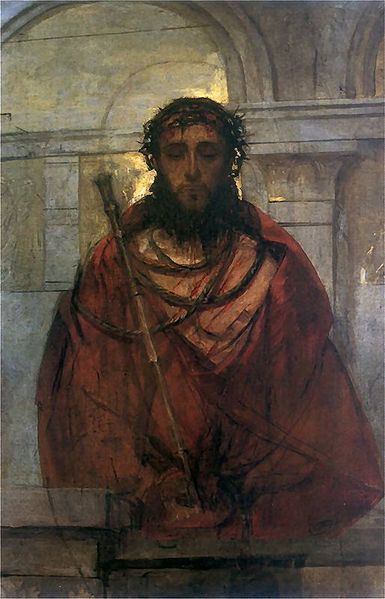
“Royalty” is actually about Christ on Palm Sunday, but it came to my mind today on this Feast of Christ the King. I won’t be surprised if at the Second Coming Christ will still look more like this than any other depiction of him as King of kings.
Royalty
He was a plain man
and learned no latin.
Having left all gold behind
he dealt out peace
to all us wild ones
and the weather.
He ate fish, bread,
country wine and God’s will.
Dust sandaled his feet.
He wore purple only once
and that was an irony.
(Follow me on Substack.)
As we near the end of the liturgical year and the Sunday readings are more and more about judgment, I find myself remembering little Thérèse’s thoughts about God’s judgment: “What a sweet joy it is to think that God is Just, i.e., that He takes into account our weakness, that He is perfectly aware of our fragile nature. What should I fear then? Ah! must not the infinitely just God, who deigns to pardon the faults of the prodigal son with so much kindness, be just also toward me who “am with Him always?” (Luke 15:31)
We must remember the mercy and love that drove Jesus to come to us then and to still come to us at every moment. Gregory of Narek gives us the example of boldly reminding Christ of his total love for us.
Refuge for my broken spirit lies in your
living, incorruptible, constant hope,
that looking on me with mercy,
as one condemned to perdition,
when I present myself before our heavenly beneficence,
empty-handed and without gifts,
brining with me the evidence of your untold glory,
I will remind you
who never slumbers in forgetfulness,
who never shuts your eyes,
never ignores the sighs of grief,
That with your cross of light
you may lift away from me, I beg you, the peril that chokes me,
with your comforting care, the vacillating sadness,
with your crown of thorns, the germs of my sin,
with the lashes of the whip, the blows of death,
with the memory of the slap in the face, the neediness of my shame,
with the spitting of your enemies, my contemptible vileness,
with your sip of vinegar, the bitterness of my soul.
A poem from Anthony Esolen for our Sunday poem this week. Anthony is one of the finest contemporary poets I have come across. If you haven’t read his The Hundredfold, do so.
O Lord, our Lord how wonderful is Thy name in all the earth!
I love Thy words, O Lord, and always shall:
The fresh sun shining forth in brash delight,
Then blushing gently in his evening fall
Like a youth from a dance; the deeps of night
Swaying the pilgrim spirit to behold
A sea powdered with stars, all life and light
Sprung from the Ancient One who is not old,
Given to man the Child. So from above
Glimmers a world of glory manifold,
And my return is gratitude and love.
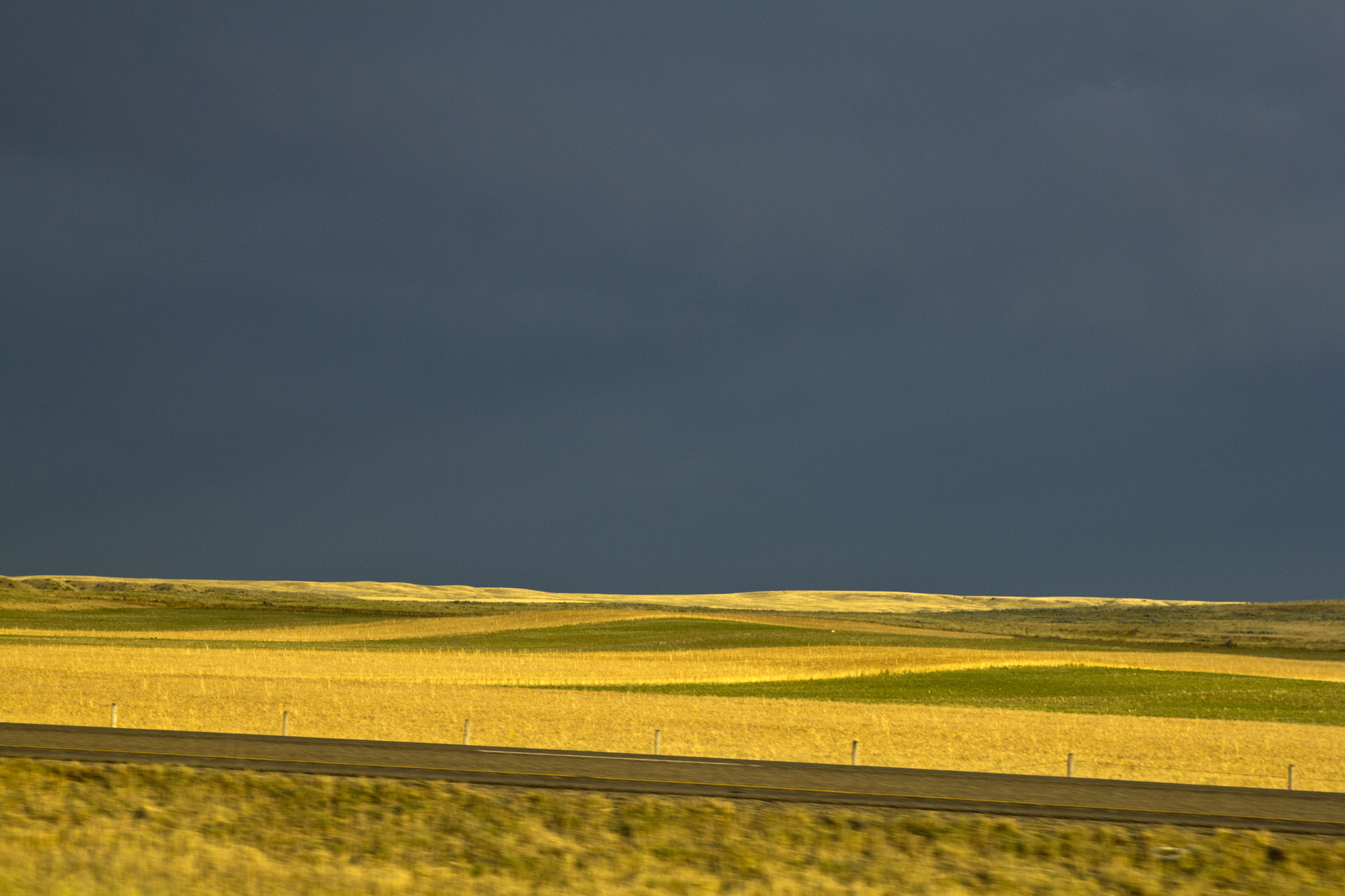

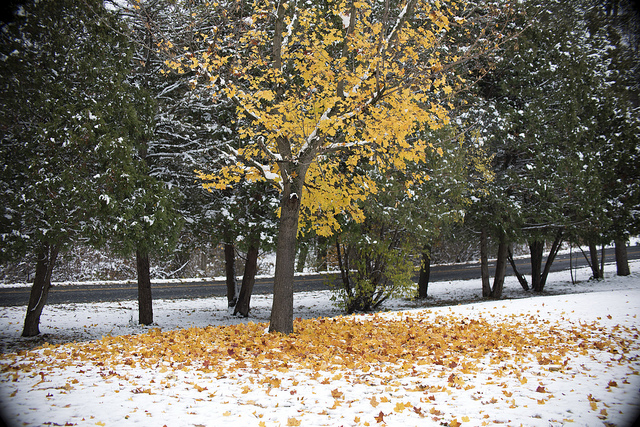
This time of year always brings to mind this poem because, indeed, my part of the world is charged with God’s grandeur.

God’s Grandeur
The world is charged with the grandeur of God.
It will flame out, like shining from shook foil;
It gathers to a greatness, like the ooze of oil
Crushed. Why do men then now not reck his rod?
Generations have trod, have trod, have trod;
And all is seared with trade; bleared, smeared with toil;
And wears man’s smudge and shares man’s smell: the soil
Is bare now, nor can foot feel, being shod.
And for all this, nature is never spent;
There lives the dearest freshness deep down things;
And though the last lights off the black West went
Oh, morning, at the brown brink eastward, springs —
Because the Holy Ghost over the bent
World broods with warm breast and with ah! bright wings.
 Witnesses to Hope