Love is on its way . . .

Especially for those in desperation . . . this song by Audrey Assad is for you.  (Lyrics below)  Just reach out your hand . . .

You’ve been let down, it’s true
Your pain is so easy to see
You’re hunted by your history
and it feels like you’ve got no escape

Your life left you high and dry
You used to be sure of yourself
But then your whole world went to hell
and tomorrow looks like just like today

So, you lie on your bed, you won’t let the morning come in
And you hide in your room, feeding that fear and it’s killing you
don’t you know
that it’s killing me too, cause your heart break is breaking you

I miss the life in your eyes
the home that I found in your arms
and now you don’t know who you are
but I won’t give up on you
on no

You lie on your bed, you wont let the morning come in
And you hide in your room, feeding that fear and it’s killing
don’t you know
that i’ts killing me too, cause your heart break is breaking you

and you lost your fight
and your flame’s gone out
and you’re down on your knees
cause your life is not what you thought it would be
no,

lift up your head
help is on the way
and it won’t pass you by
you just gotta reach out your hand
lift up your eyes
love is on the way
and it won’t pass you by
you just gotta reach out your hand

go on and lift up your head
because love is on its way
and it won’t pass you by
you’ve just gotta reach out your hand

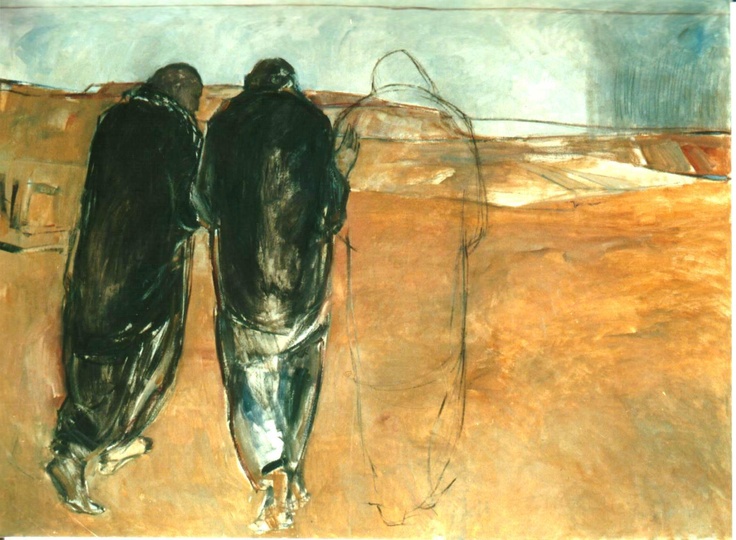
Advent Sunday

A Sunday-poem by Christina Rossetti:

Advent Sunday

Upload time: Apr 21, 2009 by Matt12345Add info Report inaccuracy Add tag FavouriteMore Sharing ServicesShare Share on facebook Share on myspace Share on google Share on twitterComments Be the first to post a comment! To write a comment please log in or register. Schadow, Wilhelm von (1788 - 1862)Parable of the Wise and Foolish Virgins (detail)
Schadow, Wilhelm von (1788 – 1862)
Parable of the Wise and Foolish Virgins (detail)

Behold, the Bridegroom cometh: go ye out
With lighted lamps and garlands round about
To meet Him in a rapture with a shout.

It may be at the midnight, black as pitch,
Earth shall cast up her poor, cast up her rich.

It may be at the crowing of the cock
Earth shall upheave her depth, uproot her rock.

For, lo, the Bridegroom fetcheth home the Bride:
His Hands are Hands she knows, she knows His Side.

Like pure Rebekah at the appointed place,
Veiled, she unveils her face to meet His Face.

Like great Queen Esther in her triumphing,
She triumphs in the Presence of her King.

His Eyes are as a Dove’s, and she’s Dove-eyed;
He knows His lovely  mirror, sister, Bride.

He speaks with Dove-voice of exceeding love,
And she with love-voice of an answering Dove.

Behold, the Bridegroom cometh: go we out
With lamps ablaze and garlands round about
To meet Him in a rapture with a shout.

The blessing of the unoffended

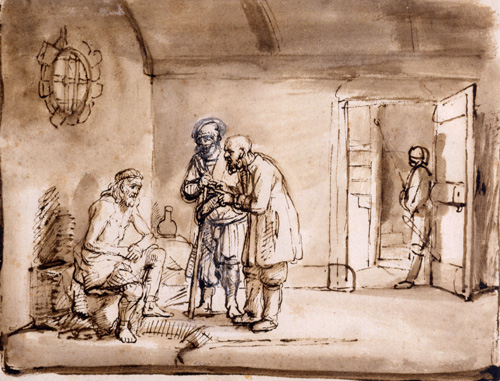
Today being the feast of the Passion of St. John the Baptist, I cannot help but return to something about which I have posted before, and that is: the blessing of not being offended by however and whatever God is doing.  In Luke 7, we read about John being in prison.  He sends word to Jesus wondering, “Are you he who is to come, or shall we look for another?”  A puzzling thing for John, of all people, to ask.  However, considering his situation at the time, not surprising.  He’s in prison.  Jesus has not come to visit him (as far as we know).  So, as for many of us, it would be perfectly understandable to start dealing with doubts about Jesus.

I find Jesus’ answer even more astounding than John’s question.  Jesus instructs John’s disciples to go to him and recite a list of the many wonders that Jesus has done.  And then He concludes with that mysterious phrase: “And blessed is he who takes no offense at me.”   Amy Carmichael was the one who unlocked this mystery for me.  She refers to this verse many times in her writings.  I’ll let her speak for herself . . . any may each of you respond to the grace of becoming one of the “unoffended.”   She writes from the perspective of John’s thinking as he is listening to the report of his disciples:

St. John the Baptist in Prison receives Christ’s answer, (Matthew 11: 2-6)
Samuel van Hoogstraten (1627 – 1678)

Before they got to the end of the mighty things they were to tell him, his heart must have kindled with new hope: My Lord can do all that, He is doing all that, He is omnipotent.  He is my loving Lord, and He is very near.  I shall soon be free–He who is opening the prison doors of death will open my prison door.  Can you not all but hear him say it, or at least feel him think it, as he listens to the story of ‘what things’ these men of his ‘have seen and heard’?  And then, instead of a promise, a quick help, ‘Blessed is he who takes no offense at Me,’ and that was all.  But it was enough.  John accepted the unexplained.  And a light shone in the cell, and in that light he lived till his prison door opened, and he stepped across its threshold into the Land of Light.

To many of you this is a familiar word, but to me it came afresh as I read these two verses one after the other last night [Luke 7.22,23], and it spoke to me as I thought of the many who are being trusted not to be offended in Him.

Let us pray for each other to each be able to accept the unexplained and not be offended in Him.

Friday: from the archives

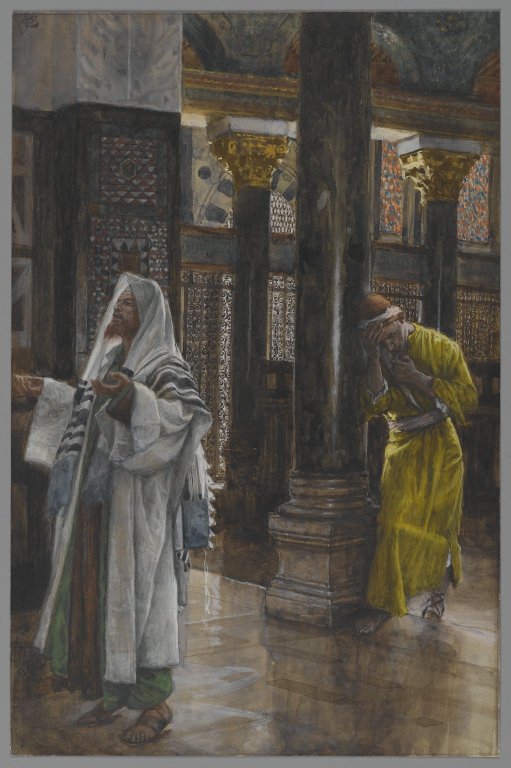
The Pharisee becomes the publican

One thing that can cause me discouragement is dealing with besetting sin–you know that thing you keep taking back to confession over and over.  One of mine is critical thinking.  A few years ago I read Sr. Ruth Burrow’s autobiography, and in it she spoke about this being one of her ongoing faults as well.  However, she found what I think is a very clever way to deal with it:

Perceptive, quick to see the flaws in another, I was prone to criticism, finding a certain satisfaction in seeing another at fault as though this, in some way, raised me up.  I knew that no fault would so displease our Lord or stop his grace as this harsh judgment on his children.  I realized I had the mentality of a pharisee but, I thought to myself, if a pharisee had turned to our Lord and admitted his hardness of heart, his crabbed, mean spirit and asked for help, our Lord would have helped him.  So I did the same.  The pharisee became the publican.  I came to realize that temptations to pride, the sin of the pharisee, could make one a publican.  The stone which the builders rejected could become head of the corner.  I tried to use these bad tendencies to grow in humility.

And the Angels danced, don’t you think?

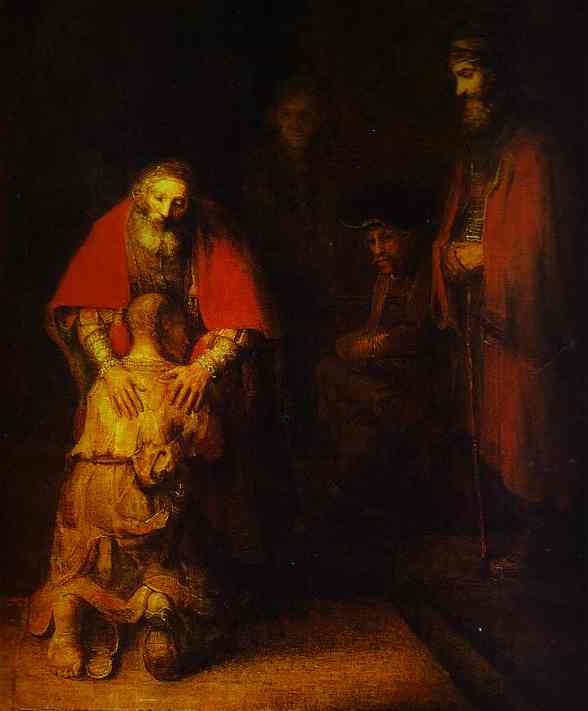
You are unrepeatable

from Christoph Cardinal Schönborn’s We Have Found Mercy:

The Divine Mercy is a profound, total devotion that is committed, lasting, faithful, and quite personal for the one to whom it is addressed.  Nothing could be more foreign to it than a vague feeling of ‘goodwill’ toward the whole world.  The one on whom God bestows his mercy is intended, addressed and loved as an unrepeatable person.  Mercy does not turn the one to whom it is shown into an object but rather touches the person in his center, in his dignity.

Jesus is, so to speak, the incarnation of God’s Mercy.  In him, God cares, not about mankind as an abstract entity, but rather about every individual person.  He has shown me mercy.  Through Christ I become the recipient of God’s care, and, on the other hand, I am addressed personally.