A Sunday poem for Pentecost from Malcolm Guite.

A Sunday poem for Pentecost from Malcolm Guite.
How a poem about our Lady on this Mother’s Day? This is a poem I have posted before. It’s also about the Ascension, about her experience after Jesus ascended. Seems doubly appropriate for today.
Our Lady of the Assumption
Fold your love like hands around the moment.
Keep it for conference with your heart, that exit
Caught on clocks, by dutiful scribes recorded
Less truly than in archives of yor soul.
Turn back from His going, be His still-remaining.
Lift the familiar latch on cottage door . . .
Discover His voice in corners, hear His footfalls
Run down the porches of your thoughts. No powers
However hoarse with joy, no Dominations
Curved with adoration guess what whispers
Of “Mother, look!” and “Mother, hurry!”
Glance off the cottage walls in shafts of glory.
How shall your heart keep swinging longer, Mary?
Quickly, quickly, take the sturdy needle
Before your soul crowds through your flesh! the needle
And stout black thread will save you. Take the sandal
Peter left for mending. After that,
The time is short, with bread to bake for John.
Mother Mary Francis
For any and all being ordained to the priesthood this spring. A Sunday-poem by John O’Donohue, a priest himself.
May the blessings released through your hands
Cause windows to open in darkened minds.
May the sufferings your calling brings
Be but winter before the spring.
May the companionship of your doubt
Restore what your beliefs leave out.
May the secret hungers of your heart
Harvest from emptiness its sacred fruit.
May your solitude be a voyage
Into the wilderness and wonder of God.
May your words have the prophetic edge
To enable the heart to hear itself.
May the silence where your calling dwells
Foster your freedom in all you do and feel.
May you find words full of divine warmth
To clothe the dying in the language of dawn.
May the slow light of the Eucharist
Be a sure shelter around your future.
And I would add: May you always find your home deep, deep in the Heart of Christ and never venture from there.
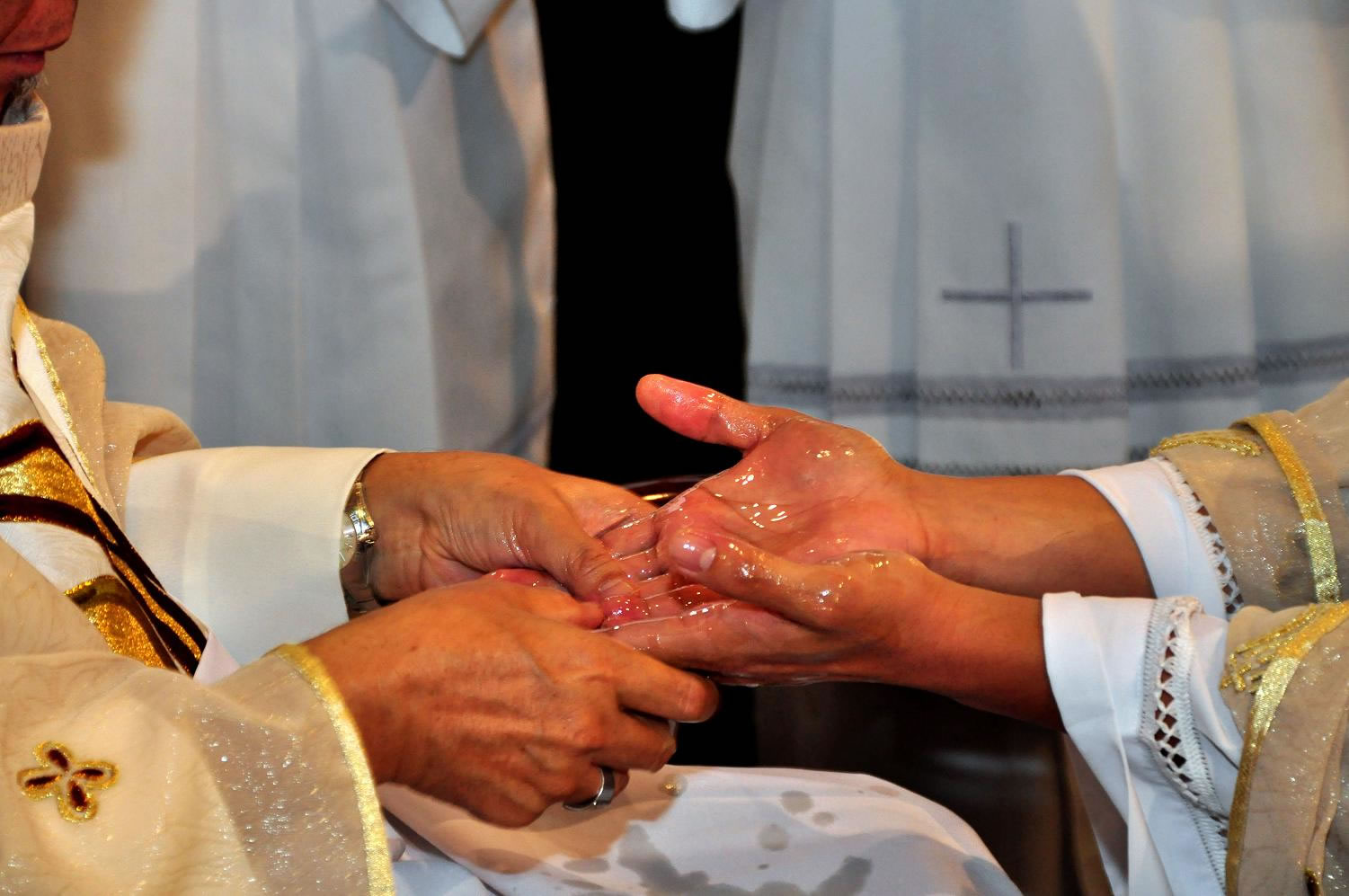
A beautiful short Sunday-poem. Using just a few words, Joseph Massey creates an exquisite image of prayer in an empty church. Do sit with it for a moment.
In an empty church
in the middle of the day
dark but for stained glass
flooded with sun, a prayer
held in the breath in my hands.
You can find his latest bestselling book of poems here.
An anonymous lovely, lilting poem from Sally Read’s 100 Great Catholic Poems that describes the longing of many of our hearts.
The Song of Manchán the Hermit
I wish, O Son of the Living God, O Ancient Eternal King,
For a hidden hut in the wilderness, a simple secluded thing.
The all-blithe lithe little lark in his place, chanting his lightsome lay;
The calm, clear pool of the Spirit’s grace, washing m sins away.
A wide, wild woodland on every side, its shades the nursery
Of glad-voiced songsters, who at day-dawn chant their sweet psalm for me.
A southern aspect to catch the sun, a brook across the floor,
A choice land, rich with gracious gifts, down-stretching from my door.
Few men and wise, these would I prize, men of content and power,
To raise Thy praise throughout the days at each canonical hour.
Four times three, three times four, fitted for every need,
To the King of the Sun praying each one, this were a grace, indeed.
Twelve in the church to chant the hours, kneeling there twain and twain;
And I before, near the chancel door, listening their low refrain.
A pleasant church with an Altar-cloth, where Christ sits at the board,
And a shining candle shedding its ray on the white words of the Lord.
Brief meals between, when prayer is done, our modest needs supply;
No greed in our share of the simple fare, no boasting or ribaldry.
This is the husbandry I choose, laborious, simple, free,
The fragrant leek about my door, the hen and the humble bee.
Rough raiment of tweed, enough for my need, this will my King allow;
And I to be sitting praying to God under every leafy bough.

I’m not sure where I found this Sunday-poem or who the poet is. There are some very beautiful thoughts expressed here which I pray touches your heart and its desires.
Woman of fire,
woman of desire,
woman of great passions,
Woman of the lavish gesture.
Mary of Magdala!
The icons show you robed in red,
covered in the blood of the Lamb,
a living flame, a soul set afire.
You are there at the foot of the cross:
kneeling, bending low, crushed by sorrow,
your face in the dust.
You love,
but in that hour of darkness,
dare not look on the disfigured Face of Love.
It is enough that you are there,
brought low with Him,
Enough for you
the Blood dripping from the wounded feet
Blood seeping into the earth
to mingle with your tears.
You seek Him on your bed at night,
Him whom your heart loves.
David’s song is on your lips:
“Of Thee my heart has spoken. Seek his face.
It is Thy Face, O Lord, that I seek;
hide not Thy face from me” (Ps 26:8-9).
His silence speaks.
His absence is a presence.
And so you rise to go about the city,
drawn out, drawn on by Love’s lingering fragrance.
“Draw me, we will run after Thee, in the odor of your ointments” (Song of Songs 1.3).
You seek Him by night
in the streets and broadways;
you seek Him whom your soul loves,
with nought by your heart’s desire for compass.
You seek Him but do not find Him.
In this, Mary, you are friend to every seeker.
In this, you are a sister to every lover.
In this you are close to us who walk in darkness
and wait in the shadows,
and ask of every watchman,
“Have you seen Him whom my soul loves?”
Guide us, Mary, to the garden of new beginnings.
Let us follow you in the night.
Wake our souls before the rising of the sun.
Weep that we may weep
and in weeping become penetrable to joy.
The Gardener waits,
the earth beneath His feet watered by your tears.
Turn, Mary, that with you we may turn
and, being converted,
behold His Face
and hear His voice
and, like you, be sent to say only this:
“I have seen the Lord” (John 20:18).

Good Friday
Am I a stone and not a sheep
That I can stand, O Christ, beneath Thy Cross,
To number drop by drop They Blood’s slow loss,
And yet not weep?
Not so those women loved
Who with exceeding grief lamented Thee;
Not so fallen Peter weeping bitterly;
Not so the the thief was moved;
Not so the Sun and Moon
Which hid their faces in a starless sky,
A horror of great darkness at broad noon–
I, only I.
Yet give not o’er,
But seek Thy sheep, true Shepherd of the flock;
Greater than Moses, turn and look once more
And smite a rock.
Christina Rossetti
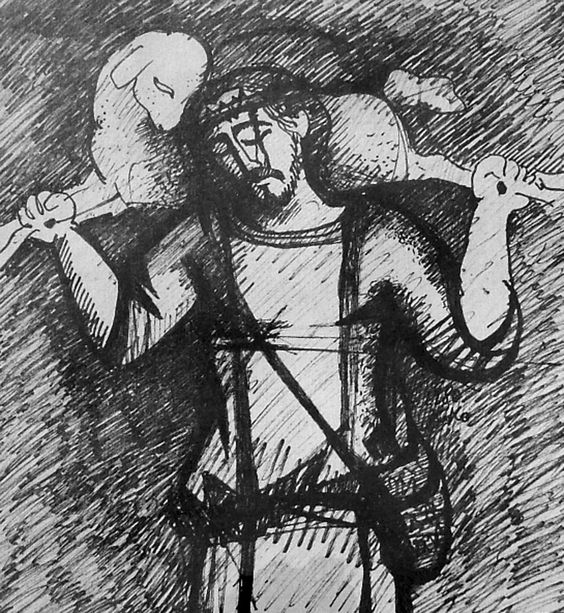
There’s always hope. We just need to weep and wait for him.
Judas, Peter
because we are all
betrayers, taking
silver and eating
body and blood and asking
(guilty) is it I and hearing
him say yes
it would be simple for us all
to rush out
and hang ourselves
but if we find grace
to weep and wait
after the voice of morning
has crowed in our ears
clearly enough
to break our hearts
he will be there
to ask us each again
do you love me
Luci Shaw
A Sunday poem for the beginning of this Holy Week.
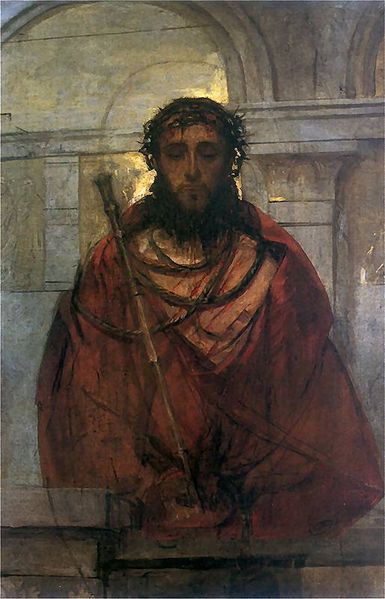
Royalty
He was a plain man
and learned no Latin.
Having left all gold behind
he dealt out peace
to all us wild ones
and the weather.
He ate fish, bread,
country wine and God’s will.
He wore purple only once
and that was an irony.
Luci Shaw
Jan’s book, Circle of Grace, must be one of my favorite books of poetry. This Sunday poem is from another of her books, The Cure for Sorrow: A Book of Blessings for the Seasons.
 Witnesses to Hope