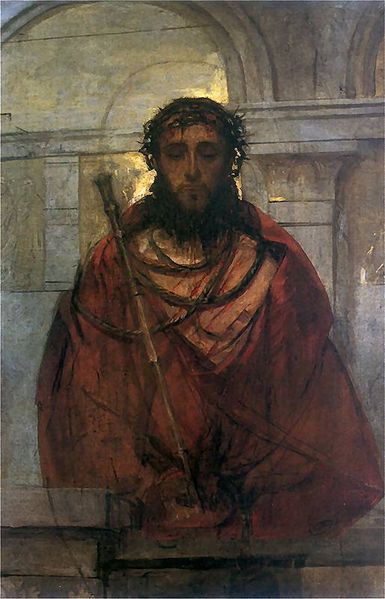
Refuge for my broken spirit.

(Oops. I meant to schedule this for this coming Sunday, but made a mistake. I trust God will use it for you now.) This Sunday I offer you this bit of a longer poem by Gregory of Narek:

Refuge for my broken spirit lies in your
living incorruptible, constant hope,
that looking on me with mercy,
as one condemned to perdition,
when I present myself before your heavenly beneficence,
empty-handed and without gifts,
bringing with me the evidence of your untold glory,
I will remind you
who never shuts your eyes,
never ignores the sighs of grief,
that with your cross of light
you may lift away from me, I beg you, the peril that chokes me,
with your comforting care, the vacillating sadness,
with your crown of thorns, the germs of my sin,
with the lashes of the whip, the blows of death,
with the memory of the slap in the face, the neediness of my shame,
with the spitting of your enemies, my contemptible vileness,
with your sip of vinegar, the bitterness of my soul.

Gregory of Narek 

Do not fear the memory of sin

A lovely, lovely poem from Malcolm Guite. I find it most encouraging at the beginning of this Lent. Lent can be a discouraging time for many of us because we are so aware of our obvious faults.

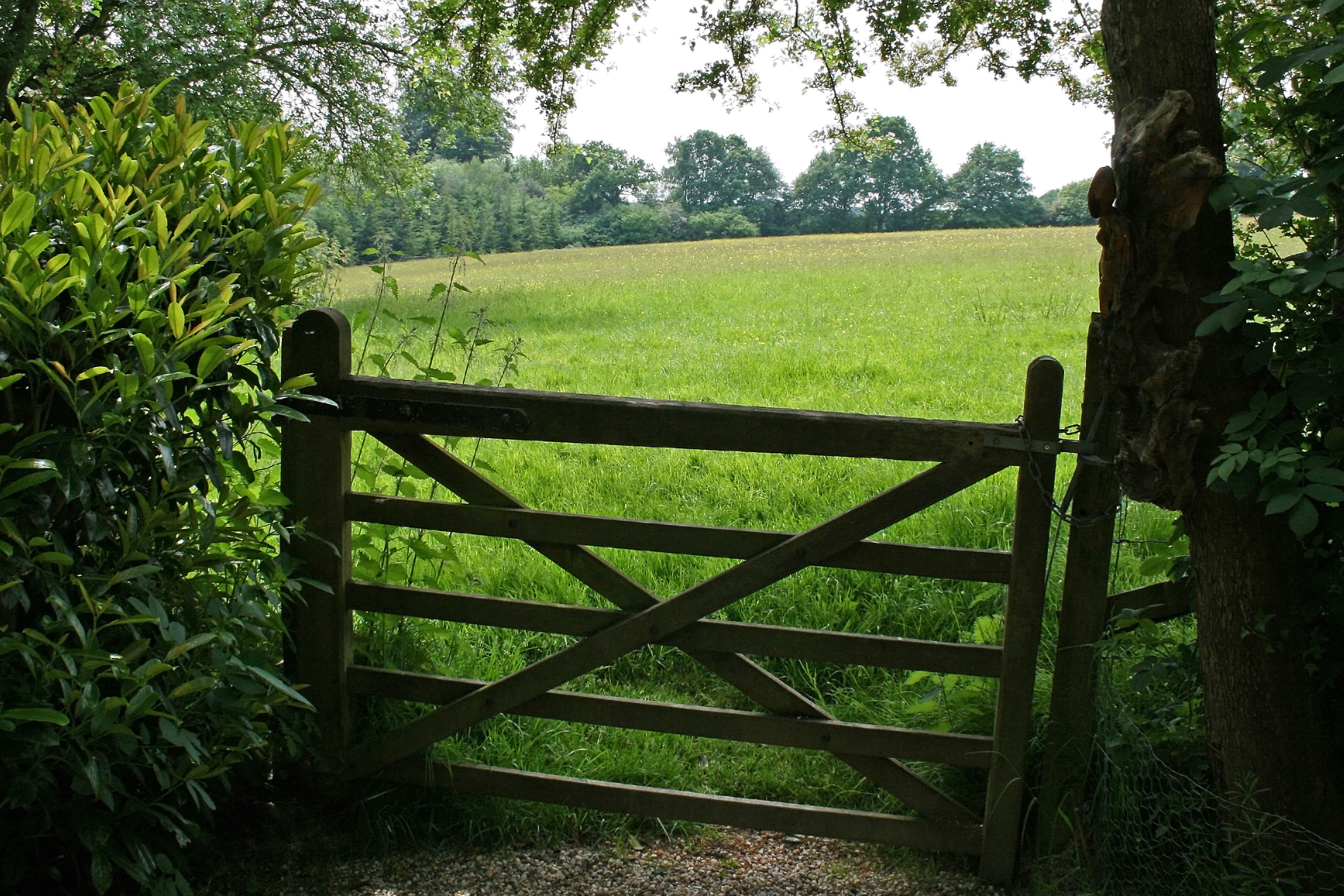
Through the Gate

Begin the song exactly where you are,
For where you are contains where you have been
And holds the vision of your final sphere.

And do not fear the memory of sin;
There is a light that heals, and, where it falls,
Transfigures and redeems the darkest stain

Into translucent colour. Loose the veils
And draw the curtains back, unbar the doors,
Of that dread threshold where your spirit fails.

The hopeless gate that holds in all the fears
That haunt your shadowed city fling it wide
And open to the light that finds, and fares

Through the dark pathways where you run and hide.
Through all the alleys of your riddled heart,
As pierced and open as his wounded side.

Open the map to him and make a start,
And down the dizzy spirals, through the dark,
His light will go before you. Let him chart

And name and heal. Expose the hidden ache
To him, the stinging fires and smoke that blind
Your judgments, carry you away, the mirk 

And muted gloom in which you cannot find
The love that you once thought dying for.
Call him to all you cannot call to mind.

He comes to harrow Hell and now to your
Well-guarded fortress let his love descend.
The icy ego at your frozen core

Can hear his call at last. Will you respond?
mgupIXg

Blessing the dust

Jan Richardson is a poet I discovered just a few years ago. My favorite book of hers is the one from which this poem is taken. She has a number of poems just for this day, Ash Wednesday.

“For you, for Ash Wednesday, with gratitude. May we keep learning what God does with dust; may we be part of the answer. So many blessings to you, beloveds, as Lent arrives.”
 
BLESSING THE DUST
 
All those days
you felt like dust,
like dirt,
as if all you had to do
was turn your face
toward the wind
and be scattered
to the four corners
 
or swept away
by the smallest breath
as insubstantial—
 
did you not know
what the Holy One
can do with dust?
 
This is the day
we freely say
we are scorched.
 
This is the hour
we are marked
by what has made it
through the burning.
 
This is the moment
we ask for the blessing
that lives within
the ancient ashes,
that makes its home
inside the soil of
this sacred earth.
 
So let us be marked
not for sorrow.
And let us be marked
not for shame.
Let us be marked
not for false humility
or for thinking
we are less
than we are
 
but for claiming
what God can do
within the dust,
within the dirt,
within the stuff
of which the world
is made
and the stars that blaze
in our bones
and the galaxies that spiral
inside the smudge
we bear.
 
—Jan Richardson
from Circle of Grace: A Book of Blessings for the Seasons

The Garments of God

The poem I chose for last Sunday–“Suspended”–reminds me of another poem, one I have posted before, but am going to do again because it’s always worth a re-read. Both speak of God’s garments and our touching them. In “Suspended”, the author’s “hand slipped on the rich silk of it.” In this one, Jessica Powers writes of holding fast to it, clutching it.

The Garments of God

God sits on a chair of darkness in my soul.
He is God alone, supreme in His majesty.
I sit at His feet, a child in the dark beside Him;
my joy is aware of His glance and my sorrow is tempted
to nest on the thought that His face is turned from me.
He is clothed in the robes of His mercy, voluminous garments–
not velvet or silk and affable to the touch,
but fabric strong for a frantic hand to clutch,
and I hold to it fast with the fingers of my will.
Here is my cry of faith, my deep avowal
to the Divinity that I am but dust.
Here is the loud profession of my trust.
I need not go abroad
to the hills of speech or the hinterlands of music
for a crier to walk in my soul where all is still.
I have this potent prayer through good or ill:
here in the dark I clutch the garments of God.

                                 Jessica Powers

A shy yet solemn glory

A Sunday poem.

Music

When I was a child
I once sat sobbing on the floor
Beside my mother’s piano
As she played and sang
For there was in her singing
A shy yet solemn glory
My smallness could not hold

And when I was asked
Why I was crying
I had no words for it
I only shook my head
And went on crying

Why is it that music
At its most beautiful
Opens a wound in us
An ache a desolation
Deep as a homesickness
For some far-off
And half-forgotten country

I’ve never understood
Why this is so

But there’s an ancient legend
From the other side of the world
That gives away the secret
Of this mysterious sorrow

For centuries on centuries
We have been wandering
But we were made for Paradise
As deer for the forest

And when music comes to us
With its heavenly beauty
It brings us desolation
For when we hear it
We half remember
That lost native country

We dimly remember the fields
Their fragrant windswept clover
The birdsongs in the orchards
The wild white violets in the moss
By the transparent streams

And shining at the heart of it
Is the longed-for beauty
Of the One who waits for us
Who will always wait for us
In those radiant meadows

Yet also came to live with us
And wanders where we wander.

                         Anne Porter

Wring the Changes

A Sunday poem.

Wring the Changes

I have known the breathless feeling of a sponge that has been wrung
thoroughly and roughly above my life’s chipped sink,
squeezed to the point of tearing by the chapped hands of God
until my shape was nothing. Until I could not think.

I have known the way one squishes at the crushing of one’s foam,
have felt the curious balling of a thing without a spine.
But all of it led to a hope I do not hold alone:
that when my water’s all pressed out, I might soak in his wine. 

                                   Paul J. Pastor

Epiphany

They have brought gold and spices to my King,
Incense and precious stuffs and ivory;
O holy Mother mine, what can I bring
That so my Lord may deign to look on me?
They sing a sweeter song than I can sing,
All crowned and glorified exceedingly:
I, bound on earth, weep for my trespassing,–
They sing the song of love in heaven, set free.
Then answered me my Mother, and her voice
Spake to my heart, yea answered in my heart:
‘Sing, saith He to the heavens, to earth, Rejoice:
Thou also lift thy heart to Him above:
He seeks not thine, but thee such as thou art,
For lo His banner over thee is Love.’

Christina Rossetti

20 January 1852

Water from a cistern

Epiphany has traditionally been the celebration of three mysteries: the coming of the Kings, Jesus’ baptism, and the wedding feast of Cana. Here’s a beautiful little extract from “Hymn for Epiphany” by Paul Claudel, celebrating the wedding feast. I can’t help that what Christ did with the water is the very same he would do for each of us, without hesitation. Changing our impure water into incredible wine.

The third mystery truly is at Galilee’s wedding repast
(For the first time that we see Thee, it is not as Host but as Guest)
When Thou dost change into wine, on Thy Mother’s whispered word,
The secret water there in the ten stone water-jars stored,
The bridegroom lowers his eyes. He is poor and oppressed with love:
For cistern water is hardly drink for a marriage, you know,
Such as it is in August when the reservoirs are low,
All filled with the impurities and with insects, not fit to show.