Friday: from the archives

When you feel that you have nothing left to give . . . 
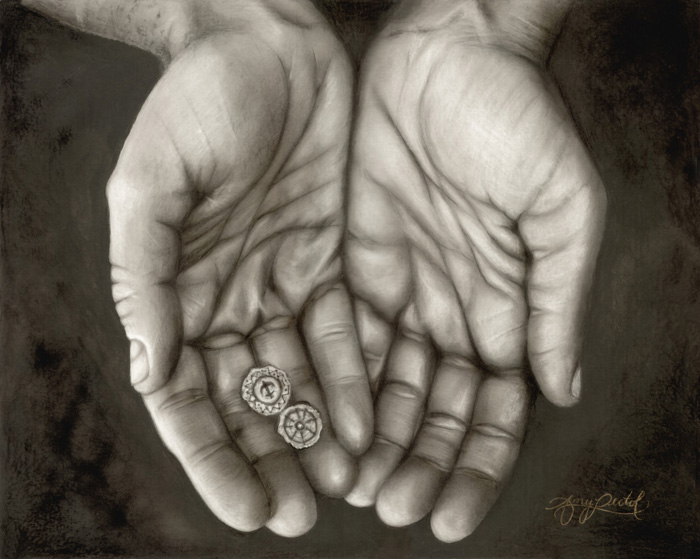
In my position as superior of our community, there are many days when I feel like I don’t have anything to give my sisters–not that I don’t want to–I just feel very poor.  I also feel that way pretty much all the time in prayer these days.  I have always experienced great encouragement from the story of the widow’s mite.  Some words on this topic from Andre Louf, abbot emeritus of the Cistercian monastery of Mont-des-Cats, France:

Jesus was elated over the poor widow who offered two copper coins.  She gave from her poverty and in so doing offered up everything she had to live on (Mk 12:42-44).  The others had also given money, a lot of it even, but “from their surplus wealth” . . . Jesus, however, preferred the two miserable coins of the widow to these substantial gifts even though the coins were of no significance in the sum total of the collection.    Why did he rate this gift more highly?  Jesus’ answer was very simple: “She, from her poverty, put in everything she had, all she had to live on.”  Does this mean the others should have been more generous?  Should they have given larger sums?  Of course not.  They were naturally free to do this and a higher contribution would certainly have been appreciated.  But that was not what was important to Jesus; the issue was not so much one of quantity.  Even if the rich were to give more, they would still only be giving from their abundance.  For them it would always remain immensely difficult to give from their poverty.  It is the same for us: whatever we may give of all the things that belong to us–our money, our time, our magnanimity, our health, our thousand good qualities–even if we put all this at Jesus’ disposal, still we are only giving from our abundance.  And it will always remain hard and even painful for us to give from our poverty.  To give everything to Jesus always means to give from our poverty and that is not an easy thing to do.  But it is precisely this gift that Jesus expects from us all . . . To give from our poverty means, first of all, to know that we are poor, that we have discovered in ourselves the wound for which (for that matter) no one is responsible but which for ever makes us utterly poor indeed, poor to a degree we would not dare to admit to ourselves. . . [The widow] accepts the fact that she just wants to give what she has because Jesus looked at her and accepted her as she was.  Happy are they who dare to give from their poverty: in the eyes of Jesus they have given everything they had.   (from Mercy in Weakness)
Bring him to me

from Amy Carmichael:

Mt 17.17 Then Jesus answered and said,  . . . “Bring him here to me.”

Have you a ‘him’ about whom you are anxious?  Bring him to Me.  Have you a ‘her’?  Bring her to Me.  We can even turn the pronoun to ‘it’–this crushing burden of the state of the world, the grief and misery that overwhelms us if we think at all–Bring it to Me.  We can turn the word to ‘all’–the problems of our work with its cares and its questions, and more personal cares and anxieties too–Bring all to Me.

And there are joys, too. Don’t let us bring only griefs and anxieties, but also thanks and praises.

Bring him to Me.

Bring her to Me.

Bring it to Me.

Bring all to Me.

You are unrepeatable

from Christoph Cardinal Schönborn’s We Have Found Mercy:

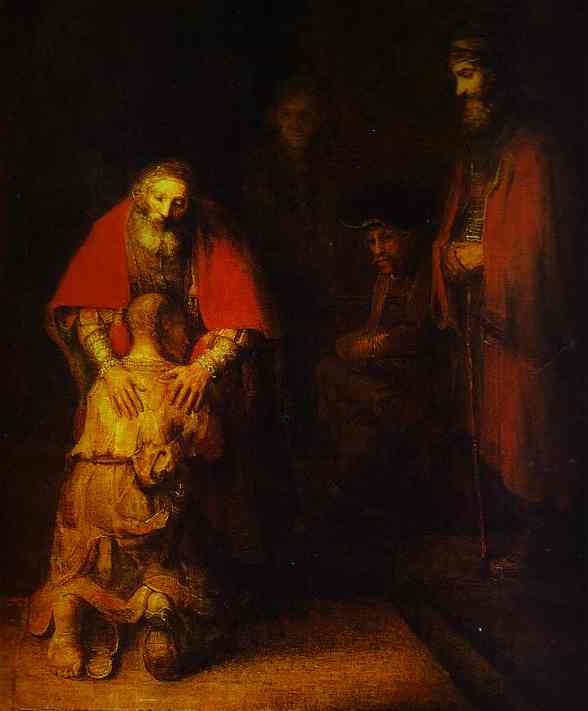
The Divine Mercy is a profound, total devotion that is committed, lasting, faithful, and quite personal for the one to whom it is addressed.  Nothing could be more foreign to it than a vague feeling of ‘goodwill’ toward the whole world.  The one on whom God bestows his mercy is intended, addressed and loved as an unrepeatable person.  Mercy does not turn the one to whom it is shown into an object but rather touches the person in his center, in his dignity.

Jesus is, so to speak, the incarnation of God’s Mercy.  In him, God cares, not about mankind as an abstract entity, but rather about every individual person.  He has shown me mercy.  Through Christ I become the recipient of God’s care, and, on the other hand, I am addressed personally.

Bless the Lord, my soul!

Bless the Lord, my soul!
Lord God, how great you are,
clothed in majesty and glory,
wrapped in light as in a robe!

You stretch out the heavens like a tent.
Above the rains you build your dwelling.
You make the clouds your chariot,
and walk on the wings of the wind;
you make the winds your messengers
and flashing fire your servants.

Psalm 104

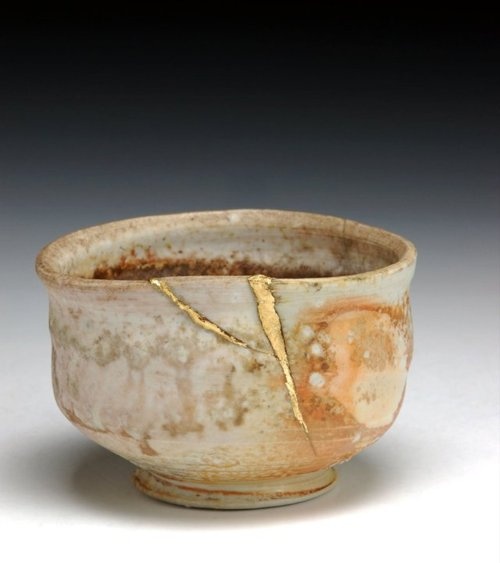
Cracks filled with gold

“When the Japanese mend broken objects, they aggrandize the damage by filling the cracks with gold. They believe that when something’s suffered damage and has a history it becomes more beautiful.” — Billie Mobayed

To me, that sounds like a pretty good deal–but, our God, in His incredible love, not only fills the cracks in our lives with gold, but transforms our very lives into a vessel of pure gold.  Amazing love.

Though our outer nature is wasting away, our inner nature is being renewed every day.  For this slight momentary affliction is preparing for us an eternal weight of glory beyond all comparison. . .”  


Using our failings

The day before yesterday was the feast of St. Thomas the Apostle.  In the Office of Readings, St. Gregory the Great makes the following point: “Do you really believe that it was by chance that this chosen disciple was absent, then came and heard, heard and doubted, doubted and touched, touched and believed?  It was not by chance but in God’s providence.  In a marvelous way God’s mercy arranged that the disbelieving disciple, in touching the wounds of his master’s body, should heal our wounds of disbelief.  The disbelief of Thomas has done more for our faith than the faith of the other disciples.”

Try to remember this the next time you are dismayed by your own failings.  God, in His providence, can use them to hearten others as they  see His work in your life.  Struggle through to touch and believe.

Storms

This slideshow requires JavaScript.

Storms.  God’s own fireworks.

He made the darkness his covering,
the dark waters of the clouds, his tent.
A brightness shone out before him
with hailstones and flashes of fire.

The Lord thundered in the heavens;
the Most High let his voice be heard.
He shot his arrows, scattered the foe,
flashed his lightnings, and put them to flight.

 Beautiful words from Psalm 18, one of the psalms from Morning Prayer this morning.  But even more marvelous are the verses that follow:

From on high he reached down and seized me;
he drew me forth from the mighty waters.
He snatched me from my powerful foe,
from my enemies whose strength I could not match.

They assailed me in the day of my misfortune,
but the Lord was my support.
He brought me forth into freedom,
he saved me because he loved me.

In the midst of your storm, God is coming to you.  He is coming to you to save you.  Because He loves you.  Be not afraid of the storm.

All times are in His hands

This slideshow requires JavaScript.

I don’t put my trust in the weather; I put my trust in God.  All times are in His hands.  We have had weeks of dryness, but even these speak to us of Him.  This morning in Morning Prayer, we prayed these lines from Psalm 63: “My body pines for you like a dry, weary land without water.”  May that be true of us; may we pine for Him, long for Him, like a dry, weary land without water.

Yet I took heart as we prayed the Canticle from Daniel this morning: “Cold and chill, bless the Lord.  Dew and rain, bless the Lord.”  All times are in His hands.

Don’t just bump into Jesus

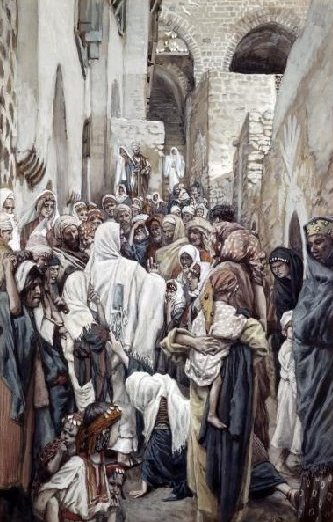
The Gospel reading for today tells the story of Christ healing the woman who had been hemorrhaging for twelve years.  Many people were bumping up against Him, but she alone reached out to Him in faith.  Dr. Mary Healy challenges each of us: “The afflicted woman in this episode is a model for approaching Jesus.  While crowd of people were bumping into him as he walked along, she touched him.  Her faith brought her into living contact with Jesus, and as a result she experienced a dramatic healing.  The difference between the crowds and the woman prompts the question: How often do we merely bump against Jesus—for instance, when we receive Him in the Eucharist?”