Last year a few very gifted songwriters from our parish put new music to an old Advent song. It’s become a favorite of mine. The chorus goes: “Hark, the glad sound! The Savior comes, the Savior promised long; let ev’ry heart prepare a throne, and every voice a song.” I’ve been thinking a lot about that last phrase: “and every voice a song,” and asking myself: “What song am I preparing for the Savior’s coming?” I would suggest that you ask yourself the same question. Maybe it’s a simple, secret phrase that you sing silently in your heart: “I am Yours and You are mine.” Or maybe it’s something you want to sing out loud with your whole heart: “I am Yours and You are mine.” (Yes, I know I repeated myself.) May the Holy Spirit open your ears to His still, small voice singing in your heart, that you may sing along with full voice–whether silently or full volume.
Author: Sr. Dorcee, beloved
I am the one whom Jesus loves.
Beginning to hope
Today’s post comes from The Magnificat Advent Companion for this year. I think it is a good meditation for all of us who are aspiring to be Witnesses to Hope:
There is a story of two priests who were speaking about their respective blood brothers, both of whom had strayed from the Catholic faith. One remarked, “I have been praying for my brother for fifteen years and I’m beginning to lose hope.” The other responded, not without wisdom, “I’ve been praying for my brother for twenty-five years, and I am beginning to hope.” The message of the parable is important: when our hearts are tested by the secularism around us (or within us), prayer for others is related to our hope in the power and presence of God’s grace. Our hope can be tried, but such trials are also related to our own progressive conversion, and therefore serve to our spiritual benefit. . . . Advent is a season of hope in the promises of God, hope for the conversion of ourselves and of others. We should pray ardently for this great good, and allow hope in Christ to change us. For who are we to underestimate the power of the grace of God? (Fr. Thomas Joseph White, OP)
“Hidden in our darkness”
Advent, like winter, is a time of hiddenness and darkness. The leaves are stripped from the trees, and the trees look dead. We know life is hid within them, but it’s hard to tell. One can only have hope if you remember Spring is coming. The same is true for us. We must have faith in the middle of the darkness.
Caryll Houselander, describing Advent, writes:
“It is a time of darkness, of faith. We shall not see Christ’s radiance in our lives yet: it is still hidden in our darkness; nevertheless, we must believe that he is growing in our lives; we must believe it so firmly that we cannot help relating everything, literally everything, to this almost incredible reality.” (Reed of God, p. 29)
Advent Visitation
An Advent Sunday-poem from Luci Shaw:
Advent visitation
Even from the cabin window I sensed the wind’s
contagion begin to infect the rags of leaves.
Then the alders gilded to it, obeisant, the wayangels are said to bow, covering their faces with
their wings, not solemn, as we suppose, but
possessed of a sudden, surreptitious hilarity.When the little satin wind arrived,
I felt it slide through the cracked-open door
(A wisp of prescience? A change in the weather?),and after the small push of breath–You
entering with your sir of radiant surprise,
I the astonished one.These still December mornings
I fancy I live in a clear envelope of angels
like a cellophane womb. Or a soap bubble,the colors drifting, curling. Outside
everything’s tinted rose, grape, turquoise,
silver–the stones by the path, the skin of sunon the pond ice, at night the aureola of
a pregnant moon, like me, irridescent,
almost full-term with light.

Advent: the season of the woman
As we begin Advent, I would like to share an excerpt from a newly published collection of Advent meditations by Mother Mary Clare PCC:
I am quite confident all of us have a deep sense of expectation, joy, and wonderment that Advent is about to begin. We look at the different facets of this season, turning it like a jewel in our hands. Certainly it is a season for children. It is a season of the child, the joy of the Child who came to give joy to the world. It is a season, certainly, of the family, of the community. Family life was solidly established in a lowly, humble, poor place, with three persons who loved utterly and were utterly given–even the CHild, from the first moment, because he was divine. It is a season of great tenderness, and a season of hush. It is a season for everyone. It is a season particularly of the woman. It is the woman, especially the religious woman, who has great potential for the spiritual maternity which was so basic in our Lady and which was ratified on Calvary when she became the Mother of all the redeemed: ‘Woman, behold your son.’ It is a precious season. Advent summons us to fold the wings of our souls. There is rich meaning in the expression ‘folded wings’. Wings that remain always folded and are never spread to fly in giving would be wings that would deteriorate in atrophy, whereas wings that are always spread and never folded in intense personal prayer, reflection, contemplation would be wings quickly spent or, perhaps, misspent. With all of this–the joy, the tenderness, the maternal sense, the deepening of womanhood, the folded wings–Advent is a season of tremendous purpose . . . .
Mother Mary Clare was the abbess of a Poor Clare monastery in Roswell, New Mexico. These conferences to her Sisters were collected posthumously, and I for one am very grateful. I have read every book I could get my hands on by her and was saddened that her writing would cease when she died. I am eternally grateful to her dear Sisters.
Carrying another’s burdens
I have been thinking a lot about forgiveness lately. And, why, you might ask, would I post about forgiveness the day before Thanksgiving? If you’re like me, you probably find yourself encountering all kinds of family-linked-emotions around Thanksgiving time . . . and, also if you’re like me, sometimes that means dealing with forgiveness of past or present hurts. Anyway, this morning during Mass the picture below popped into my mind: 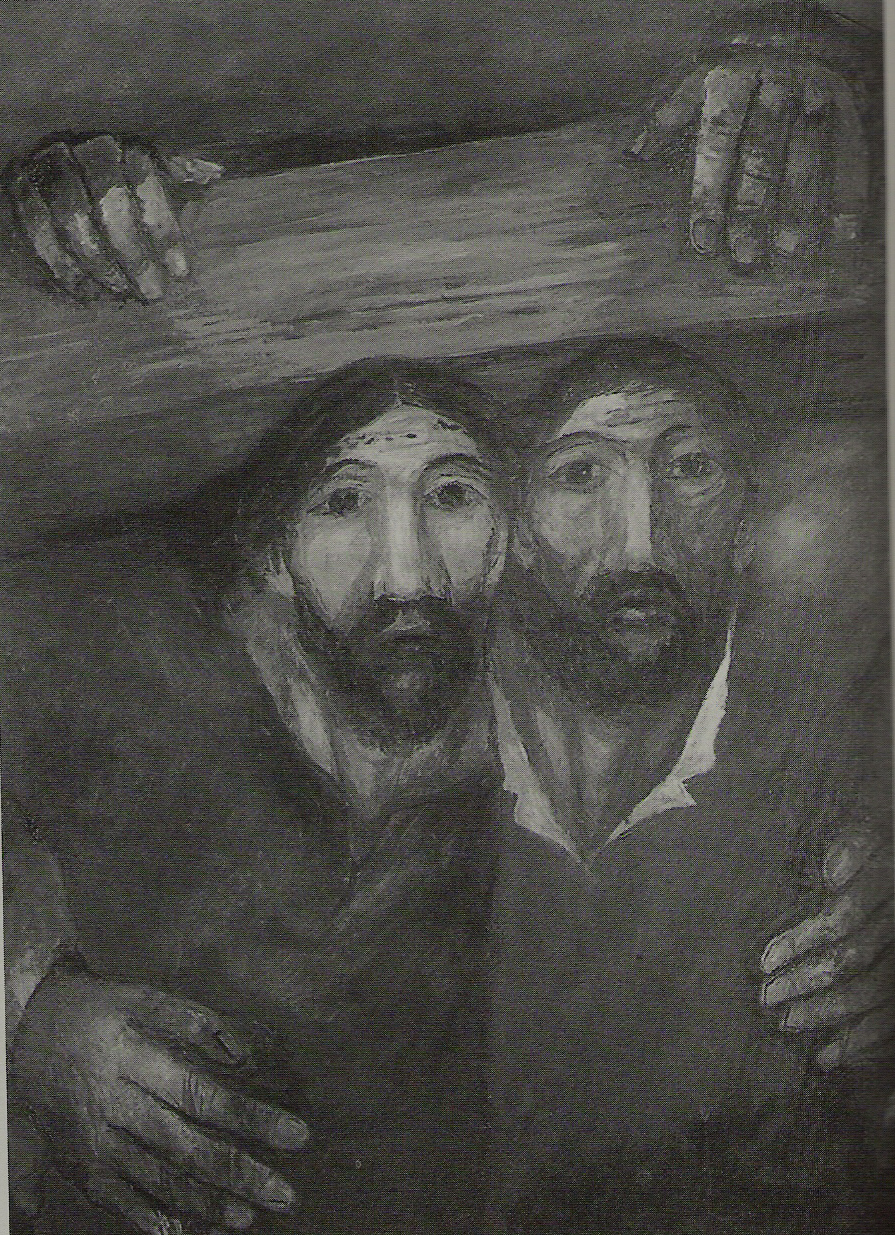 I first came across this picture in a commentary on Matthew by Erasmo Leiva-Merikakis (see Books to Read tab above). I love this picture because Jesus and Symon of Cyrene look so alike. It’s speaks to me so much of how much Christ took on our humanity, our likeness. But what struck me this morning in Mass is how apt a portrait this is of forgiveness. When we truly forgive someone, we decide, in our heart of hearts–despite however we may be feeling–to carry his/her burdens (cf. Gal 6.2). We become Simon of Cyrene to them and to Christ in them. We help them to carry their poverty . . . which has met us in our poverty. (That’s usually why there is a need for forgiveness.) Another beautiful aspect of the depiction above is that Christ and Simon have their arms wrapped around each other. When we truly forgive we wrap our arms around Christ in the other person . . . and His are wrapped around us in return.
Maybe you’ve already had the grace to forgive, but you have trouble with the “forgetting” part. (That’s where I get tripped up so often.) Again, we can decide to be Simon of Cyrene. Every time that past hurt comes up, we can decide to continue to walk side by side with that person in our life. It may be at a physical distance, but close-in-proximity in our hearts. Of course, this all takes the grace of God, the mercy of God, and the sure knowledge of how many times He has been that Simon of Cyrene for us, carrying much, much more weight of the cross than we every deserve. From the Office of Readings for today’s commemoration of the martyr, Andrew Dung-Lac: “Our Master bears the whole weight of the cross, leaving me only the tiniest, last bit” (from a letter of Saint Paul Le-Bao-Tinh sent to the students of the Seminary of Ke-Vinh in 1843).
Just a further thought: sometimes that “other” person in need of forgiveness is ourselves. . . .
Let us, this Thanksgiving, beg Him for this grace, this profound grace of forgiveness, so that we may encounter Christ in every person we need to forgive. May you each have a very, very blessed Thanksgiving. I thank God for each of you.
What God can see
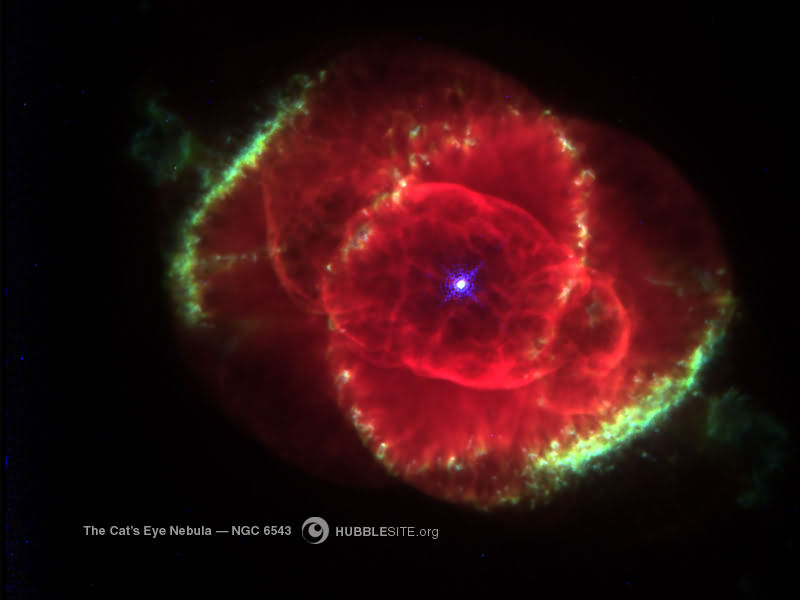 One of my favorite screensavers is a collection of photos from outer space taken by the Hubble
 Telescope. What is out there, that we can’t see with our naked eye, is utterly beautiful. Besides those I’ve posted here, there are countless others at their website. Now let me tell you the reason I really like looking at these photos: because each one is a reminder of what God can see and I can’t. What that reminds me of is that there is so much going on in my soul, so much that the Spirit of God is doing
 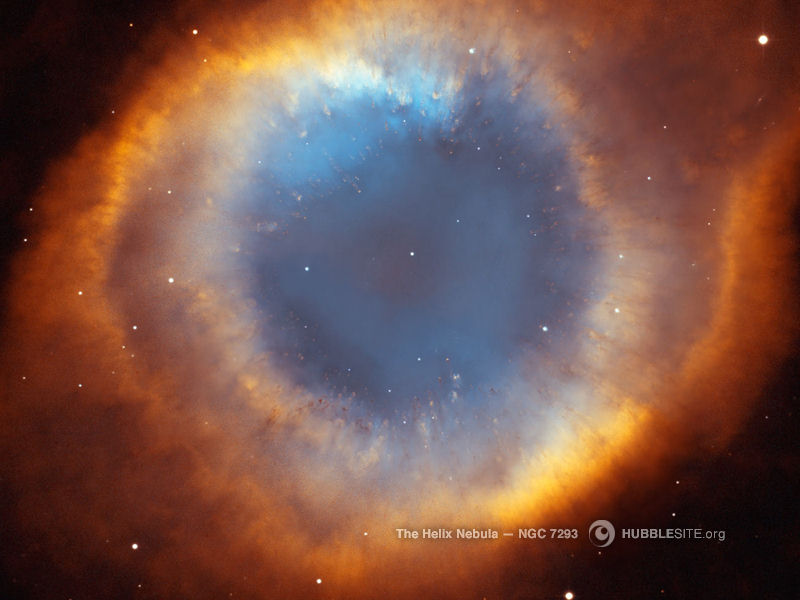 deep in my soul, that is of great beauty, even though I can’t see it. Think about that, will you? And your soul (and mine) is infinitely more beautiful than any of these pictures . . .

“To make visible the marvels wrought by God”
Yesterday, November 21, is usually observed as the Feast of the Presentation of Mary in the Temple. (This year it was superseded by the Feast of Christ the King.) The Presentation of Mary is always a special day for consecrated religious. Fr. Peter John Cameron, in his book Mysteries of the Virgin Mary, explains it this way:
The Presentation of Mary in the temple is an act of consecration. This feast hold special significance for those persons called to consecrated life in the Church; at the same time it moves all people to reflect on the meaning of consecrated life for the Church.
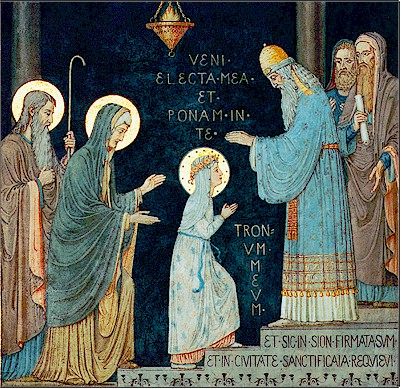
He goes on to cite a quote from John Paul II that I have also found very encouraging for myself, as one called to consecrated life:
What Pope John Paul II says about consecrated life in his apostolic exhortation Vita Consecrata is revealed first and foremost in the life of the Blessed Virgin Mary, especially as Our Lady is presented in the temple:
The first duty of the consecrated life is to make visible the marvels wrought by God in the frail humanity of those who are called. They bear witness to these marvels not so much in words as by the eloquent language of a transfigured life, capable of amazing the world. To people’s astonishment they respond by proclaiming the wonders of grace accomplished by the Lord in those whom he loves . . . . It is the duty of consecrated life to show that the Incarnate Son of God is . . . the infinite beauty which alone can fully satisfy the human heart.
Please pray for us that we may fulfill this duty wholeheartedly, that God’s marvels may be manifest “in the frail humanity of those [of us] who are called”.
“The Joys of Letting Go” & “Paging Humility”
About a month ago I wrote a post about not being in control which gathered quite a few comments. Fr. David May, from Madonna House in Combermere, ON, writes along a similar vein in this month’s copy of Restoration. He titles it: “The Joys of Letting Go.” You can read it here. And, please, especially you mothers who worry about being the perfect mother–and even those of you who don’t, don’t miss this post by Betty Duffy. It will at the least give you a good laugh . . . and that’s always a good thing.
Sky diamonds
Have you ever really pondered that repetitive verse from Genesis 1: “And God saw that it was good”? The Hebrew word used there for “good” also means “beautiful.” Paul Evdokimov writes in his book, The Art of the Icon, a Theology of Beauty: “The Creator, like a divine poet, in bringing the world into being out of nothingness, composed his ‘Symphony in Six Days”, the Hexameron. After each of his creative acts, he ‘saw that it was beautiful.’ The Greek text of the biblical story uses the word kalón—beautiful and not agathon—good; the Hebrew word carries both meanings at the same time.”
That quote came to mind last week as I was reading an article about rocks of all things. Apparently, during the early days of the universe, after some stars blew up and died in intense heat, “we get the first 12 or so minerals: atoms forged by starbursts. Carbon, nitrogen, silicon, iron all come from stars.” But the really cool thing I read is that “the universe’s original minerals include diamonds . . . teeny bits of diamond dust floating in deep space.” That strikes me so much as just what God would do in His creative work: scatter “teeny bits of diamond dust” out into deep space. “And God saw that it was very good” and very beautiful.
 And, unbeknownst to me–the next few days are the best for viewing the Leonid Meteor Shower–“Avid meteor gazers graced with clear skies may see between 15 and 20 meteors per hour.” Read more about it here.

